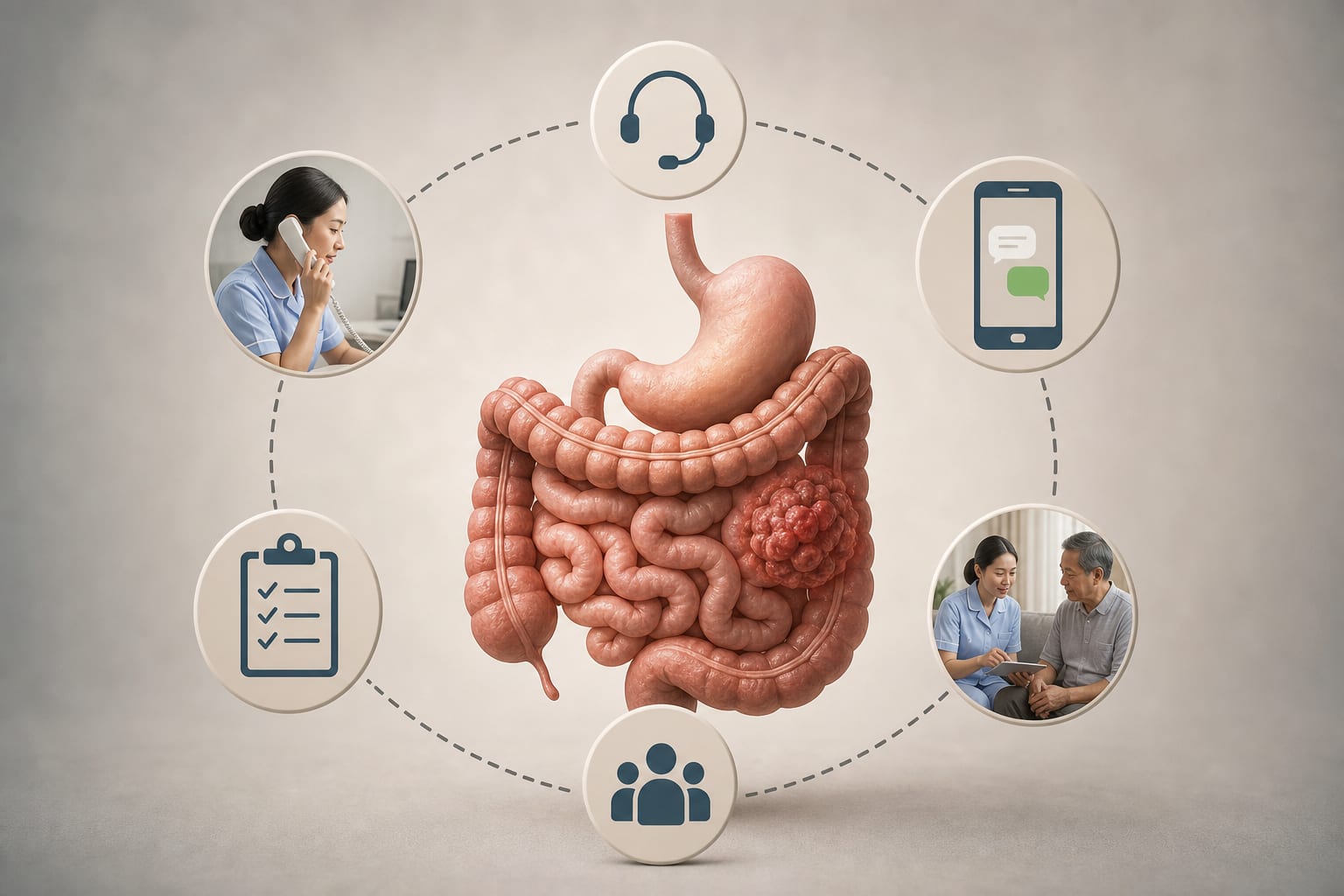
Impact of multi-channel follow-up as continuous nursing on cancer pain control, adverse reactions, and quality of life in patients with digestive tract tumors: a controlled study of 136 cases - Scorecard - MDSpire
Advertisement
Evaluation of Continuous Nursing Through Multi-Channel Follow-Up on Pain Management, Side Effects, and Quality of Life in Patients with Digestive Tract Tumors: A Controlled Study Involving 136 Participants
Clinical Scorecard: Evaluation of Continuous Nursing Through Multi-Channel Follow-Up on Pain Management, Side Effects, and Quality of Life in Patients with Digestive Tract Tumors: A Controlled Study Involving 136 Participants
At a Glance
Category
Detail
Condition
Digestive Tract Tumors
Key Mechanisms
Multi-channel follow-up including nurse-led assessments and monitoring.
Target Population
Patients with digestive tract tumors post-discharge.
Care Setting
Department of Medical Oncology and Department of Tumor Radiotherapy.
Key Highlights
Experimental group showed statistically significant lower pain scores.
Higher patient-reported satisfaction with pain control in the experimental group.
Reduced incidence of constipation in the experimental group.
Improved quality of life with better sleep quality in the experimental group.
No significant difference in other analgesic-related adverse drug reactions.
Guideline-Based Recommendations
Diagnosis
Assess pain intensity and patient-reported satisfaction with pain control.
Management
Implement multi-channel follow-up for continuous nursing care.
Monitoring & Follow-up
Monitor pain relief, adverse effects, and quality of life post-discharge.
Risks
Consider the risk of constipation and other analgesic-related adverse drug reactions.
Patient & Prescribing Data
136 patients with digestive tract tumors.
Multi-channel follow-up improves pain control and quality of life.
Clinical Best Practices
Utilize nurse-led remote follow-up for cancer pain management.
Incorporate individualized care navigation in post-discharge plans.