Short term complications and risk factors of unilateral biportal endoscopic cervical spine surgery in patients with cervical radiculopathy and myelopathy: a single center retrospective study - Scorecard - MDSpire
Advertisement
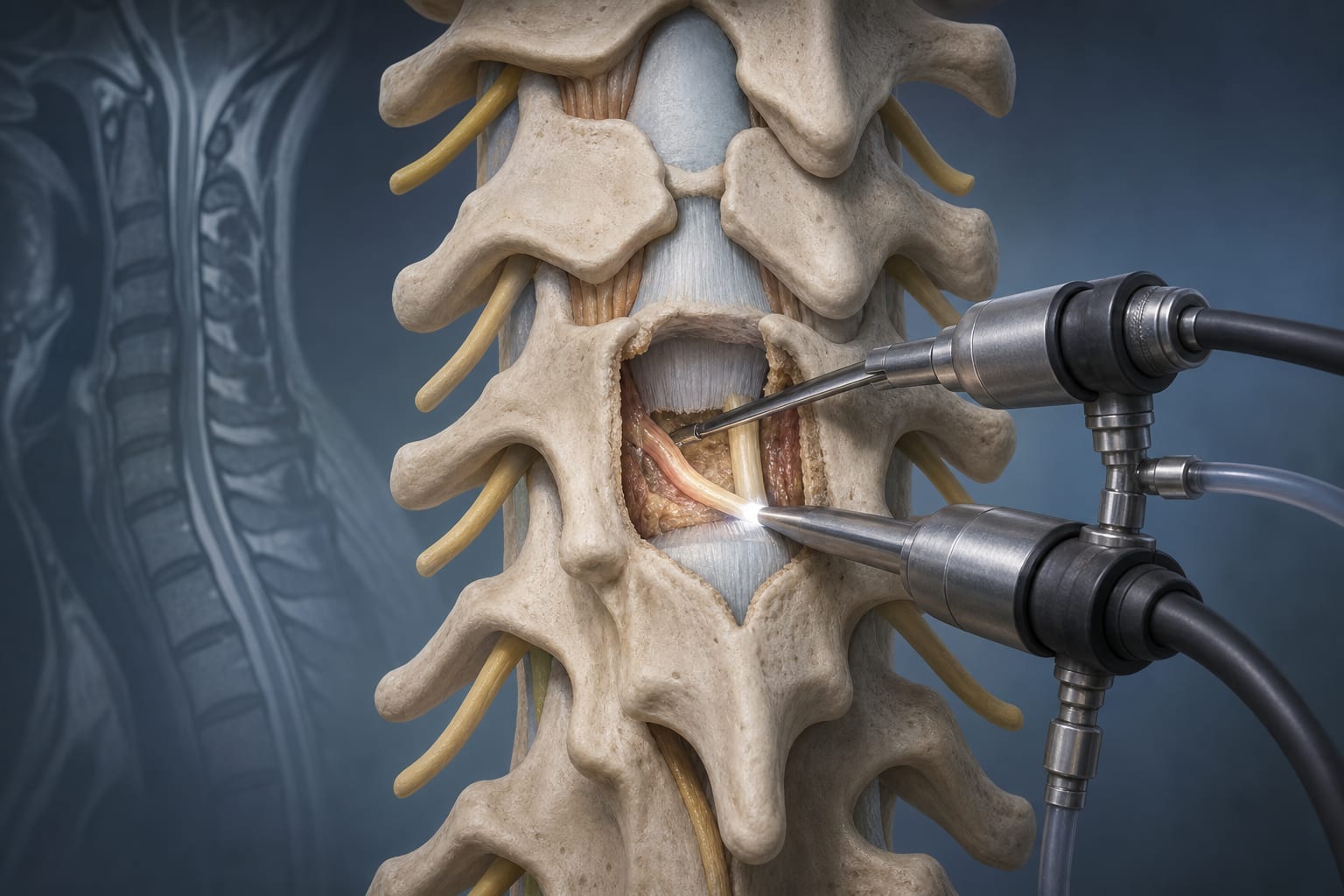
Short term complications and risk factors of unilateral biportal endoscopic cervical spine surgery in patients with cervical radiculopathy and myelopathy: a single center retrospective study
Clinical Scorecard: Short-Term Adverse Events and Associated Risk Factors Following Unilateral Biportal Endoscopic Cervical Spine Surgery in Patients with Cervical Radiculopathy and Myelopathy: A Retrospective Analysis from a Single Institution
At a Glance
Category
Detail
Condition
Key Mechanisms
Target Population
Patients aged 18-80 with cervical spondylosis requiring surgical intervention, specifically cervical radiculopathy or myelopathy.
Care Setting
Key Highlights
Clarify that complications in the cervical myelopathy group included severe cases requiring intervention.
Guideline-Based Recommendations
Diagnosis
Diagnosis confirmed by clinical evaluation and imaging (MRI, CT), specifying the types of imaging used.
Management
Monitoring & Follow-up
Risks
Patient & Prescribing Data
UBE surgery demonstrates an acceptable safety profile, particularly in cervical radiculopathy, with significant functional improvements noted.
Clinical Best Practices
Emphasize the importance of understanding the learning curve and its effect on surgical outcomes.