Comparison of the mixed approach and medial approach in laparoscopic right hemicolectomy for right colon cancer: a retrospective study - Scorecard - MDSpire
Advertisement
Evaluation of Mixed versus Medial Surgical Techniques in Laparoscopic Right Hemicolectomy for Right Colon Cancer: A Retrospective Analysis
Clinical Scorecard: Evaluation of Mixed versus Medial Surgical Techniques in Laparoscopic Right Hemicolectomy for Right Colon Cancer: A Retrospective Analysis
At a Glance
Category
Detail
Condition
Right colon adenocarcinoma
Key Mechanisms
Comparison of mixed surgical approach versus medial surgical approach in laparoscopic right hemicolectomy focusing on 3-year disease-free survival (DFS) and overall survival (OS)
Target Population
Adult patients undergoing laparoscopic right hemicolectomy for colon adenocarcinoma
Care Setting
Surgical oncology and postoperative follow-up in tertiary care hospital
Key Highlights
No significant difference in 3-year DFS and OS between medial and mixed surgical approaches.
Tumor location and chemotherapy completion are independent prognostic factors for DFS.
Mixed approach may be a preferred alternative due to safety and efficacy despite delayed vessel ligation.
Guideline-Based Recommendations
Diagnosis
Diagnosis based on colon adenocarcinoma confirmed prior to surgery.
Exclude emergency cases and patients with prior preoperative treatments such as endoscopic resection or chemotherapy.
Management
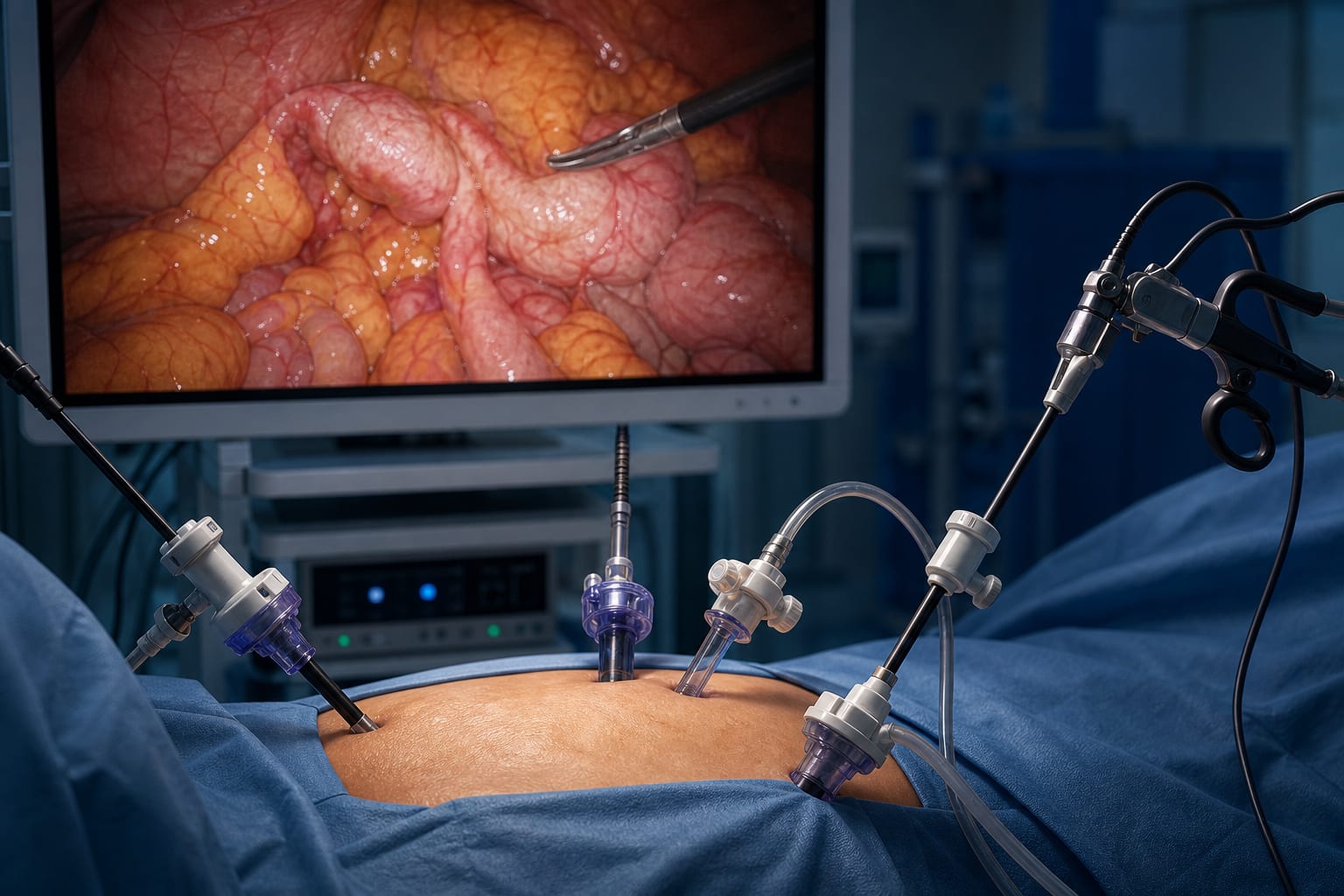
Laparoscopic right hemicolectomy using either medial or mixed surgical approach based on clinical evaluation.
Adjuvant oxaliplatin-based chemotherapy recommended for pathological stage II or higher disease.
Monitoring & Follow-up
Follow-up every 3 months for first 2 years, then every 6 months for next 3 years.
Routine physical exams, blood tests including tumor markers (CEA, CA19-9, CA125), imaging (CT scans), and annual endoscopy.
Additional imaging or laparoscopic exploration if recurrence or metastasis suspected.
Risks
Potential compromise of 'no-touch' isolation principle with mixed approach due to delayed ligation of tumor-feeding vessels.
Risk of tumor progression including local recurrence, metastasis, or death.
Patient & Prescribing Data
290 patients undergoing laparoscopic right hemicolectomy for right colon cancer
Both medial and mixed approaches yield comparable 3-year DFS and OS; chemotherapy completion significantly impacts DFS.
Clinical Best Practices
Select surgical approach based on patient anatomy, lesion location, and surgeon experience.
Adhere to standardized follow-up protocols including tumor marker monitoring and imaging.
Ensure completion of adjuvant chemotherapy in eligible patients to improve prognosis.
Consider mixed approach as a safe and effective alternative to medial approach.
An ancillary analysis found less than 2-percentage-point differences in 10-year recurrence across margin thresholds, with no statistically significant adjusted association.