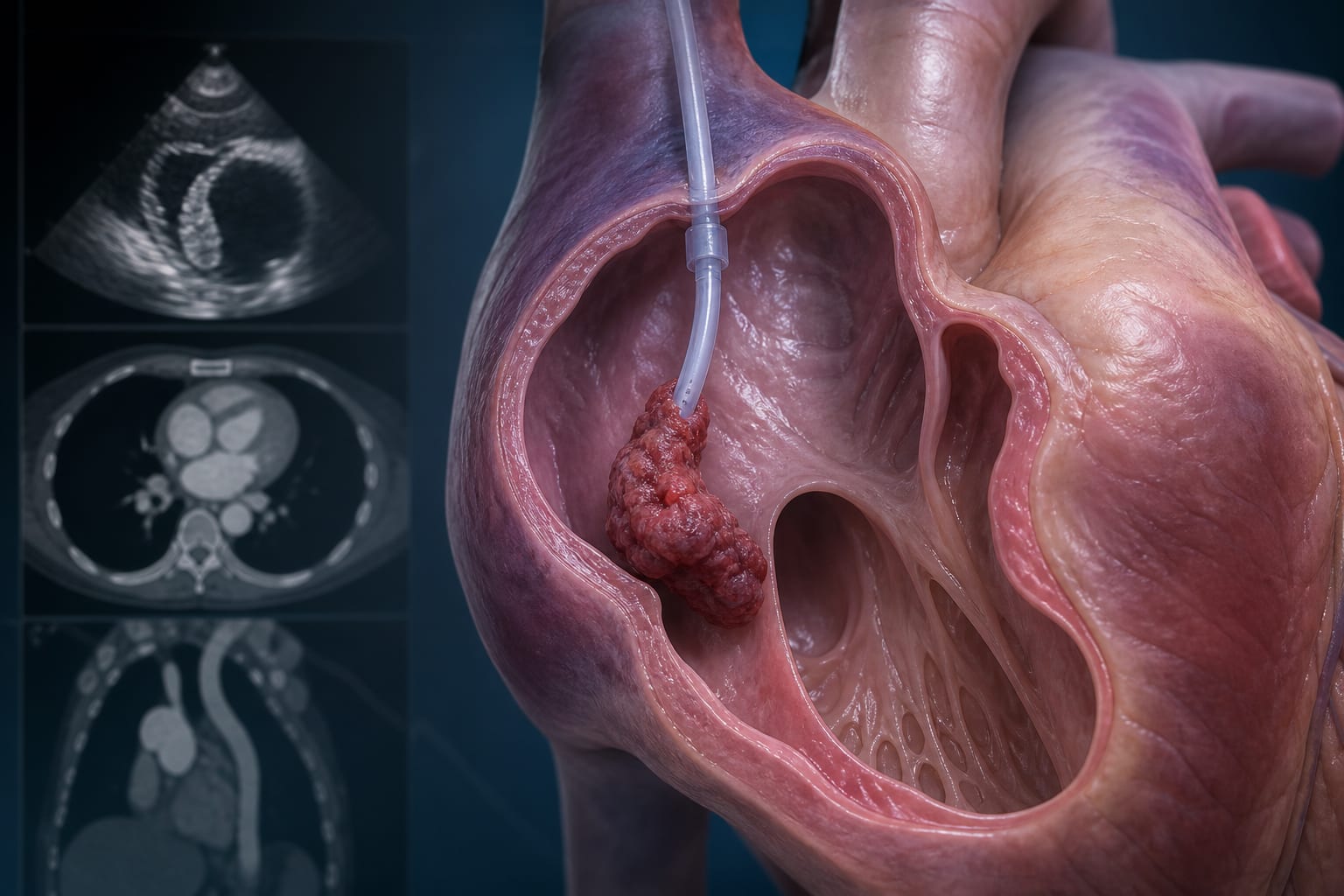
Complete thoracoscopic removal of a catheter-associated thrombus in the right atrium: a case study
By
Siqi He
Jilu Lang
Chuang Mei
Yuanxiang Wen
Zhifeng Xu
September 7, 2026
Clinical Scorecard: Complete thoracoscopic removal of a catheter-associated thrombus in the right atrium: a case study
At a Glance
Category Detail
Condition Catheter-related right atrial thrombus (CRAT) Key Mechanisms Formation of thrombus associated with totally implantable venous access ports (TIVAPs) used for chemotherapy. Target Population Patients with malignancies requiring chemotherapy and TIVAP placement. Care Setting Cardiovascular surgery department
Key Highlights
CRAT can be life-threatening and is a rare complication of TIVAPs. Anticoagulation therapy was ineffective in resolving the thrombus. Totally thoracoscopic beating-heart thrombectomy was performed successfully. Multimodality imaging was crucial for surgical planning. The patient had a favorable postoperative outcome. Guideline-Based Recommendations
Diagnosis
Use multimodality imaging (TTE, CT, MRI, TEE) to evaluate right atrial lesions. Management
Consider surgical intervention if anticoagulation fails and there is a risk of embolization. Monitoring & Follow-up
Regular imaging to assess thrombus size and response to treatment. Risks
Potential for embolization and disruption of tricuspid valve inflow. Patient & Prescribing Data
Breast cancer patients with TIVAPs experiencing thrombus formation.
Initial treatment with enoxaparin was ineffective; surgical intervention was necessary.
Clinical Best Practices
Employ strict bed rest to minimize thrombus embolization risk. Utilize a multidisciplinary approach for treatment planning. Ensure thorough imaging evaluation prior to surgical intervention. Related Resources & Content