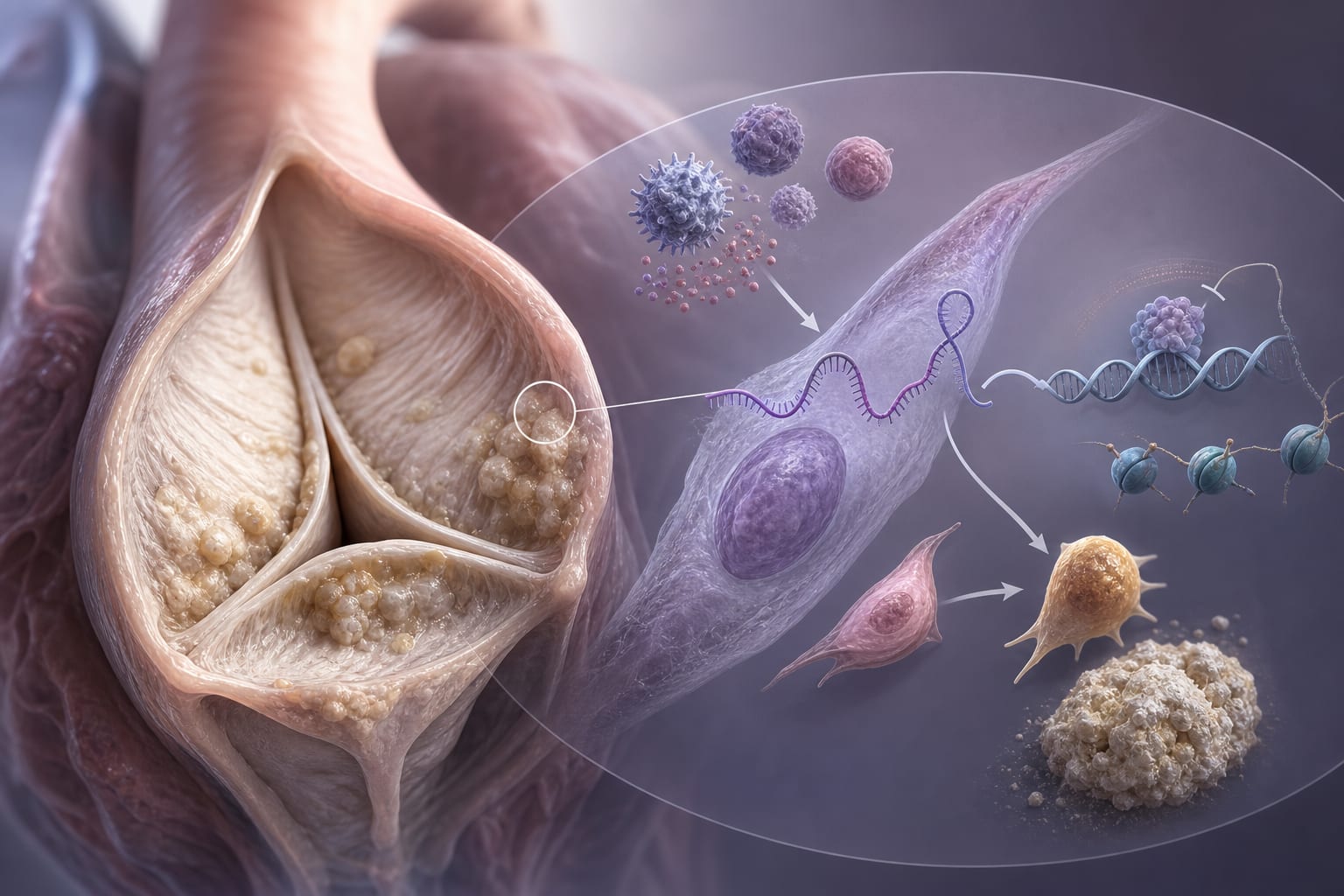
Long non-coding RNAs as molecular hubs integrating inflammatory and osteogenic pathways in calcific aortic valve disease
-
By
-
Juan Ignacio Muñoz-Manco
-
Annisa Mardianing Utami
-
Zhexi Li
-
Georg Nickenig
-
Mohammed Rabiul Hosen
-
July 8, 2026
-
Clinical Scorecard: Non-coding RNAs as Key Regulators Linking Inflammatory and Osteogenic Mechanisms in Calcific Aortic Valve Disease
At a Glance
| Category | Detail |
|---|
| Condition | Calcific Aortic Valve Disease (CAVD) |
| Key Mechanisms | Regulation of gene expression by long non-coding RNAs (lncRNAs) influencing inflammation and osteogenic differentiation. |
| Target Population | Aging population, particularly those over 75 years old. |
| Care Setting | Cardiovascular disease management and research. |
Key Highlights
- CAVD is a leading cause of morbidity and mortality in the aging population.
- Aortic stenosis is now recognized as an actively regulated disease rather than a passive degenerative process.
- LncRNAs are emerging as critical modulators of gene expression in CAVD.
- Current treatment options are limited to surgical or transcatheter valve replacement.
- Research is ongoing to explore lncRNAs as potential therapeutic targets.
Guideline-Based Recommendations
Diagnosis
- Investigate the specific lncRNA signature of CAVD.
Management
- Focus on lncRNA-based strategies for potential therapeutic interventions.
Monitoring & Follow-up
- Explore circulating lncRNAs as novel biomarkers for diagnostic and prognostic applications.
Risks
- CAVD poses a significant mortality risk, particularly in individuals over 75.
Patient & Prescribing Data
Individuals with calcific aortic valve disease, especially older adults.
No pharmacological therapies currently exist to halt or reverse disease progression.
Clinical Best Practices
- Elucidate the mechanisms by which lncRNAs regulate valvular interstitial cell fate.
- Address delivery and targeting challenges associated with lncRNA-based therapeutics.
Related Resources & Content