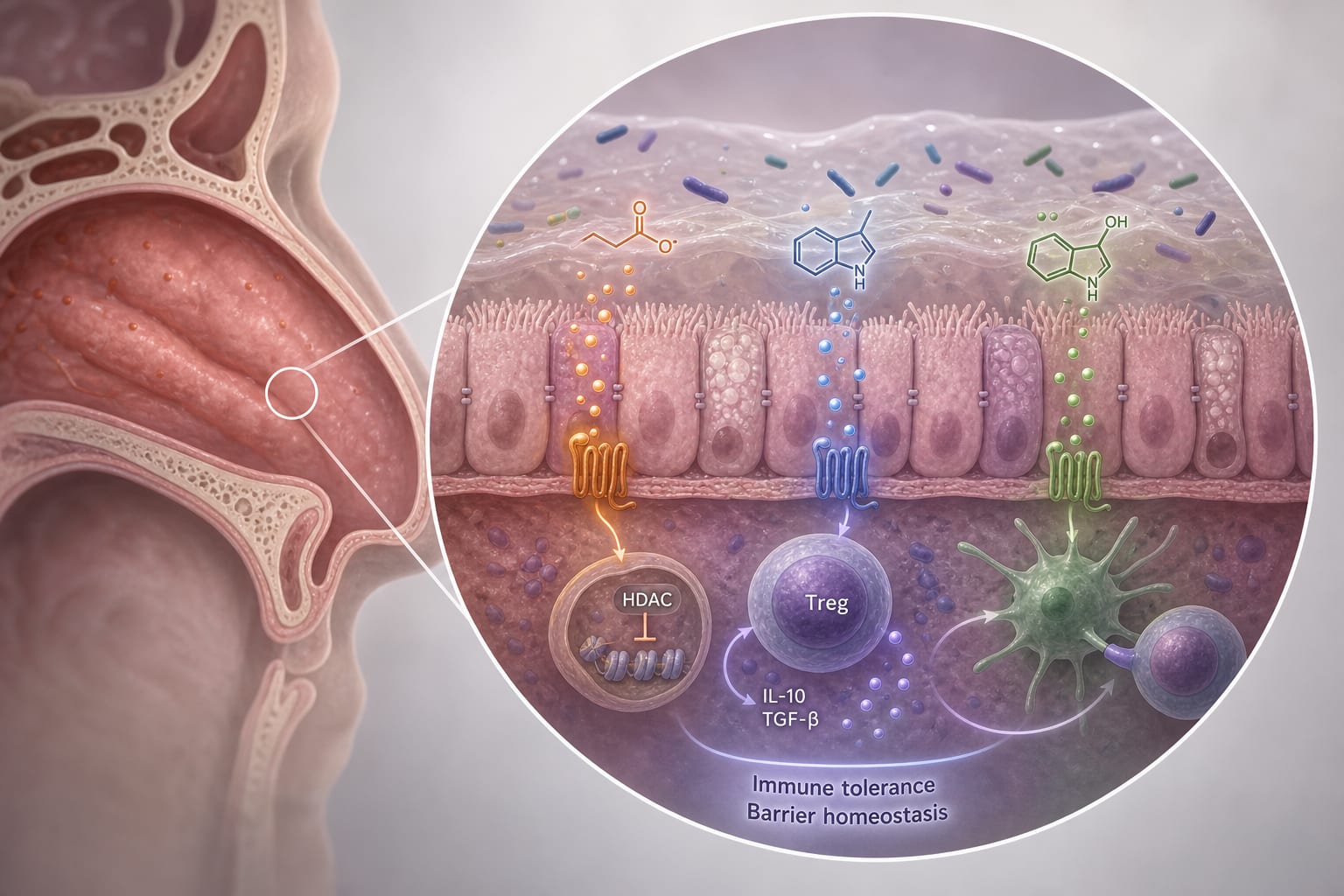
Microbial Metabolites as Crucial Modulators of Nasal Mucosal Immune Tolerance in Chronic Rhinosinusitis: Moving Beyond Dysbiosis
-
By
-
Guan-Jiang Huang
-
Zi-Qing Chen
-
Chao-Qing Long
-
Qi-Ping Luo
-
Zhi-Jun Fan
-
Biao-Qing Lu
-
June 16, 2026
Clinical Scorecard: Microbial Metabolites as Crucial Modulators of Nasal Mucosal Immune Tolerance in Chronic Rhinosinusitis: Moving Beyond Dysbiosis
At a Glance
| Category | Detail |
|---|
| Condition | |
| Key Mechanisms | Microbial metabolites are suggested to modulate immune responses through specific receptor signaling pathways. |
| Target Population | |
| Care Setting | |
Key Highlights
- CRS affects approximately 11% of adults globally.
- Microbial metabolites, rather than microbial identity, are key immunological mediators.
- Postbiotic supplementation is proposed as a therapeutic strategy, pending further evidence.
- CRSwNP is driven by type 2 inflammation, while CRSsNP exhibits type 1 or type 3 inflammation.
- Loss of nasal mucosal immune tolerance is a defining feature of CRS.
Guideline-Based Recommendations
Diagnosis
- CRS is diagnosed based on persistent symptomatic inflammation lasting at least 12 weeks.
Management
- Current management includes corticosteroids, functional endoscopic sinus surgery, and targeted biological therapies, as per clinical guidelines.
Monitoring & Follow-up
- Monitor for disease recurrence post-treatment.
Risks
- High recurrence rates of CRS despite treatment.
Patient & Prescribing Data
Adults with chronic rhinosinusitis, including CRSwNP and CRSsNP.
Consider endotype-specific metabolite candidate selection guided by individual patient metabolomics profiling.
Clinical Best Practices
- Focus on the metabolite-immune receptor axis for therapeutic strategies, as supported by current research.
- Evaluate the role of microbial metabolites in immune modulation, referencing specific studies.
Related Resources & Content