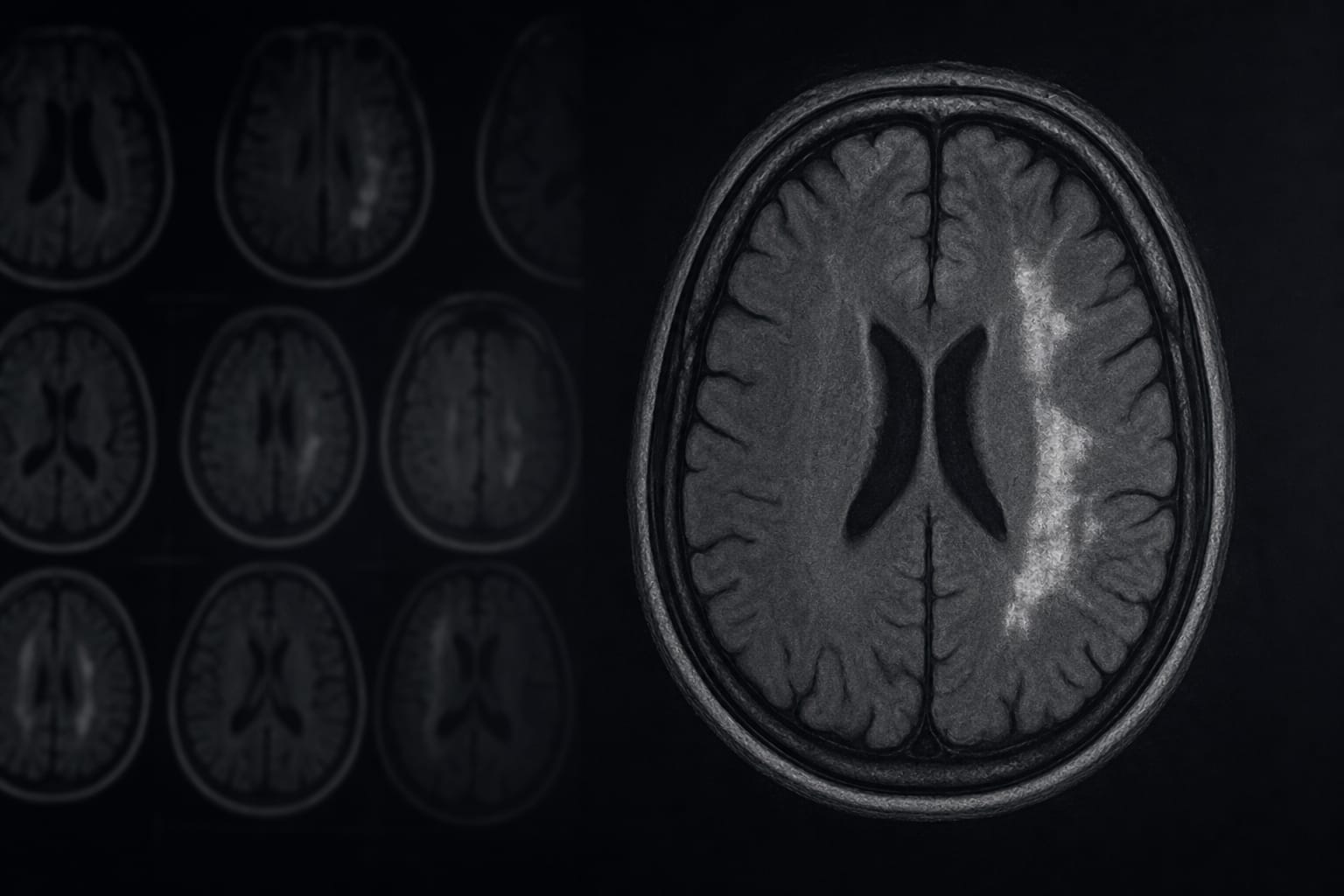
Case Report: Asymmetric recovery unmasking watershed infarction in a patient with ICU-acquired weakness
-
By
-
Bingqing Zhao
-
Meng Yu
-
Peining Zhou
-
Fan Li
-
Junfang Huang
-
Jing Ma
-
Zhaoxia Wang
-
June 24, 2026
-
Clinical Scorecard: Case Study: Uneven Recovery Revealing Watershed Infarction in a Patient with Weakness Acquired in the ICU
At a Glance
| Category | Detail |
|---|
| Condition | Intensive Care Unit-acquired weakness (ICUAW) |
| Key Mechanisms | Neuromuscular complications due to critical illness, prolonged mechanical ventilation, and exposure to neuromuscular blockade. |
| Target Population | Critically ill patients in the ICU with severe pneumonia and comorbidities. |
| Care Setting | Intensive Care Unit |
Key Highlights
- Asymmetrical recovery patterns can indicate underlying cerebrovascular issues.
- Electrophysiological studies and muscle biopsy are critical for diagnosis.
- A multimodal rehabilitation strategy can lead to significant functional improvement.
Guideline-Based Recommendations
Diagnosis
- Utilize electrophysiological examination and muscle biopsy for accurate diagnosis of ICUAW.
Management
- Implement a tailored rehabilitation strategy focusing on mitochondrial metabolism and active physical therapy.
Monitoring & Follow-up
- Maintain a high index of suspicion for asymmetric recovery patterns in ICUAW.
Risks
- ICUAW can mask underlying neurological complications, complicating diagnosis.
Patient & Prescribing Data
Critically ill patients with severe pneumonia and complex endocrine comorbidities.
A multimodal sedation and neuromuscular blockade regimen was used during mechanical ventilation.
Clinical Best Practices
- Monitor for signs of ICUAW in sedated or unconscious patients.
- Consider underlying neuromuscular diseases when diagnosing ICUAW.
Related Resources & Content