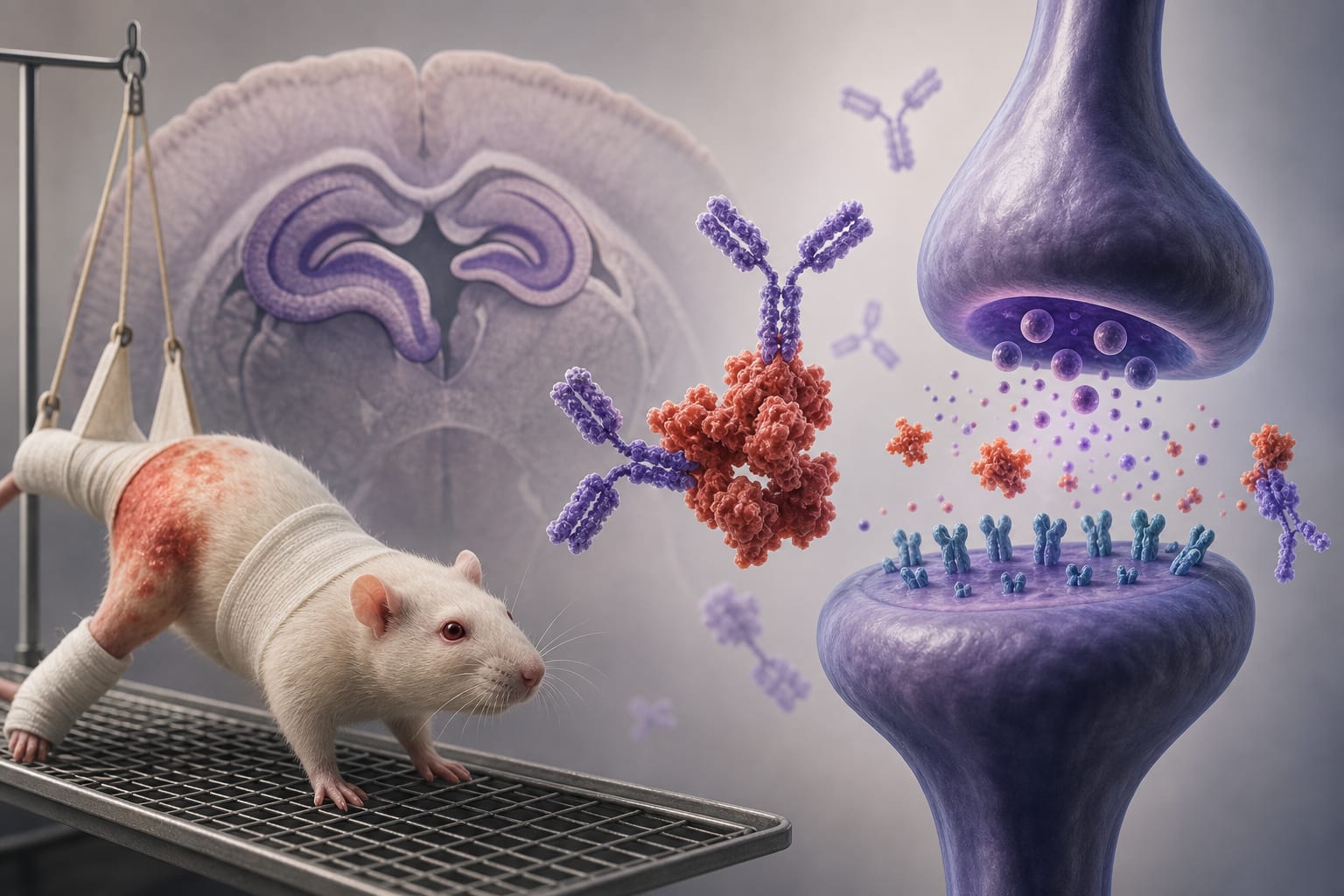
Immediate post-injury HMGB1 neutralization prevents synaptic dysfunction in burn and hindlimb unloaded rats
Clinical Scorecard: Early Neutralization of HMGB1 After Injury Mitigates Synaptic Impairment in Rats with Burns and Hindlimb Unloading
At a Glance
Category Detail
Condition Severe burns and neuroinflammation Key Mechanisms HMGB1-driven inflammation and synaptic dysfunction Target Population Adult male rats with >30% TBSA burns Care Setting Experimental animal study
Key Highlights
Severe burns combined with prolonged immobilization induce hyperinflammation and hippocampal synaptic dysfunction. HMGB1-driven inflammation is exacerbated by hindlimb unloading, leading to increased burn wound size and elevated inflammatory cytokines. Anti-HMGB1 neutralizing antibody treatment mitigates systemic inflammation and preserves hippocampal function. Guideline-Based Recommendations
Diagnosis
Evaluate burn severity based on total body surface area (TBSA) affected. Management
Consider anti-HMGB1 antibody treatment to mitigate inflammation and synaptic dysfunction. Monitoring & Follow-up
Assess hippocampal synaptic integrity through electrophysiological recordings. Risks
Prolonged immobilization may exacerbate burn-induced brain impairment. Patient & Prescribing Data
Rats with severe burns and hindlimb unloading
Anti-HMGB1 antibody treatment showed potential in restoring synaptic function.
Clinical Best Practices
Implement early intervention strategies targeting HMGB1 to reduce neuroinflammation. Monitor for signs of cognitive deficits in burn patients. Related Resources & Content