Clinical Scorecard: Comparative Analysis of Obinutuzumab and Rituximab-Containing Chemotherapy in Patients with High-Tumor Burden Indolent B-Cell Lymphoma: A Real-World Study
At a Glance
Category
Detail
Condition
High-tumor burden indolent B-cell lymphoma (follicular lymphoma and marginal zone lymphoma)
Key Mechanisms
Obinutuzumab is a type II anti-CD20 monoclonal antibody designed for enhanced antibody-dependent cellular cytotoxicity.
Target Population
Patients with previously untreated follicular lymphoma or marginal zone lymphoma with high-tumor burden.
Care Setting
Retrospective analysis at the First Hospital of Jilin University.
Key Highlights
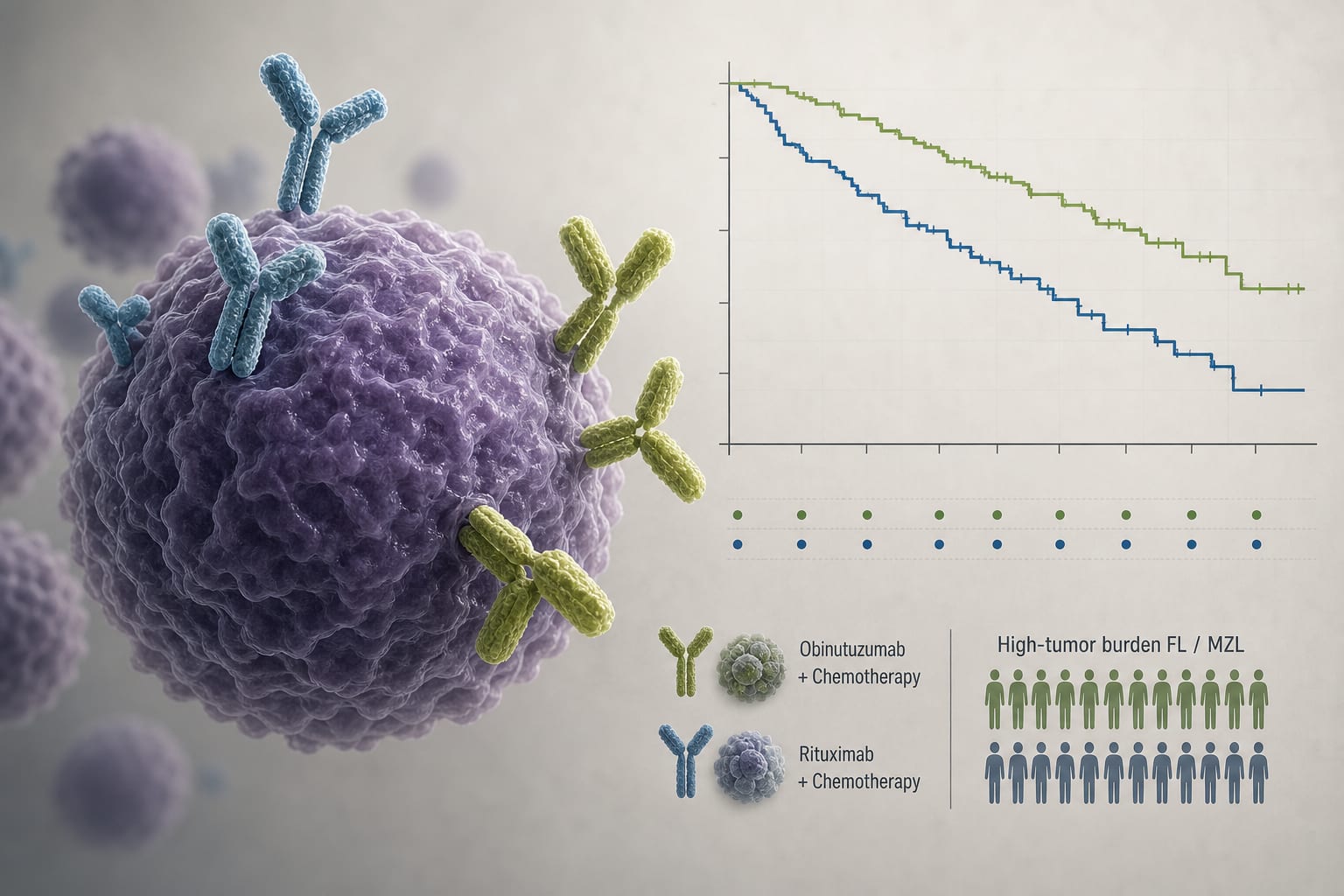
Obinutuzumab group showed a higher complete response rate (82.6% vs. 54.3%, p=0.014).
Superior 3-year progression-free survival (81.4% vs. 62.1%, p=0.0026) in the obinutuzumab group.
3-year overall survival was significantly better in the obinutuzumab group (99.0% vs. 87.3%, p=0.004).
Lower incidence of progression of disease within 24 months (13.0% vs. 24.5%, p=0.046) in the obinutuzumab group.
Safety profiles were similar between obinutuzumab and rituximab groups.
Guideline-Based Recommendations
Diagnosis
Histologically confirmed diagnosis of FL grade 1-3a and MZL according to WHO classification.
Assessment of high tumor burden using GELF criteria.
Management
First-line or relapsed/refractory treatment with obinutuzumab- or rituximab-based chemotherapy.
Monitoring & Follow-up
Response assessment at mid-induction and end of induction.
Risks
Rituximab-based treatment identified as an independent risk factor for inferior overall survival (HR 9.6, p=0.026).
Patient & Prescribing Data
186 patients with high-tumor burden FL or MZL.
Obinutuzumab-based chemotherapy associated with improved efficacy outcomes compared to rituximab-based chemotherapy.
Clinical Best Practices
Utilize GELF criteria for defining high tumor burden in FL and MZL.
Consider obinutuzumab as a preferred treatment option for high-risk patients.