A bioelectromagnetic hypothesis of chronic primary pain: from thalamocortical dysrhythmia to the consciousness-brain interface - Scorecard - MDSpire
Advertisement
A Bioelectromagnetic Perspective on Chronic Primary Pain: Exploring the Link Between Thalamocortical Dysrhythmia and the Consciousness-Brain Connection
Clinical Scorecard: A Bioelectromagnetic Perspective on Chronic Primary Pain: Exploring the Link Between Thalamocortical Dysrhythmia and the Consciousness-Brain Connection
At a Glance
Category
Detail
Condition
Key Mechanisms
Disruption of bioelectromagnetic coherence at the interface of consciousness and neural tissue (source needed).
Target Population
Care Setting
Key Highlights
Chronic primary pain is recognized as a disease in ICD-11.
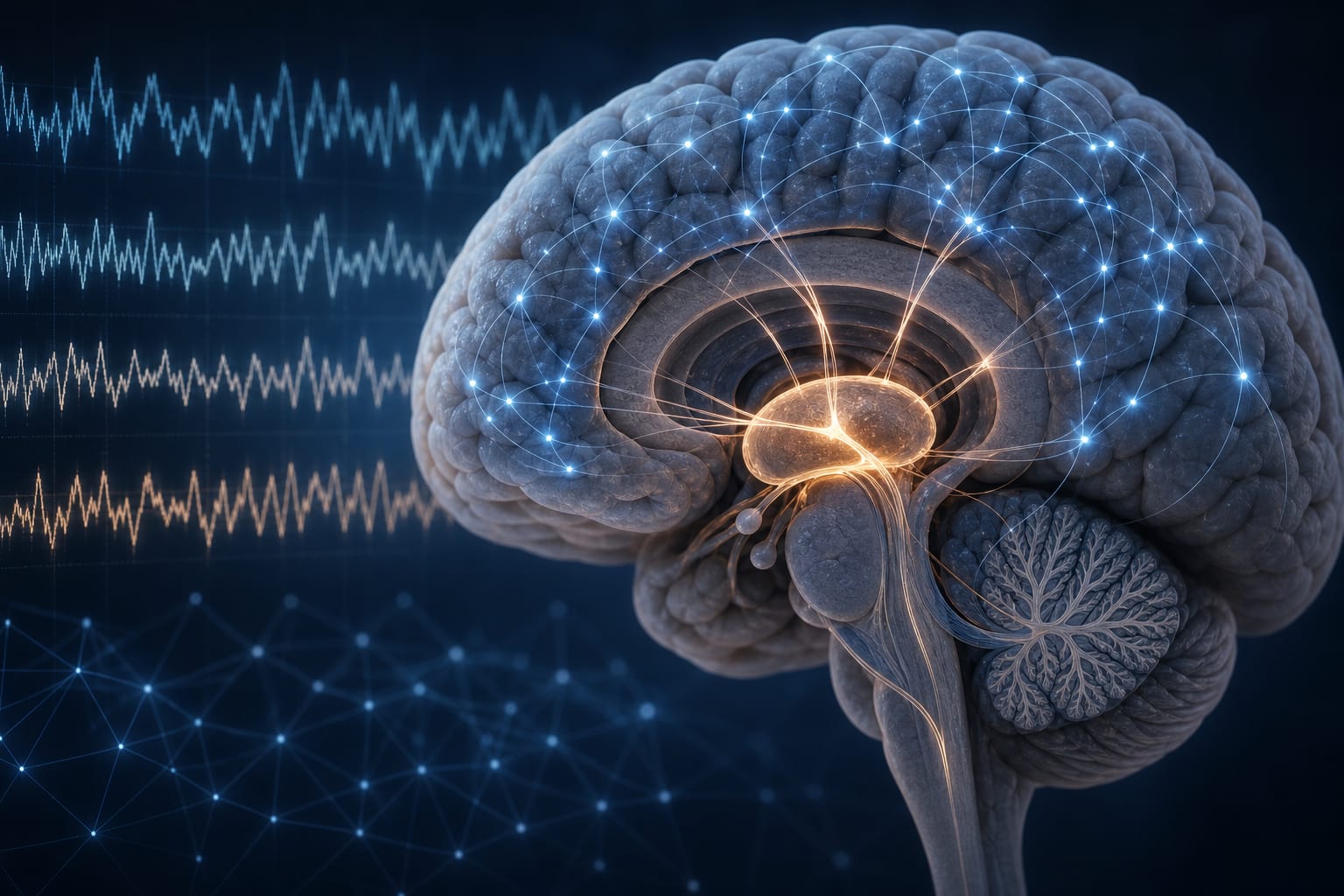
Thalamocortical dysrhythmia linked to chronic pain documented via magnetoencephalography.
Heart rate variability abnormalities found in chronic pain populations.
Photobiomodulation shows efficacy in treating chronic pain (source needed).