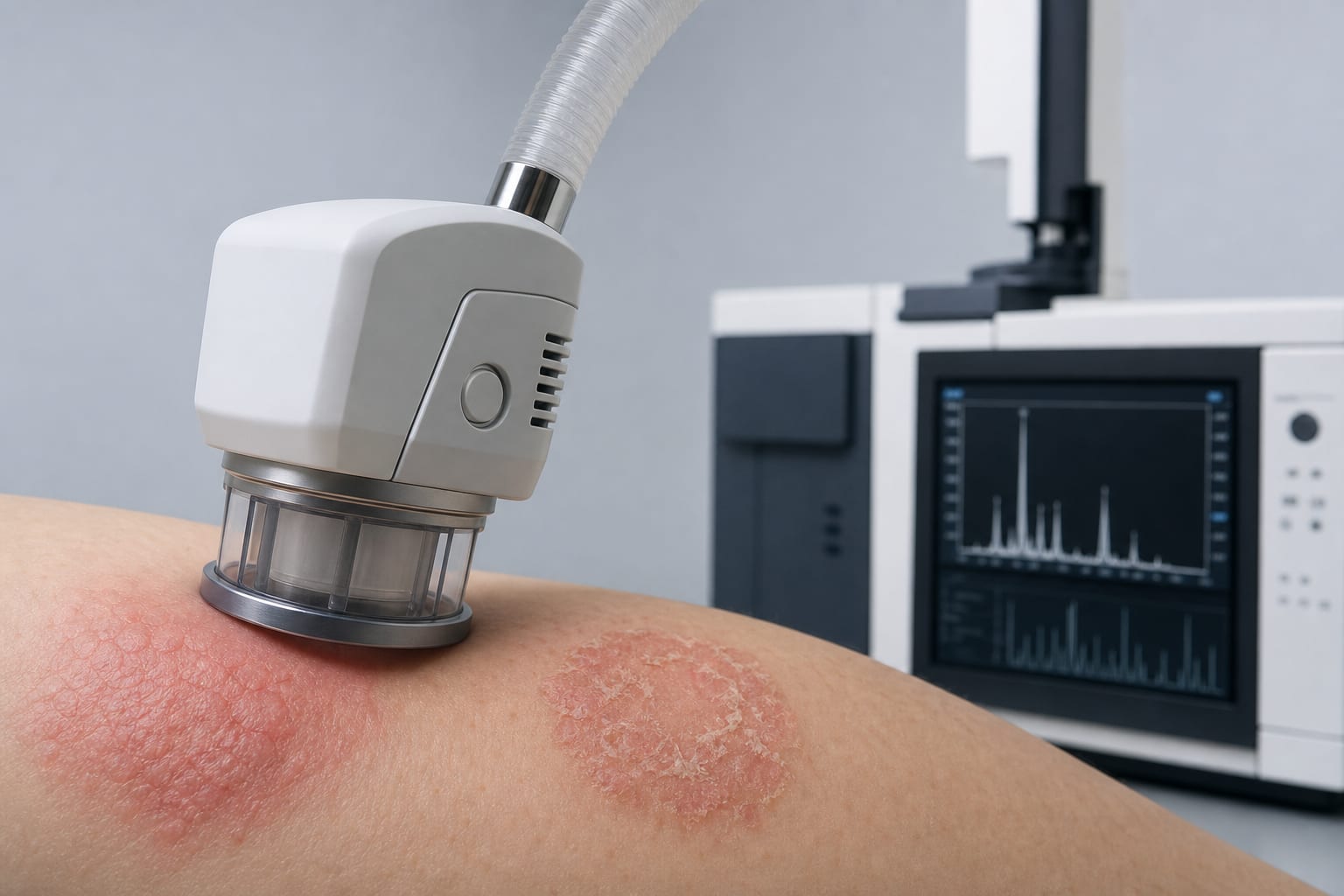
Differentiating superficial fungal infection from eczema using a heated dynamic-headspace skin VOC sampler: a hypothesis
-
By
-
Janmesh D. Patel
-
Pooja Shet
-
Mitchell M. McCartney
-
Sara Dahle
-
Apra Sood
-
Cristina E. Davis
-
Rivkah Isseroff
-
June 23, 2026
-
Clinical Scorecard: Distinguishing Superficial Fungal Infections from Eczema with a Heated Dynamic-Headspace Skin VOC Sampler: A Proposed Approach
At a Glance
| Category | Detail |
|---|
| Condition | Superficial Fungal Infections and Eczematous Dermatitis |
| Key Mechanisms | Differentiation based on unique skin volatile organic compound signatures. |
| Target Population | Patients with suspected superficial fungal infections or eczema. |
| Care Setting | Primary and urgent care environments. |
Key Highlights
- Superficial fungal infections and eczema exhibit overlapping clinical features, complicating diagnosis.
- Current diagnostic tests have limitations including operator variability and turnaround time.
- Heated dynamic headspace sampling may provide a rapid, non-invasive diagnostic method.
- Distinct VOC profiles are anticipated for fungal infections versus eczematous dermatitis.
- The proposed method aims to support confirmatory testing and inform early management strategies.
Guideline-Based Recommendations
Diagnosis
- Current confirmatory tests include potassium hydroxide microscopy, fungal culture, and PCR.
Management
- Avoid empirical treatment with topical steroids for undiagnosed tinea to prevent tinea incognito.
Monitoring & Follow-up
- Monitor for signs of antifungal resistance due to inappropriate treatment.
Risks
- Misdiagnosis can lead to inappropriate treatment and exacerbation of conditions.
Patient & Prescribing Data
Individuals presenting with skin lesions suggestive of fungal infections or eczema.
Empirical treatments may lead to complications if the underlying condition is misidentified.
Clinical Best Practices
- Implement rapid, non-invasive diagnostic tools at the point of care.
- Educate providers on the limitations of current diagnostic modalities.
Related Resources & Content