Cancer-associated fibroblast activation protein in Appalachian women with uterine cervix cancer
-
By
-
Denise Fabian
-
Morgan S. Levy
-
Dava W. Piecoro
-
Dana Napier
-
Rachel W. Miller
-
Charles A. Kunos
-
June 1, 2026
-
Clinical Scorecard: Activation of Fibroblast Activation Protein in Appalachian Women Diagnosed with Cervical Cancer
At a Glance
| Category | Detail |
|---|
| Condition | |
| Key Mechanisms | |
| Target Population | Women with persistent, recurrent, or metastatic uterine cervix cancer, particularly those in Appalachian regions with high incidence rates. |
| Care Setting | |
Key Highlights
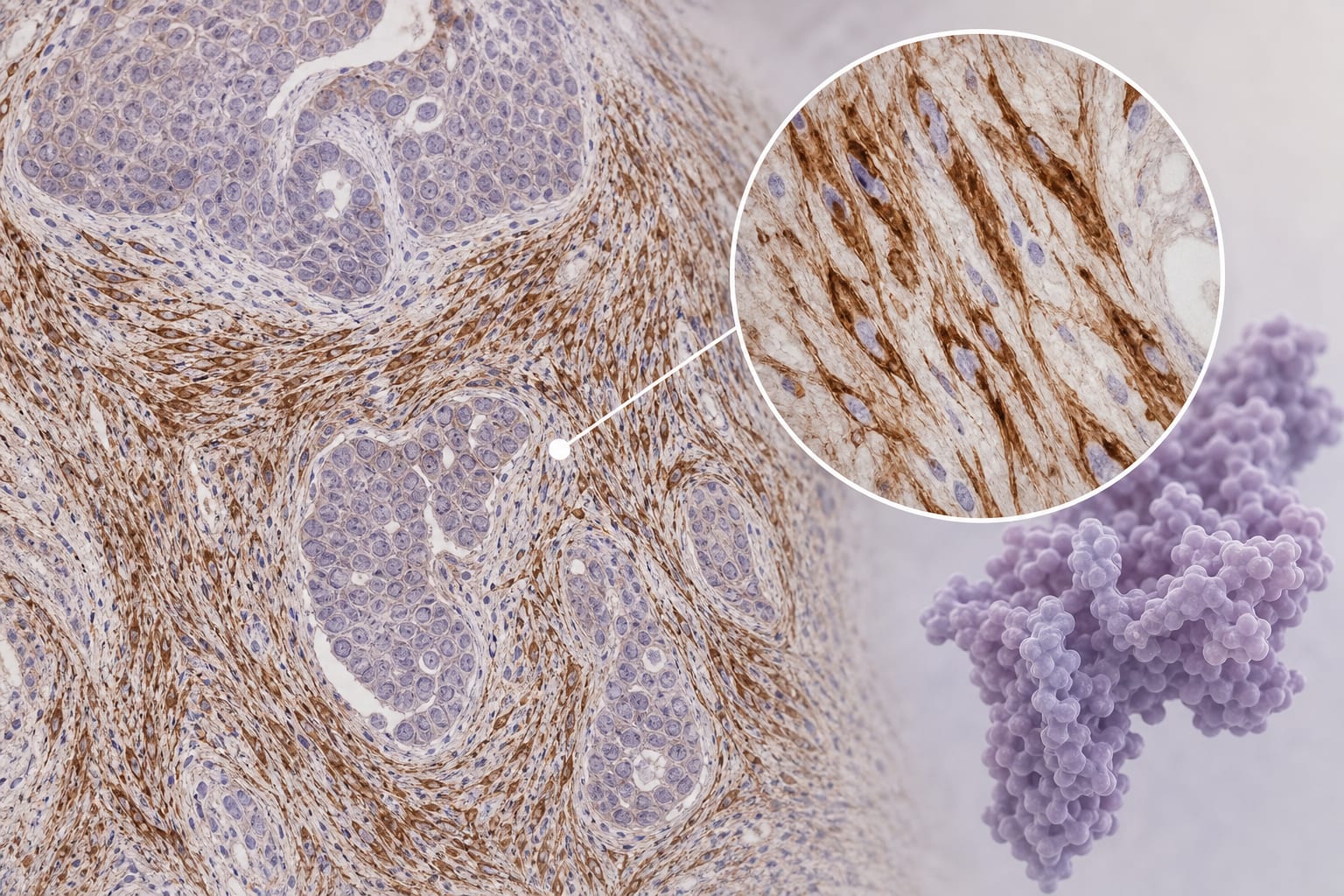
- 82% of uterine cervix cancer tumors expressed FAP, indicating potential for targeted therapies.
- 59% of tumors scored an immunoreactive score (IRS) of six or higher, correlating with treatment response.
- Stage IVB and metastatic tumors had the highest FAP expression, suggesting urgency for targeted interventions.
- Study supports the use of FAP as a biomarker for targeted radiopharmaceutical therapy, enhancing treatment personalization.
- Clinical trial NCT06710756 is underway for metastatic uterine cervix cancer patients, focusing on FAP expression.
Guideline-Based Recommendations
Diagnosis
- Assess FAP expression in uterine cervix cancer tumors using immunohistochemistry to guide treatment.
Management
- Consider [212Pb]Pb-PSV-359 therapy for patients with high FAP expression, as it may improve outcomes.
Monitoring & Follow-up
- Monitor FAP immunoreactivity as a potential biomarker for treatment response and adjust therapy accordingly.
Risks
- Patients with advanced-stage disease have a high risk of persistent or recurrent disease; proactive management is essential.
Patient & Prescribing Data
FAP expression may guide the selection of patients for targeted radiopharmaceutical therapies, improving treatment efficacy.
Clinical Best Practices
- Utilize automated immunohistochemical staining for accurate FAP assessment and ensure consistency in results.
- Incorporate FAP IRS scoring in clinical trial eligibility criteria to enhance patient selection.
Related Resources & Content