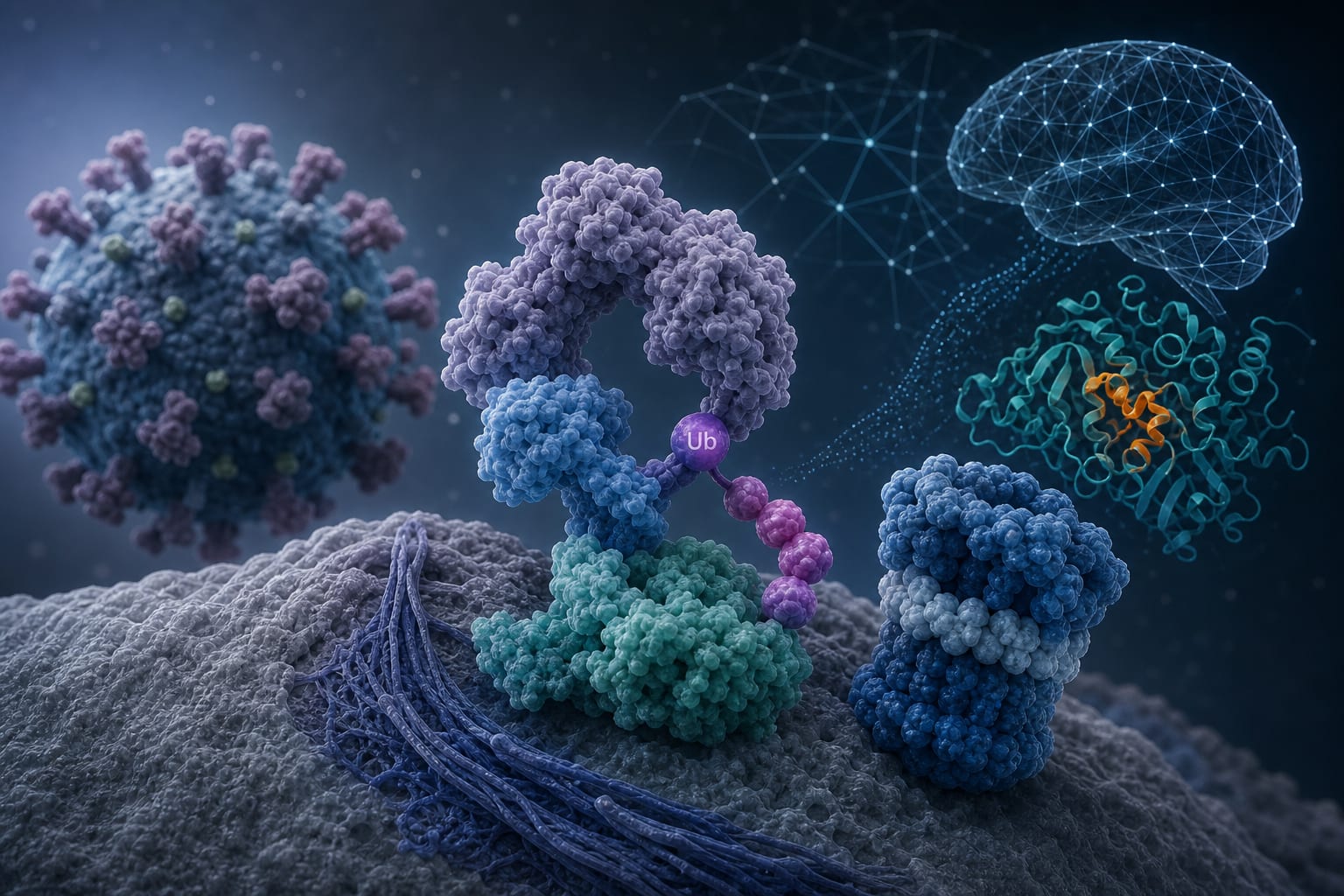
Opening the black box: insights into ubiquitin-mediated control of innate antiviral immunity and AI-enhanced therapeutics
By
Manasvi Jagannath
Ananya Sunderesan
Manshi Kumari Gupta
C. Sudandiradoss
June 15, 2026
Clinical Scorecard: Exploring Ubiquitin's Role in Regulating Innate Antiviral Immunity and the Potential of AI-Enhanced Therapeutics
At a Glance
Category Detail
Condition Viral Infections Key Mechanisms Ubiquitination in immune signalling and targeted degradation Target Population Individuals at risk of viral infections Care Setting Research and therapeutic development
Key Highlights
Ubiquitination is crucial for regulating antiviral responses and immune signalling. Viruses evade host immunity by manipulating ubiquitination processes. AI advancements enhance drug design by predicting protein interactions and structures. Generative models optimize antiviral peptides and targeted protein degradation. Explainable AI is needed to address transparency and validation issues in predictions. Guideline-Based Recommendations
Diagnosis
Utilize pattern recognition receptors to detect viral infections. Management
Explore the use of PROTACs and MGDs for targeted antiviral therapies. Monitoring & Follow-up
Assess the effectiveness of AI-generated models in therapeutic predictions. Risks
Address the 'Black Box' problem and potential inaccuracies in AI outputs. Patient & Prescribing Data
Individuals with viral infections requiring antiviral therapy
AI-driven approaches can enhance the design of targeted antiviral drugs.
Clinical Best Practices
Integrate structural modelling with AI to improve drug design. Utilize explainable AI to enhance the interpretability of therapeutic predictions. Ensure diverse and robust datasets for training AI models to reduce bias. Related Resources & Content