The effect of rehabilitation training based on brain-computer interface on limb function in stroke patients: a systematic review and meta-analyses - Scorecard - MDSpire
Advertisement
The effect of rehabilitation training based on brain-computer interface on limb function in stroke patients: a systematic review and meta-analyses
Clinical Scorecard: Impact of Brain-Computer Interface-Based Rehabilitation on Limb Function Recovery in Stroke Patients: A Systematic Review and Meta-Analysis
At a Glance
Category
Detail
Condition
Stroke
Key Mechanisms
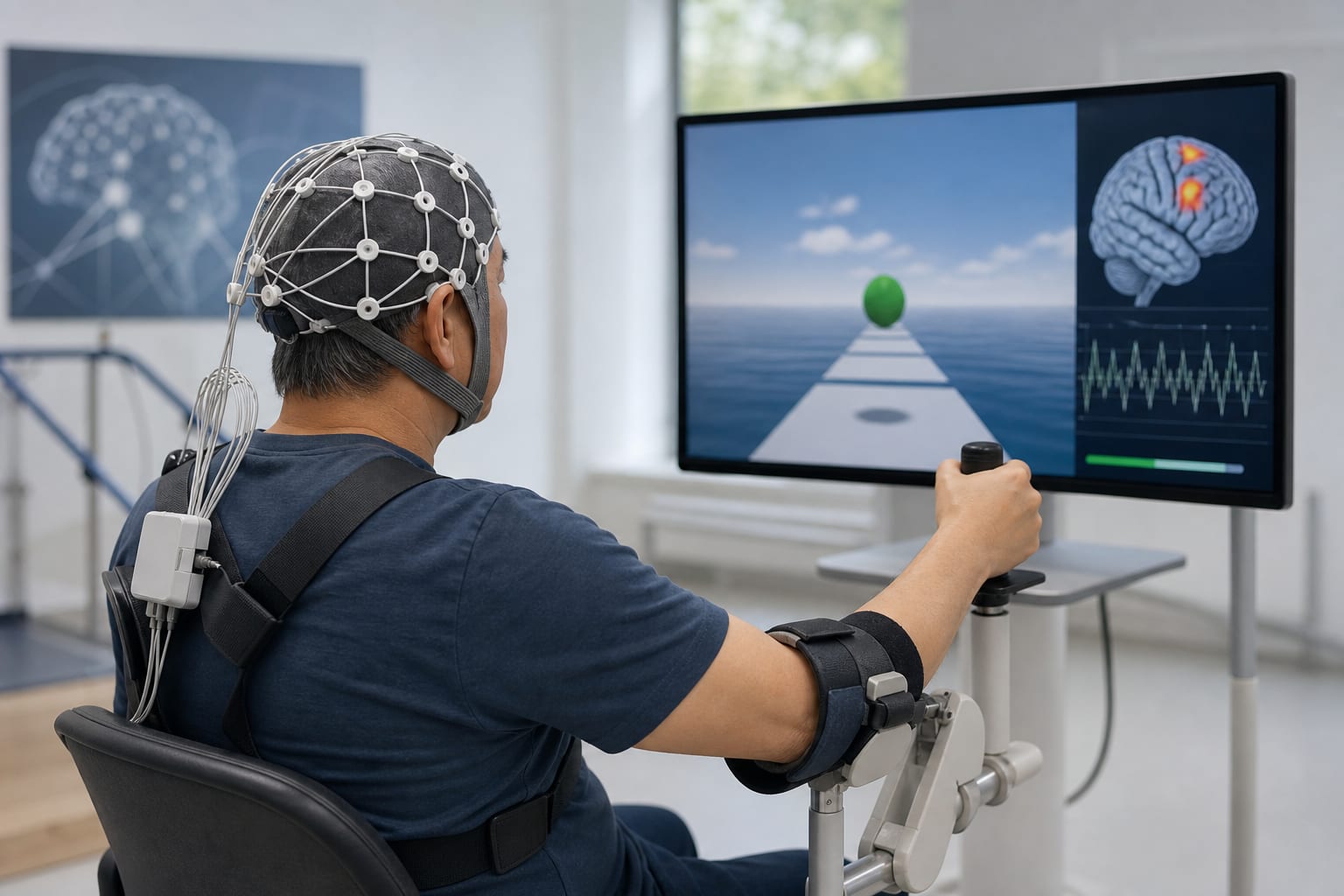
Disruption of neural pathways affecting motor function; BCI enhances neural plasticity and motor control.
Target Population
Patients recovering from stroke with upper and lower limb dysfunction.
Care Setting
Rehabilitation training utilizing brain-computer interfaces.
Key Highlights
BCI significantly improved upper limb function (FMA-UE) with WMD = 3.50.
BCI significantly improved lower limb function (FMA-LE) with WMD = 2.59.
Twenty-seven RCTs included in the meta-analysis.
Traditional rehabilitation methods have limitations in efficacy and engagement.
BCIs provide real-time feedback and enhance neural plasticity.
Guideline-Based Recommendations
Diagnosis
Assess motor dysfunction in stroke patients using standardized scales.
Management
Incorporate BCI-based rehabilitation alongside traditional methods for limb recovery.
Monitoring & Follow-up
Evaluate progress using Fugl-Meyer Assessment scores.
Risks
Consider potential variability in individual responses to BCI interventions.
Patient & Prescribing Data
Stroke patients with varying degrees of limb dysfunction.
BCI-based training may enhance recovery outcomes compared to traditional rehabilitation alone.
Clinical Best Practices
Utilize non-invasive BCI systems for safety and effectiveness.
Integrate BCI with physical and occupational therapy for comprehensive rehabilitation.
Monitor patient engagement and adjust interventions based on real-time feedback.