Metabolic dysregulation and biological age acceleration in Hashimoto’s thyroiditis: a cross-sectional study based on clinical biomarker aging indices and metabolomics - Scorecard - MDSpire
Advertisement
Metabolic dysregulation and biological age acceleration in Hashimoto’s thyroiditis: a cross-sectional study based on clinical biomarker aging indices and metabolomics
Clinical Scorecard: Metabolic Imbalance and Acceleration of Biological Age in Hashimoto’s Thyroiditis: A Cross-Sectional Analysis Utilizing Clinical Biomarker Aging Indices and Metabolomic Approaches
At a Glance
Category
Detail
Condition
Hashimoto’s Thyroiditis
Key Mechanisms
Thyroid autoantibody positivity, chronic lymphocytic inflammation, metabolic age acceleration.
Target Population
Patients with Hashimoto’s Thyroiditis and healthy controls.
Care Setting
Clinical research and validation cohorts.
Key Highlights
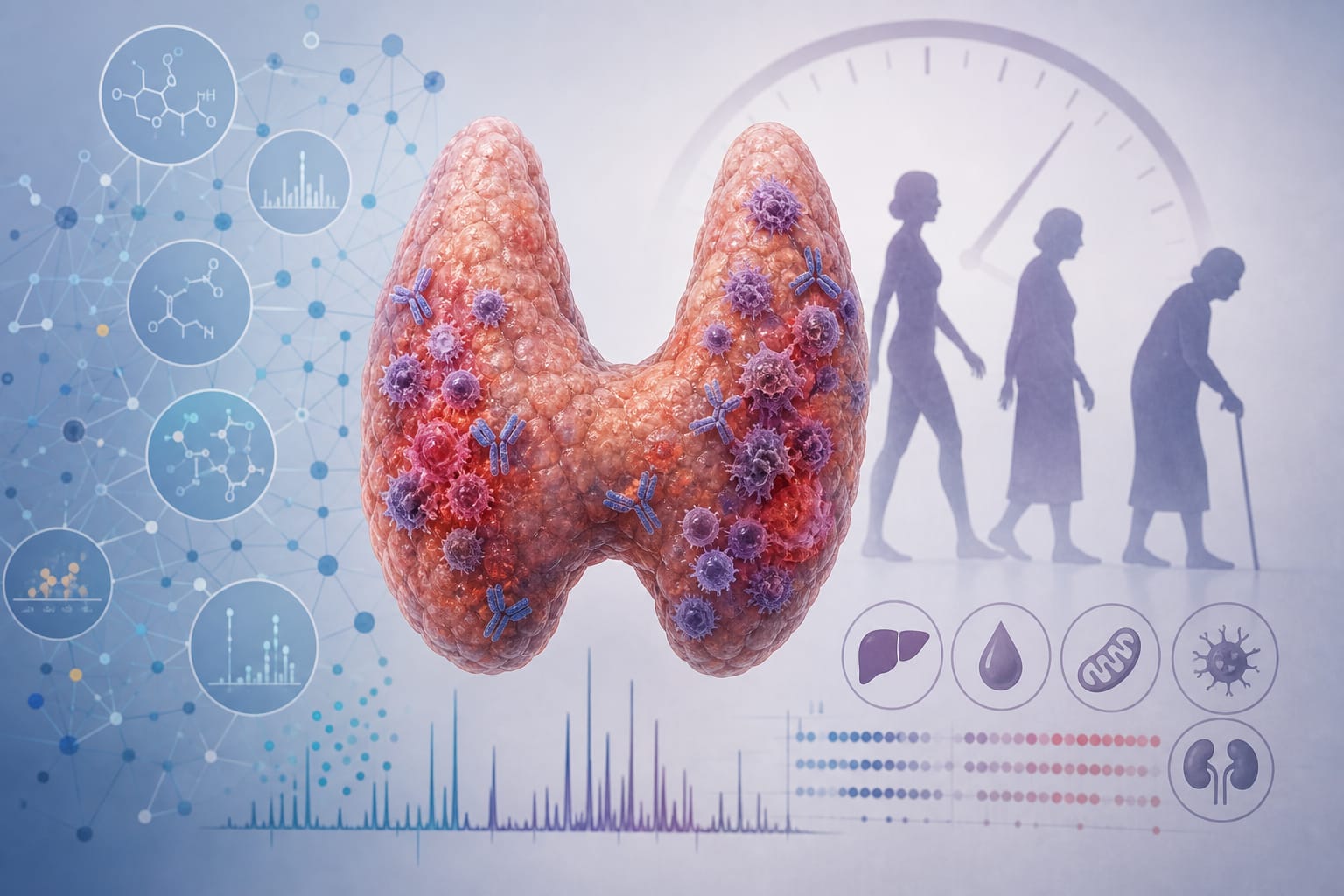
Hashimoto’s Thyroiditis is associated with higher biological age and metabolic age acceleration.
KDM biological age and PhenoAge indices were significantly higher in HT patients compared to healthy controls.
Metabolomics identified 18 candidate metabolites related to HT and aging.
Citric acid, LPC 20:0 sn-1, and SM 34:2 were prioritized as core candidate metabolites.
Guideline-Based Recommendations
Diagnosis
Utilize KDM biological age and PhenoAge for assessing biological age in HT patients.
Management
Monitor metabolic age and associated biomarkers in patients with Hashimoto’s Thyroiditis.
Monitoring & Follow-up
Regular assessment of thyroid function tests (FT3, FT4, TSH) and metabolic indices.
Risks
Increased biological age may correlate with chronic disease risk in HT patients.
Patient & Prescribing Data
Patients with Hashimoto’s Thyroiditis.
Focus on managing thyroid function and monitoring metabolic health.
Clinical Best Practices
Incorporate biological age assessments in routine evaluations of HT patients.
Utilize metabolomic profiling to identify metabolic dysregulations in HT.