Nanomedicine delivery systems remodel the immunosuppressive microenvironment of colorectal cancer: synergistic strategies and mechanisms of targeted immune checkpoint inhibitors - Scorecard - MDSpire
Advertisement
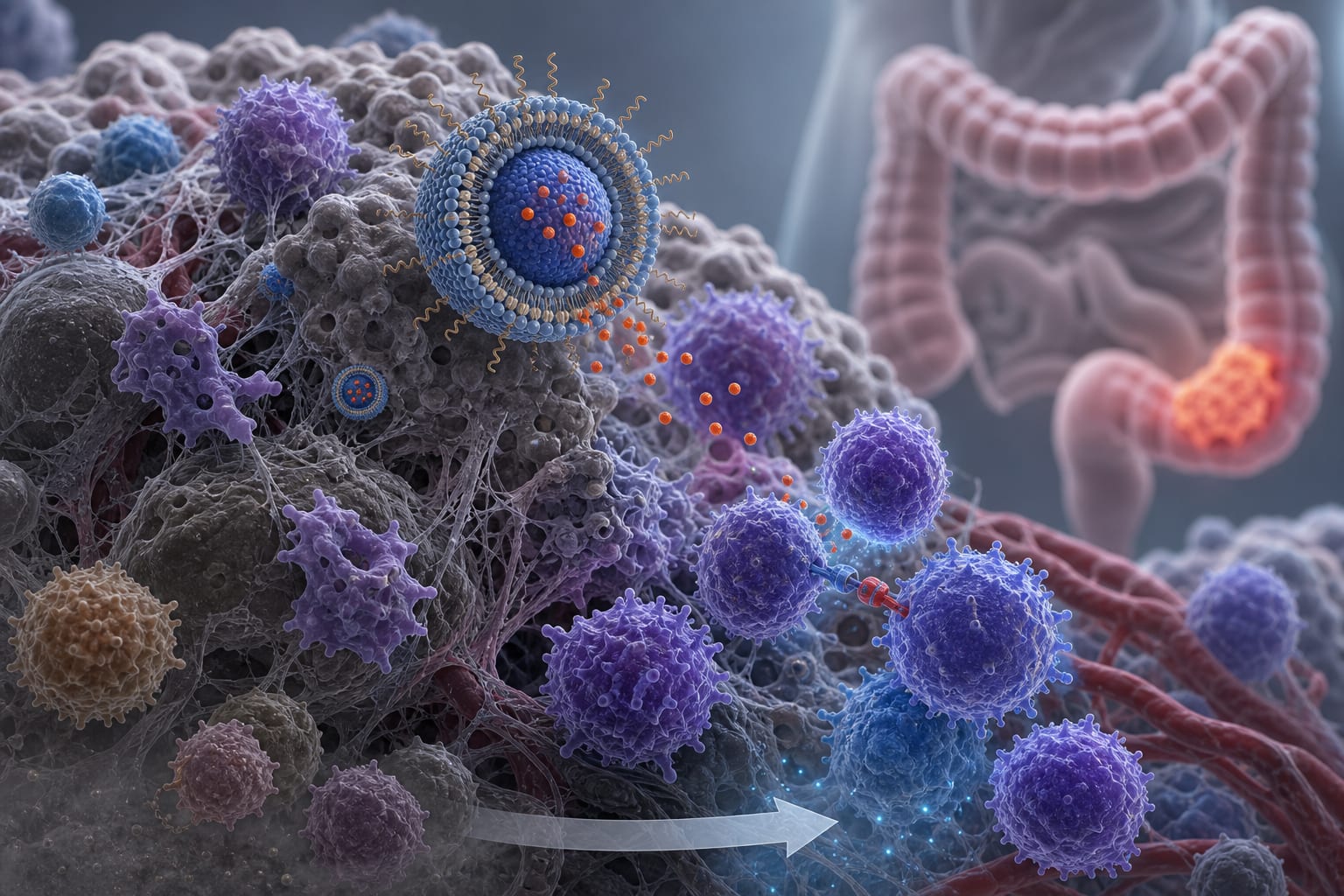
Nanomedicine delivery systems remodel the immunosuppressive microenvironment of colorectal cancer: synergistic strategies and mechanisms of targeted immune checkpoint inhibitors
Clinical Scorecard: Nanomedicine Approaches Alter the Immunosuppressive Microenvironment in Colorectal Cancer: Mechanisms and Synergistic Strategies with Targeted Immune Checkpoint Inhibitors
At a Glance
Category
Detail
Condition
Colorectal Cancer (CRC)
Key Mechanisms
Targeted immunotherapy and nanomedicine to overcome immunosuppressive tumor microenvironment.
Target Population
Patients with advanced-stage colorectal cancer.
Care Setting
Oncology and immunotherapy research.
Key Highlights
Colorectal cancer has a five-year survival rate of less than 15% in advanced stages.
Immunosuppressive cells in the tumor microenvironment hinder effective immunotherapy.
Nanomedicine can enhance drug delivery and modulate the immune response.
Targeting Tregs and reprogramming TAMs are key strategies for improving immunotherapy efficacy.
Combination therapies using nanocarriers show promise in reversing immunosuppression.
Guideline-Based Recommendations
Diagnosis
Assess the immunosuppressive characteristics of the tumor microenvironment.
Management
Consider targeted immunotherapy in combination with nanomedicine approaches.
Monitoring & Follow-up
Evaluate the density and functional status of immune cell populations in tumors.
Risks
Be aware of the limitations of conventional treatments in advanced colorectal cancer.
Patient & Prescribing Data
Patients with advanced colorectal cancer exhibiting immunosuppressive tumor microenvironment.
Nanomedicine strategies can improve the efficacy of immune checkpoint inhibitors.
Clinical Best Practices
Utilize nanocarriers for targeted delivery of immunomodulators.
Focus on depleting immunosuppressive cells to enhance anti-tumor immune responses.
Incorporate combination therapies to address the limitations of single-agent immunotherapy.