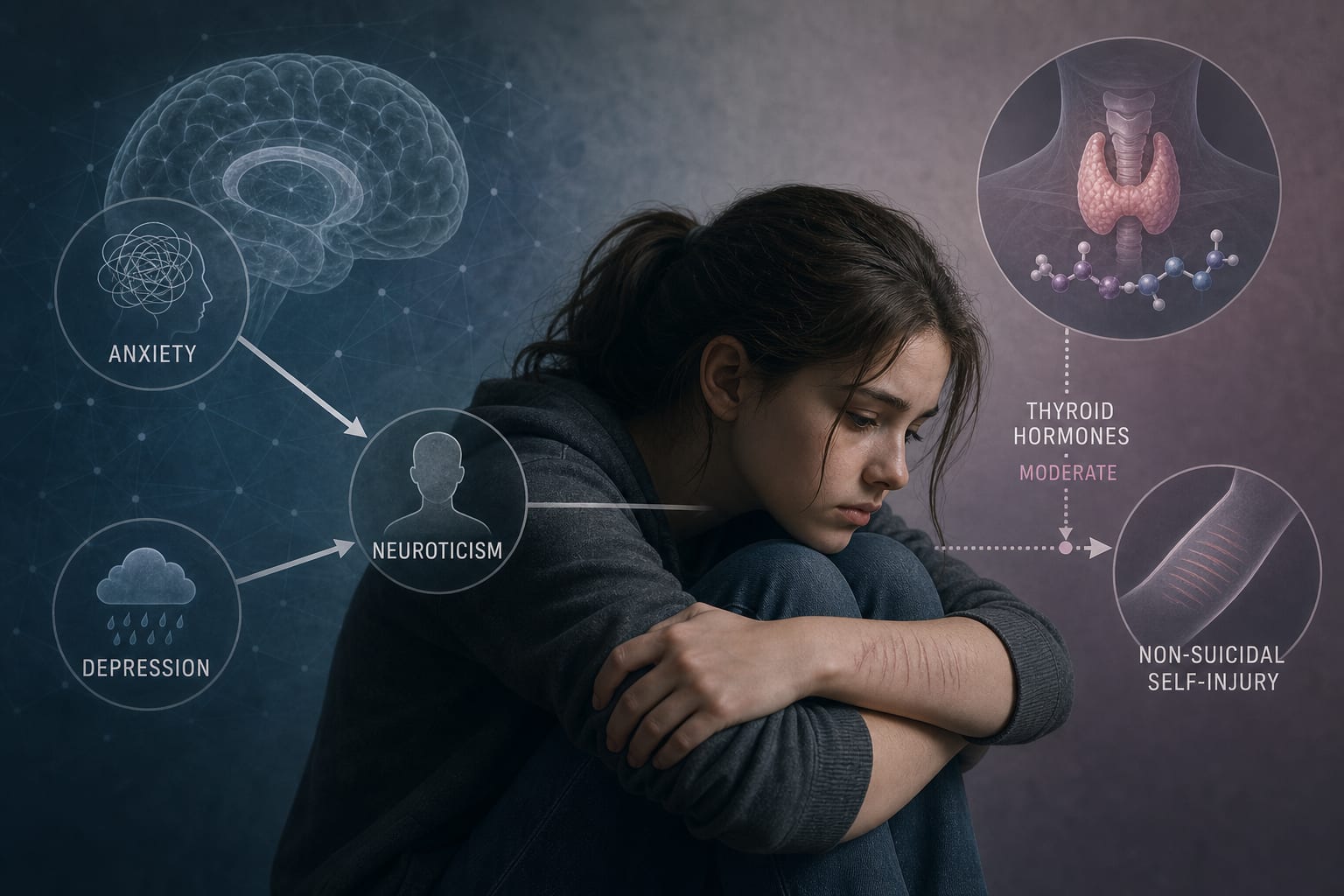
The Role of Neuroticism and Thyroid Hormones in Linking Anxiety and Depression to Non-Suicidal Self-Injury in Adolescents
By
Hui Ma
Jing Zhang
Tiandao Wang
Fang Huang
Lei Li
July 3, 2026
Clinical Scorecard: The Role of Neuroticism and Thyroid Hormones in Linking Anxiety and Depression to Non-Suicidal Self-Injury in Adolescents
At a Glance
Category Detail
Condition Non-Suicidal Self-Injury (NSSI) Key Mechanisms Neuroticism mediates the relationship between negative emotions and NSSI; thyroid hormones moderate this pathway. Target Population Adolescents aged 12–22 years exhibiting NSSI behaviors. Care Setting Psychiatric and psychological assessment settings.
Key Highlights
Neuroticism fully mediates the association between anxiety and NSSI. TT3 and FT3 positively moderate the depression-NSSI relationship. TSH negatively moderates the depression-NSSI relationship, particularly in high-neuroticism individuals. NSSI prevalence is estimated at 17-18% in the general adolescent population. The study emphasizes the integration of psychological and neuroendocrine mechanisms in understanding NSSI. Guideline-Based Recommendations
Diagnosis
Assess depressive and anxiety symptoms using standardized scales (e.g., HAMD, HAMA). Evaluate personality traits, particularly neuroticism, using the Eysenck Personality Questionnaire. Management
Consider psychological interventions targeting neuroticism and emotional regulation. Monitor thyroid hormone levels in adolescents exhibiting NSSI behaviors. Monitoring & Follow-up
Regularly assess NSSI severity and emotional symptoms over time. Evaluate changes in thyroid hormone levels in relation to mood symptoms. Risks
High neuroticism is associated with increased risk of NSSI. Depressive and anxious moods are predictive of NSSI behaviors. Patient & Prescribing Data
Adolescents aged 12–22 years with NSSI behaviors.
Thyroid hormone levels may influence treatment approaches for adolescents with NSSI.
Clinical Best Practices
Incorporate assessments of neuroticism in evaluating adolescents at risk for NSSI. Utilize a multidisciplinary approach involving psychological and endocrinological assessments. Related Resources & Content