Influence of Stem Cell Factor 248 on ILC2 Gene Expression and Its Role in Mucosal Inflammation Associated with Allergic Asthma
By
Nobuhiro Asai
Grace K. Lombardo
Ramon Ocadiz-Ruiz
Yao Gu
Andrew J. Rasky
Dana S. Garcia
Angela J. Montoya
Sarita Montaño
Kazuma Yagi
Wendy Fonseca
July 2, 2026
Clinical Scorecard: Influence of Stem Cell Factor 248 on ILC2 Gene Expression and Its Role in Mucosal Inflammation Associated with Allergic Asthma
At a Glance
Category Detail
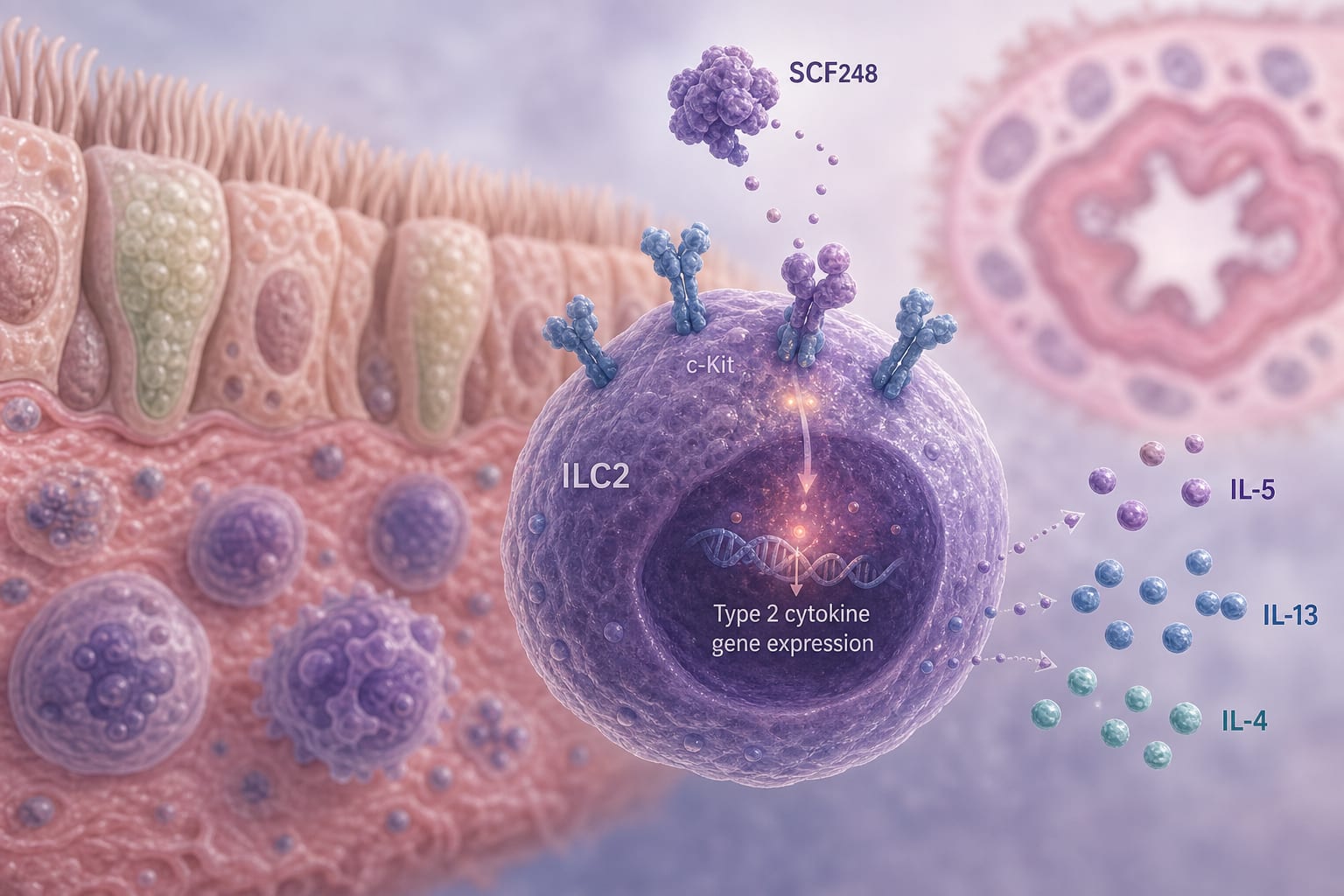
Condition Allergic Asthma Key Mechanisms SCF248 regulates ILC2 maturation and activation, influencing type 2 cytokine production. Target Population Patients with allergic asthma, particularly those with eosinophilic and severe disease. Care Setting Research on immunological mechanisms in allergic airway inflammation.
Key Highlights
SCF248 is upregulated in allergic inflammation and contributes to ILC2 activation. ILC2s are key mediators of type 2 airway inflammation in allergic asthma. SCF deficiency reduces type 2 cytokine production and lung inflammation. Elevated soluble SCF levels are found in asthma patients. SCF248 may serve as a therapeutic target for allergic asthma. Guideline-Based Recommendations
Diagnosis
Evaluate ILC2 populations in patients with allergic asthma. Management
Consider targeting SCF248 to modulate ILC2 activity in allergic asthma. Monitoring & Follow-up
Monitor type 2 cytokine levels in patients with allergic asthma. Risks
Increased ILC2 populations are associated with worse lung function and airway eosinophilia. Patient & Prescribing Data
Individuals diagnosed with allergic asthma, particularly those with severe forms.
SCF248 blockade may reduce allergic inflammation and improve respiratory function.
Clinical Best Practices
Assess the role of ILC2s in the pathophysiology of allergic asthma. Investigate SCF248 levels in patients to understand their allergic response. Utilize animal models to study the effects of SCF on ILC2 biology. Related Resources & Content