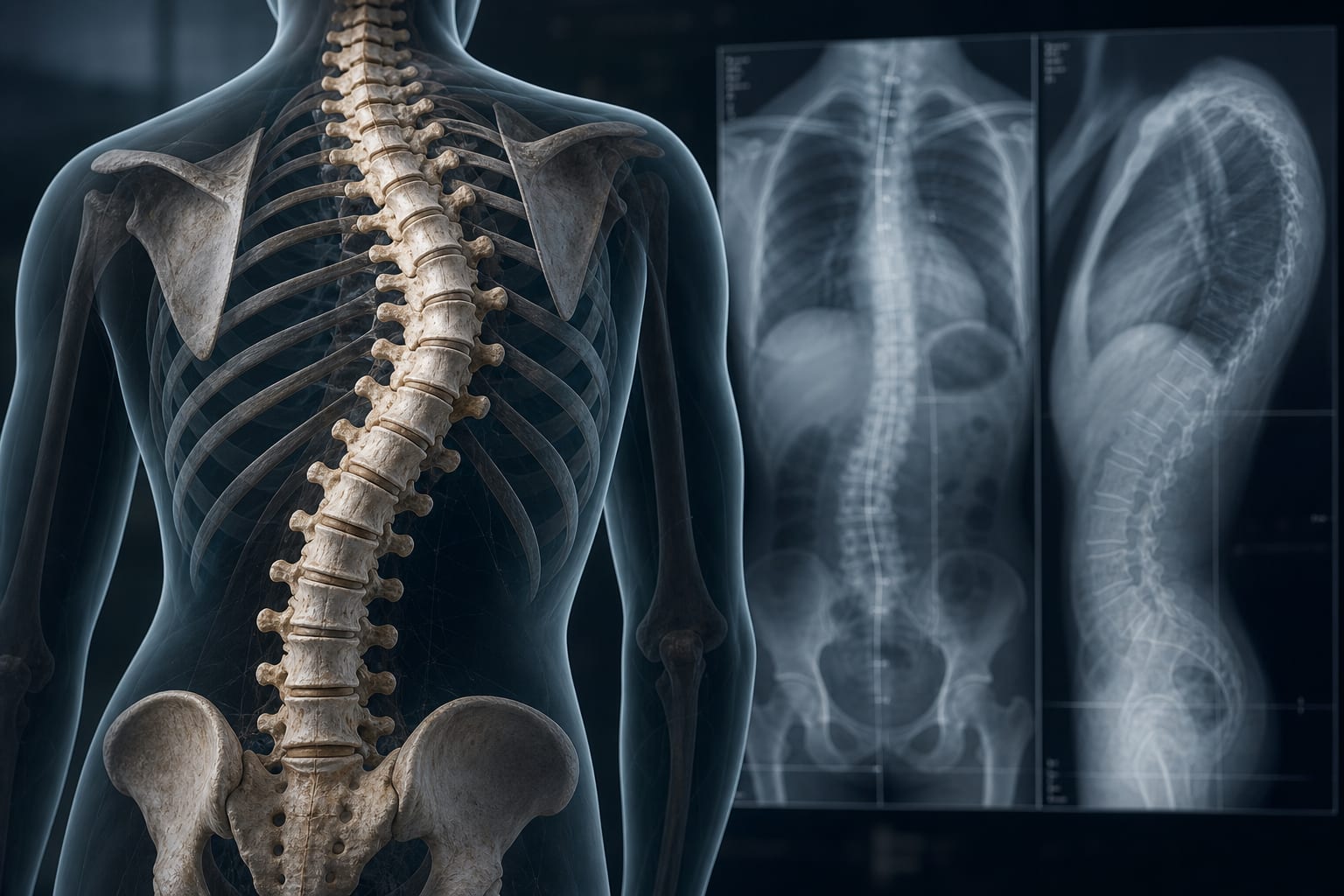
Managing Adult Degenerative Scoliosis: Diagnostic Difficulties, Pain Relief Strategies, and Surgical Considerations
-
By
-
Shuiwang Zhao
-
Jiaxin Liu
-
Bei Li
-
HaoLi Zhang
-
Rong Tian
-
Shenqiao Yang
-
Li Zhu
-
July 7, 2026
Clinical Scorecard: Managing Adult Degenerative Scoliosis: Diagnostic Difficulties, Pain Relief Strategies, and Surgical Considerations
At a Glance
| Category | Detail |
|---|
| Condition | Adult Degenerative Scoliosis (ADS) |
| Key Mechanisms | Asymmetric degeneration of intervertebral discs, facet joints, and supporting soft tissues leading to spinal deformity. |
| Target Population | Adults aged 18 years or older with coronal Cobb angle greater than 10°. |
| Care Setting | Multidisciplinary clinical management in spine practice. |
Key Highlights
- ADS is a progressive spinal deformity associated with pain and disability.
- Diagnosis can be complicated due to symptom overlap with other conditions.
- Management requires a multimodal approach to address chronic pain.
- Surgical options range from decompression to complex fusion procedures.
- Complications such as proximal junctional kyphosis and pseudarthrosis are significant considerations.
Guideline-Based Recommendations
Diagnosis
- Utilize standing full-spine radiographs and assess spinopelvic parameters.
Management
- Implement multimodal, longitudinal strategies for pain relief.
Monitoring & Follow-up
- Regularly evaluate functional status and symptom progression.
Risks
- Consider the increased complication risk associated with age and severity of deformity.
Patient & Prescribing Data
Adults with degenerative spinal changes and associated comorbidities.
Focus on symptom relief and maintenance of independence rather than maximal curve correction.
Clinical Best Practices
- Adopt a patient-centered, individualized approach to care.
- Prioritize accurate prognostic models and minimally invasive techniques.
- Engage in transparent shared decision-making with patients.
Related Resources & Content