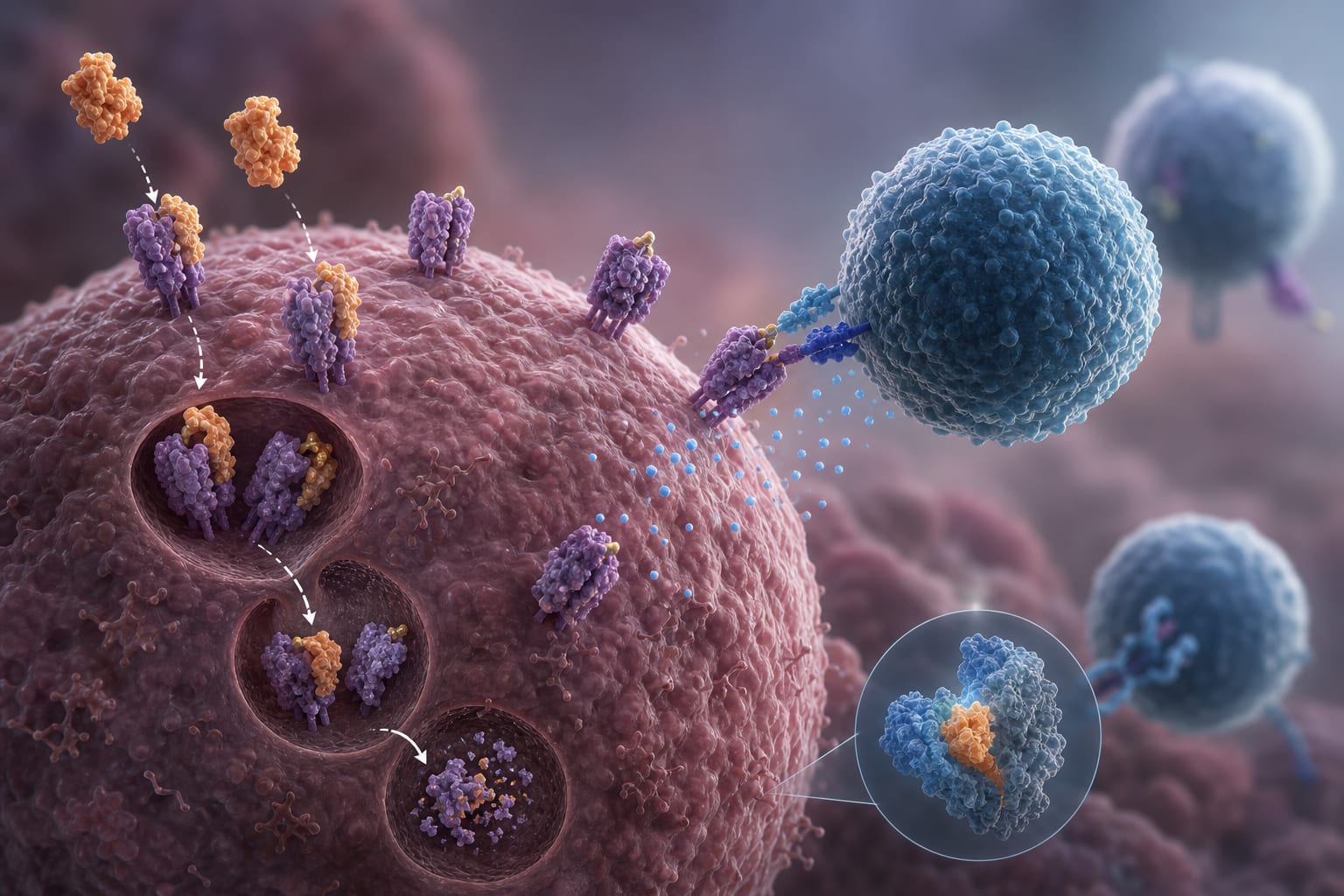
CRISPR Enables In Vivo CAR T Cell Production
In vivo gene editing strategy generates CAR T cells directly inside the body – sidestepping costly manufacturing
Clinical Scorecard: CRISPR Enables In Vivo CAR T Cell Production
At a Glance
| Category | Detail |
|---|
| Condition | Cancer (Leukemia, Myeloma, Solid Tumors) |
| Key Mechanisms | CRISPR-Cas9 and engineered AAV for targeted CAR gene insertion |
| Target Population | Patients requiring CAR T cell therapy |
| Care Setting | Clinical settings for cell therapy |
Key Highlights
- In vivo production of CAR T cells using a two-vector system
- Targeted insertion of CAR gene into TRAC locus for T cell-specific expression
- Demonstrated strong anti-tumor activity in humanized mouse models
- Potential to reduce costs and improve access to CAR T therapies
- Outperformed conventional viral approaches in efficacy
Guideline-Based Recommendations
Diagnosis
- Utilize humanized mouse models for preclinical evaluation of CAR T cell efficacy
Management
- Consider in vivo CAR T cell production for patients with limited access to ex vivo therapies
Monitoring & Follow-up
- Monitor CAR T cell proliferation and anti-tumor activity post-administration
Risks
- Evaluate potential off-target effects of CRISPR-Cas9 in clinical applications
Patient & Prescribing Data
Patients with hematological malignancies and solid tumors
In vivo CAR T cell production may simplify treatment protocols and enhance patient outcomes
Clinical Best Practices
- Employ targeted delivery systems for gene therapy to enhance specificity
- Ensure rigorous preclinical testing in humanized models before clinical trials
- Focus on patient safety and monitoring for adverse effects during therapy
References