A randomized controlled trial of telemedicine and e-health interventions for the management of oral complications in oncology patients undergoing antineoplastic therapy - Scorecard - MDSpire
Conexiant’s news site is now MDSpire News. Learn more
Advertisement
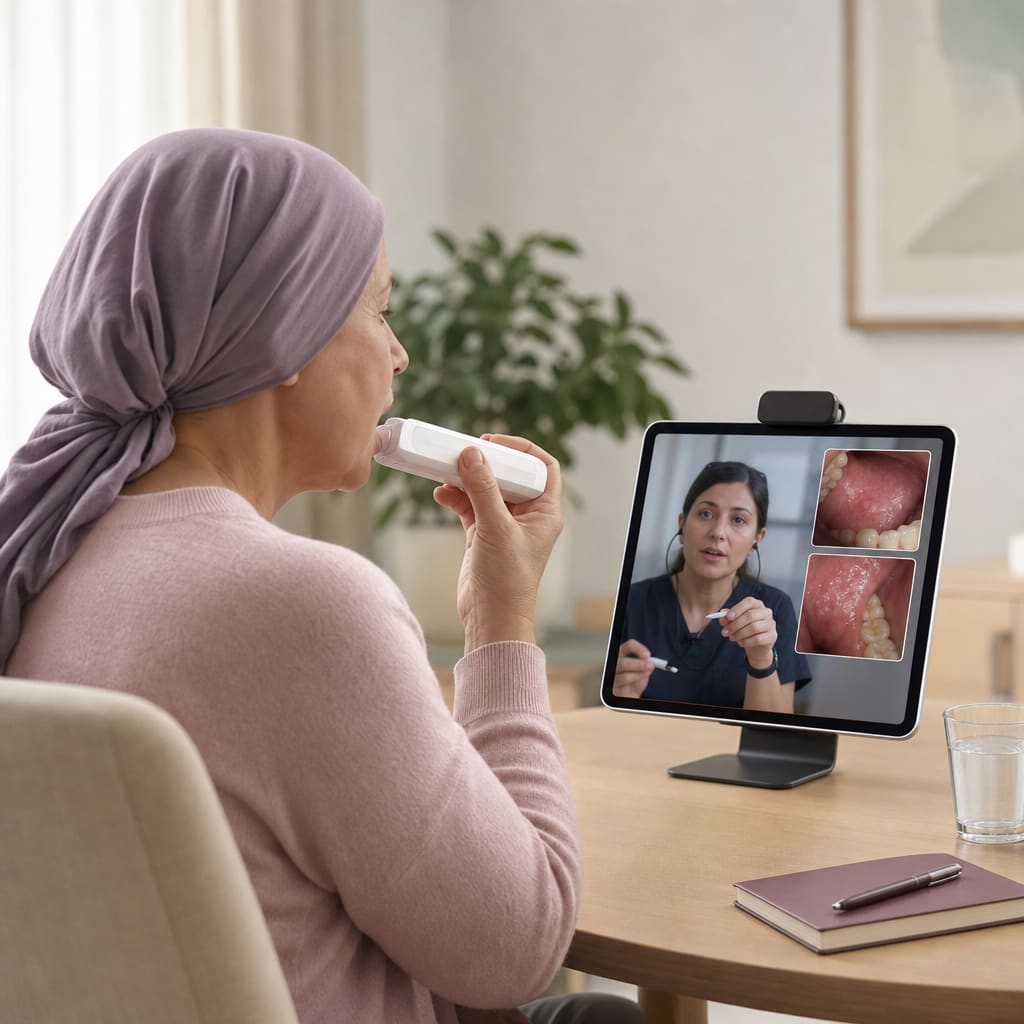
A Randomized Controlled Study on Telehealth and E-Health Strategies for Managing Oral Complications in Cancer Patients Receiving Antineoplastic Treatment
Clinical Scorecard: A Randomized Controlled Study on Telehealth and E-Health Strategies for Managing Oral Complications in Cancer Patients Receiving Antineoplastic Treatment
At a Glance
Category
Detail
Condition
Oral complications in cancer patients undergoing antineoplastic therapy
Key Mechanisms
Telemedicine and e-health applications for oral health monitoring
Target Population
Patients with solid tumors (breast, lung, colon) initiating chemotherapy
Care Setting
Oncology Hospital
Key Highlights
Telemedicine improved oral health outcomes compared to standard care.
Significant reduction in mucosal lesions and gingival bleeding in intervention group.
Higher tooth-brushing frequency observed in patients using telehealth.
Structured teledentistry monitoring enhances patient well-being during treatment.
Dentist involvement is crucial for managing oral health in oncology patients.
Guideline-Based Recommendations
Diagnosis
Systematic examination for oral complications before and during cancer therapy.
Management
Implement telehealth strategies for ongoing oral health assessment and management.
Monitoring & Follow-up
Regular clinical and radiographic assessments of oral health during treatment.
Risks
Increased susceptibility to infections and oral complications due to chemotherapy.
Patient & Prescribing Data
105 patients with breast, lung, or colon cancer
E-health applications facilitate early detection and self-care guidance.
Clinical Best Practices
Integrate dental care into oncology treatment plans.
Educate patients on managing oral health complications proactively.
Utilize telehealth for continuous monitoring and support.