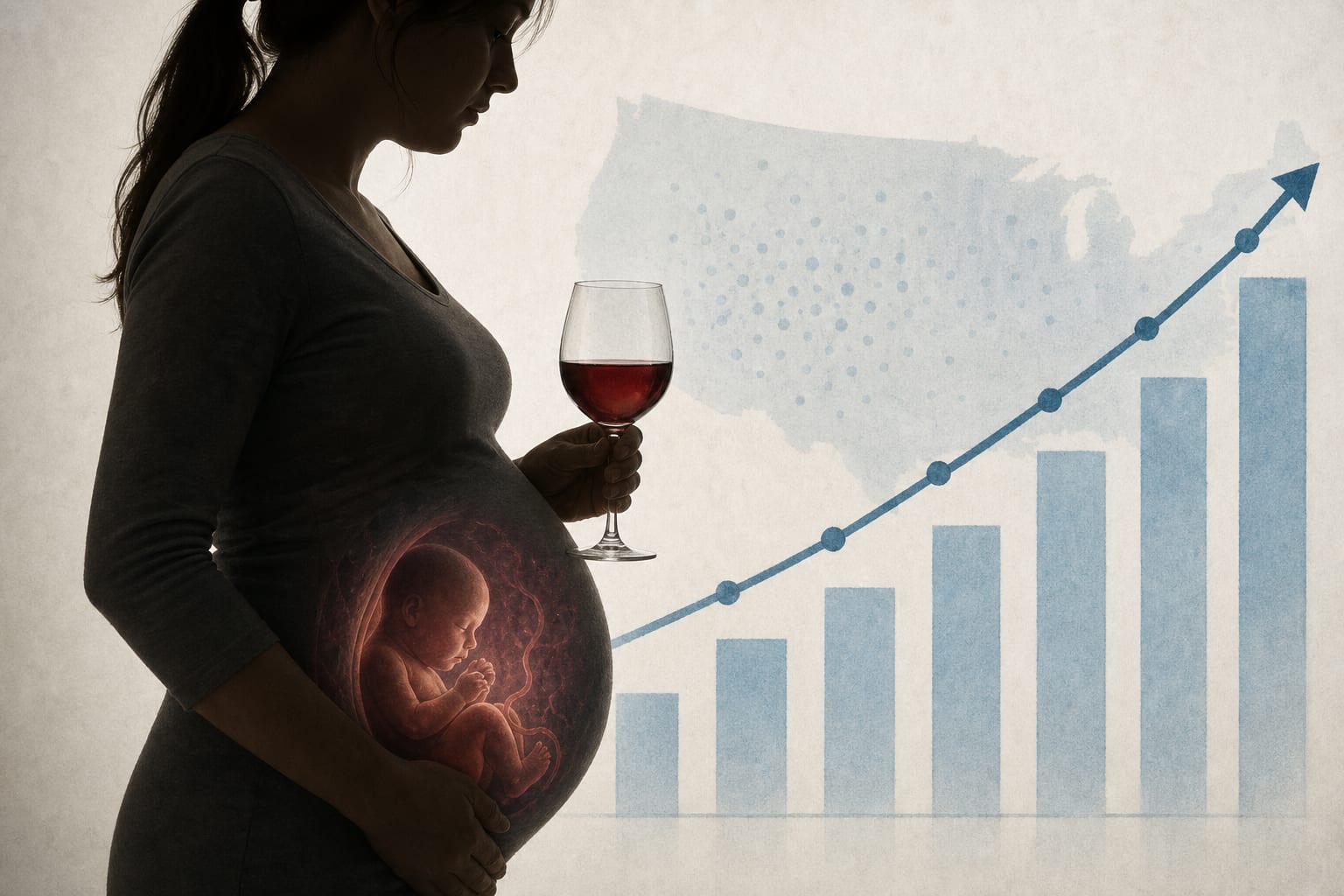
Drinking during pregnancy rose after 2020, new CDC data suggest
-
By
-
Isabella Cueto
-
June 11, 2026
-
Clinical Scorecard: Recent CDC Findings Indicate an Increase in Alcohol Consumption Among Pregnant Women Post-2020
At a Glance
| Category | Detail |
|---|
| Condition | Alcohol consumption during pregnancy |
| Key Mechanisms | Ethanol is a known cause of birth defects and affects fetal development. |
| Target Population | Pregnant women, particularly those who are unmarried or experience mental distress. |
| Care Setting | Clinical and community settings. |
Key Highlights
- 15% of adult pregnant women reported current drinking from 2021 to 2024.
- Binge drinking defined as four or more drinks in two hours; heavy drinking as four or more drinks in a day.
- Routine screening for alcohol consumption and mental health conditions could help reduce drinking.
- No amount of alcohol has proven safe for a developing fetus.
- Pregnant women are often excluded from clinical trials.
Guideline-Based Recommendations
Diagnosis
- Routine screening for alcohol consumption during pregnancy.
Management
- Providers should refer pregnant patients to substance use disorder treatment.
Monitoring & Follow-up
- Monitor alcohol consumption and mental health conditions.
Risks
- Alcohol use during pregnancy is linked to fetal alcohol spectrum disorders and intellectual disability.
Patient & Prescribing Data
Pregnant women, especially those with mental distress.
Interventions during pregnancy are rare, and providers are hesitant to prescribe medications.
Clinical Best Practices
- Implement point-of-sale warning signs for alcohol.
- Consider alcohol sales taxes as a preventive measure.
Related Resources & Content