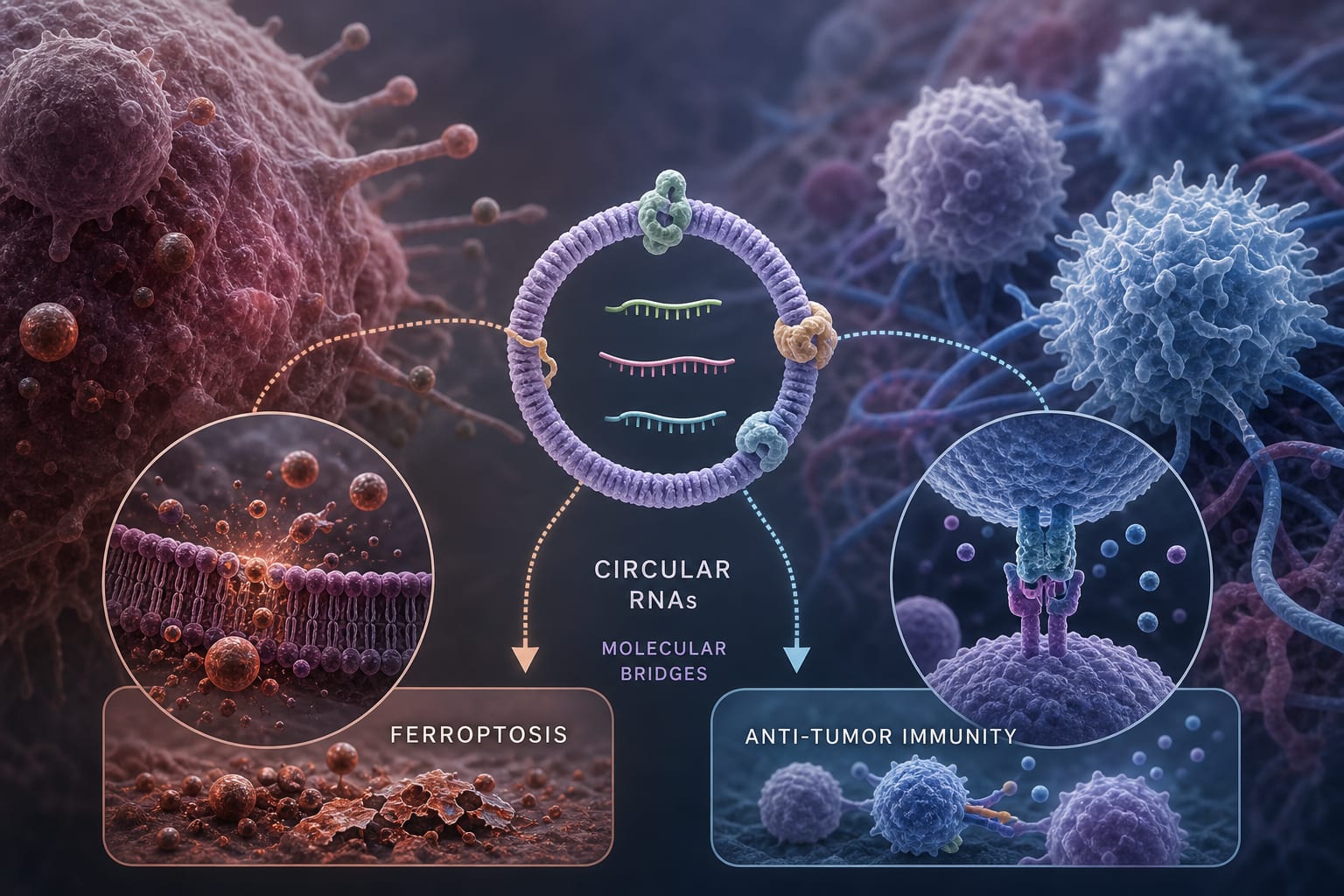
Circular RNAs as molecular bridges: dual regulation of ferroptosis and immunity in cancer
-
By
-
Songbai Xu
-
Peiyi Liang
-
Tie Lin
-
Guangxin Zhang
-
Xiying Fu
-
Yicun Wang
-
June 15, 2026
-
Clinical Scorecard: Circular RNAs: Key Regulators Linking Ferroptosis and Immune Response in Cancer
At a Glance
| Category | Detail |
|---|
| Condition | Cancer |
| Key Mechanisms | CircRNAs regulate ferroptosis and anti-tumor immunity through miRNA sponging, protein interaction/scaffolding, and functional peptide encoding. |
| Target Population | Patients with various solid tumors, including lung, hepatocellular, and breast cancers. |
| Care Setting | Oncology research and clinical settings focusing on cancer biology and therapeutic strategies. |
Key Highlights
- CircRNAs are stable, tissue-specific RNA molecules that modulate tumor progression.
- Ferroptosis is a regulated cell death process linked to cancer development and therapy resistance.
- CircRNAs act as 'molecular bridges' linking ferroptosis and immune responses.
- The interplay between ferroptosis and immunity can influence cancer progression and treatment efficacy.
- CircRNAs have potential as non-invasive diagnostic biomarkers and therapeutic targets.
Guideline-Based Recommendations
Diagnosis
- CircRNAs may serve as biomarkers for cancer diagnosis.
Management
- Targeting circRNAs could provide new therapeutic strategies in cancer treatment.
Monitoring & Follow-up
- Monitoring circRNA levels may help assess tumor progression and response to therapy.
Risks
- Aberrant circRNA expression is associated with tumor initiation, progression, and therapy resistance.
Patient & Prescribing Data
Patients with solid tumors exhibiting dysregulated ferroptosis and immune responses.
CircRNAs may enhance the efficacy of immunotherapy by modulating immune cell functions.
Clinical Best Practices
- Consider circRNA expression profiles when evaluating tumor biology.
- Explore circRNA-targeted therapies in clinical trials for precision oncology.
Related Resources & Content