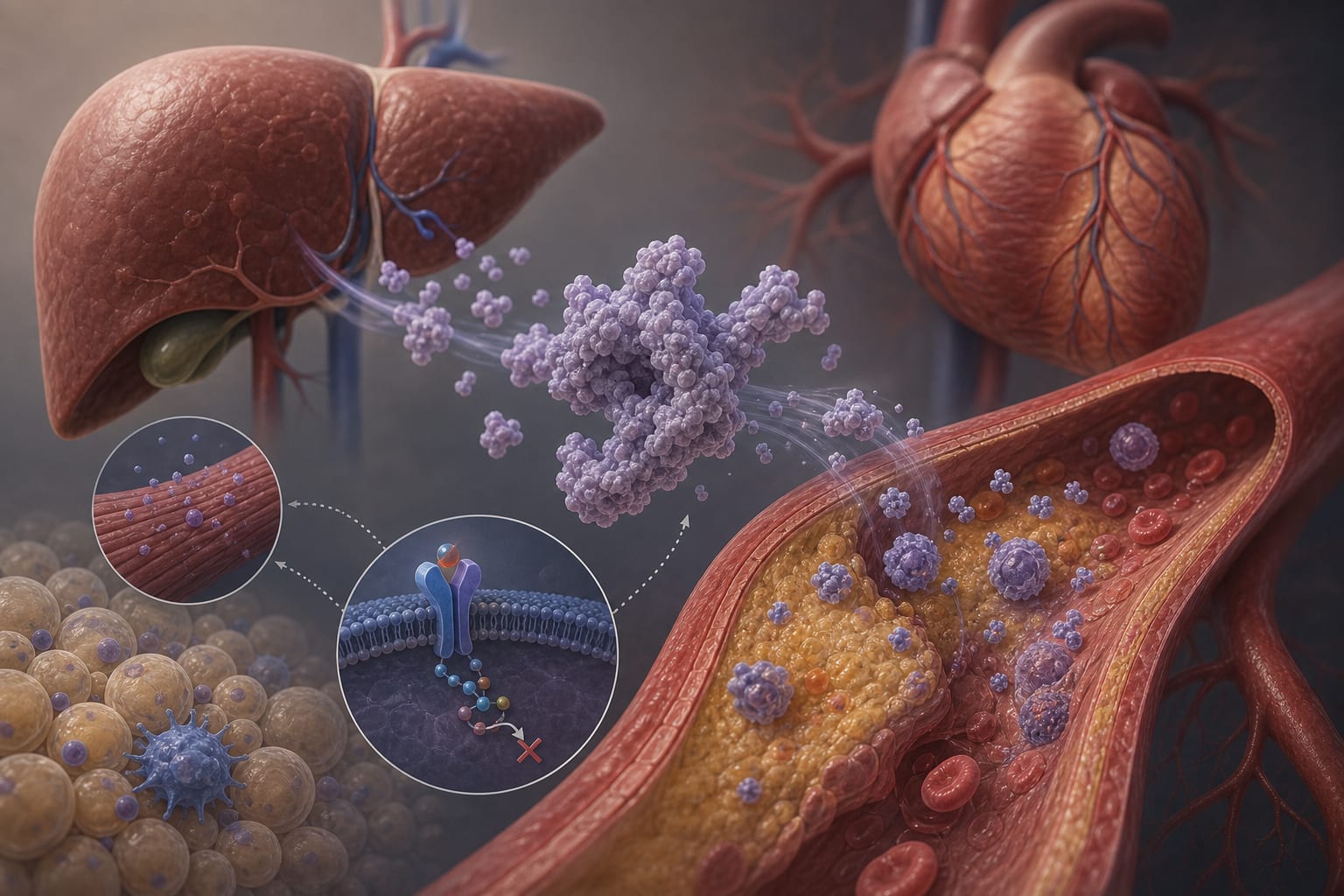
Succinylation-annotated genes in AMI: multi-omics and single-cell prioritization of ASGR2 and NPL - Scorecard - MDSpire

Succinylation-annotated genes in AMI: multi-omics and single-cell prioritization of ASGR2 and NPL

  • By

  • Jie Yu

  • Xu Ma

  • Jing Fang

  • Yingying Liu

  • Cong Wang

  • Shuxia Shi

  • Kaile Wang

  • Yunlun Li

  • Lei Zhang

  • June 25, 2026

  • 0 min

Share

Clinical Scorecard: Identification of Succinylation-Related Genes in Acute Myocardial Infarction: A Multi-Omics and Single-Cell Analysis Highlighting ASGR2 and NPL

At a Glance

CategoryDetail
ConditionAcute Myocardial Infarction
Key MechanismsSuccinylation-annotated genes influencing inflammation and myocardial injury.
Target PopulationPatients with Acute Myocardial Infarction.
Care SettingClinical research and biomarker discovery.

Key Highlights

  • Identification of 18 succinylation-annotated genes associated with AMI.
  • ASGR2 and NPL prioritized as exploratory candidate biomarkers.
  • Classical monocytes more abundant in non-plaque rupture cases.
  • Elevated plasma levels of ASGR2 and NPL in AMI patients compared to controls.
  • Exploratory analysis suggests monocyte-related inflammatory remodeling.

Guideline-Based Recommendations

Diagnosis

  • Current diagnostic tools include ECG and myocardial biomarkers, though they have limitations.

Management

  • Further validation of ASGR2 and NPL as biomarkers is needed before clinical application.

Monitoring & Follow-up

  • Monitoring of succinylation-related biomarkers may provide insights into AMI progression.

Risks

  • Misclassification risk due to variable sensitivity and specificity of existing biomarkers.

Patient & Prescribing Data

Patients diagnosed with Acute Myocardial Infarction.

Potential for succinylation-related genes to serve as therapeutic targets.

Clinical Best Practices

  • Utilize high-sensitivity cardiac troponin for improved sensitivity in AMI diagnosis.
  • Consider the role of monocytes in AMI-related inflammation during patient assessment.

Related Resources & Content

Original Source(s)

Related Content