Sustained stable disease and immune response observed in a patient with metastatic uveal melanoma receiving tebentafusp: a case study
By
Parham Habibzadeh
Anushri Kulkarni
Drew Hurd
Amy Rose
Danielle Bednarz
Yana G. Najjar
John M. Kirkwood
Arivarasan Karunamurthy
Diwakar Davar
July 2, 2026
Clinical Scorecard: Sustained stable disease and immune response observed in a patient with metastatic uveal melanoma receiving tebentafusp: a case study
At a Glance
Category Detail
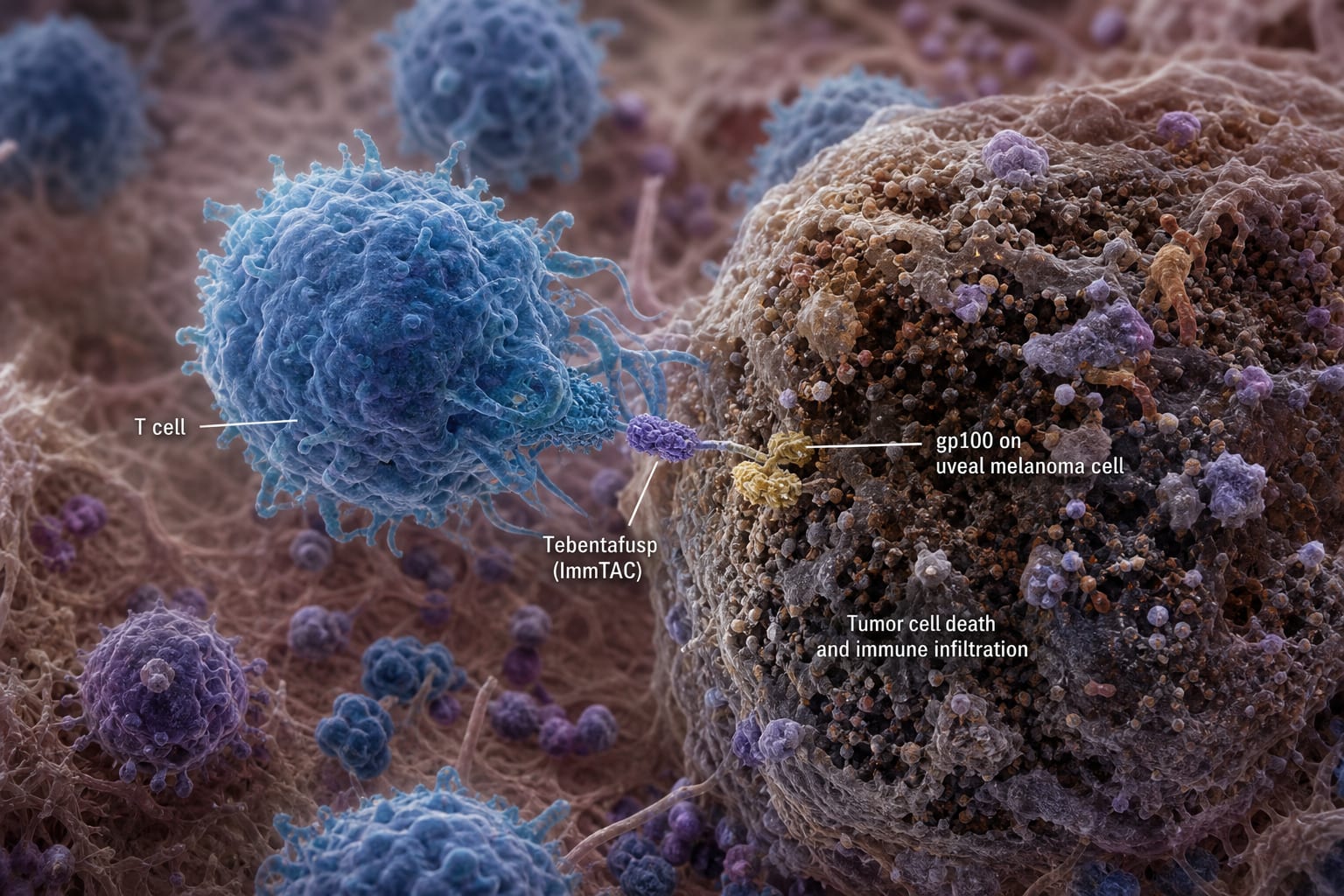
Condition Metastatic Uveal Melanoma Key Mechanisms Immune-mobilizing monoclonal T cell receptor targeting gp100, inducing immune-mediated tumor remodeling. Target Population HLA-A*0201-positive patients with metastatic uveal melanoma. Care Setting Clinical trial setting for advanced cancer treatment.
Key Highlights
Tebentafusp improved overall survival by 6 months compared to standard therapies. Patient achieved durable stable disease with significant immune activation. Autopsy revealed extensive tumor necrosis and minimal viable tumor cells. Cardiovascular events require careful monitoring in patients with pre-existing conditions. ImmTACs can induce profound immune-mediated changes not reflected in imaging. Guideline-Based Recommendations
Diagnosis
Confirm metastatic uveal melanoma through imaging and biopsy. Management
Consider tebentafusp for HLA-A*0201-positive patients with mUM. Monitoring & Follow-up
Regular cardiac safety monitoring, including ECG assessments. Risks
Monitor for cytokine-mediated toxicities and cardiovascular events. Patient & Prescribing Data
Adults with metastatic uveal melanoma.
Tebentafusp may induce immune responses that are not fully captured by conventional imaging.
Clinical Best Practices
Integrate clinical, pathologic, and imaging evaluations for comprehensive assessment. Maintain vigilant monitoring for cardiovascular health in patients with a history of CAD. Related Resources & Content