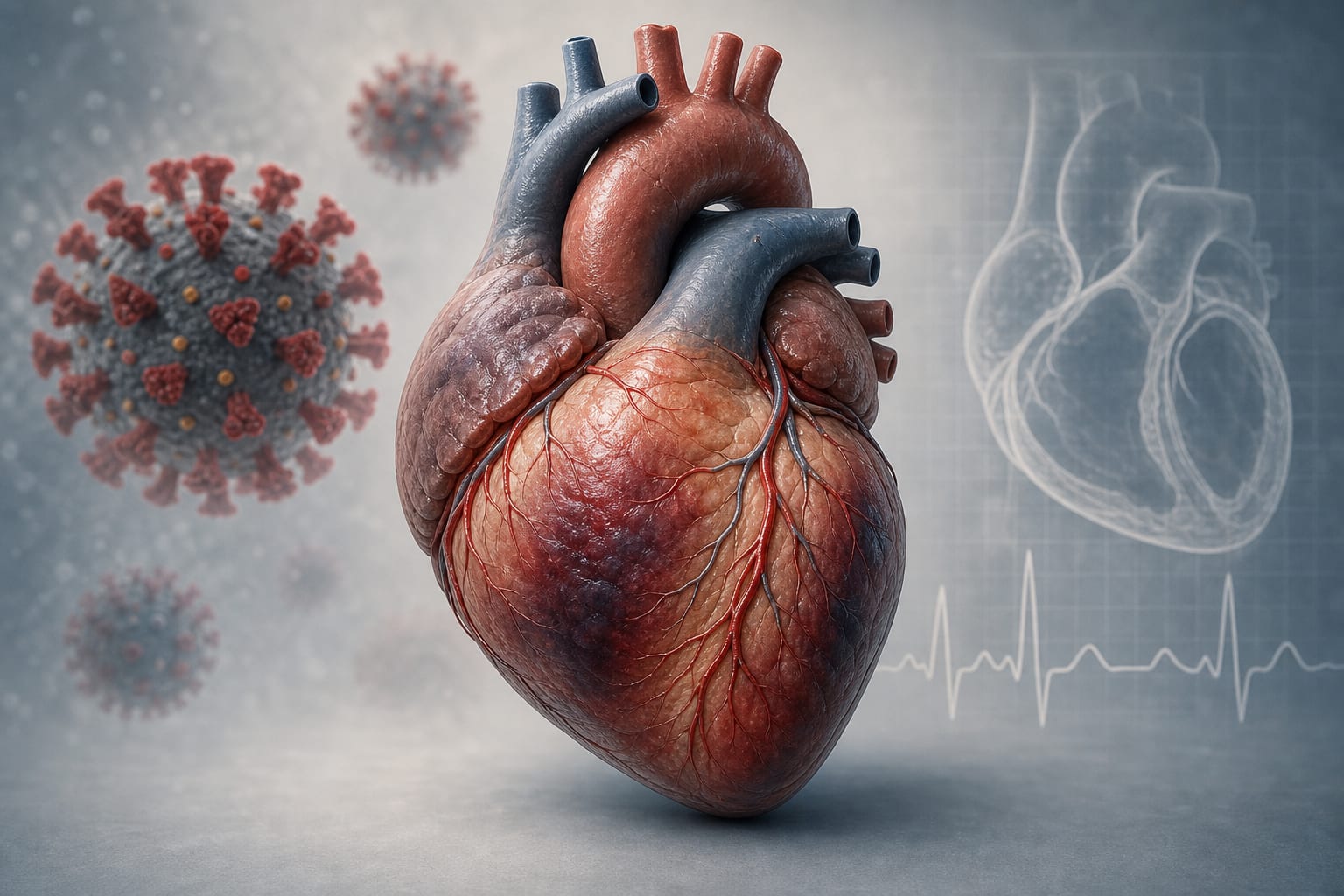
Impact of COVID-19 history on the prevalence of coronary slow flow: a comparative study in unstable angina patients
-
By
-
Sait Alan
-
Bircan Alan
-
May 8, 2026
-
Clinical Scorecard: Influence of Previous COVID-19 Infection on Coronary Slow Flow Rates in Patients with Unstable Angina: A Comparative Analysis
At a Glance
| Category | Detail |
|---|
| Condition | Coronary Slow Flow (CSF) in Unstable Angina (UA) |
| Key Mechanisms | Endothelial dysfunction and microvascular damage linked to previous COVID-19 infection. |
| Target Population | Patients with unstable angina and normal coronary arteries, with and without a history of COVID-19. |
| Care Setting | Single-center retrospective study. |
Key Highlights
- CSF prevalence was significantly higher in COVID (+) UA-NCA cohort (18.9%) compared to COVID (–) UA-NCA cohort (5.3%).
- Higher corrected TIMI frame count (CTFC) measurements in COVID (+) cohort for LAD, LCX, and RCA.
- Endothelial dysfunction is a key factor in the development of CSF post-COVID-19.
- COVID-19 may lead to persistent coronary microvascular damage.
- Chronic endotheliitis can last 6 to 12 months post-infection.
Guideline-Based Recommendations
Diagnosis
- Utilize coronary angiography and TIMI frame count assessments to identify CSF.
Management
- Monitor patients with a history of COVID-19 for signs of microvascular dysfunction.
Monitoring & Follow-up
- Regular follow-up for cardiovascular symptoms and risk factors in patients with prior COVID-19.
Risks
- Increased risk of major adverse cardiovascular events (MACE) in patients with CSF.
Patient & Prescribing Data
Individuals with unstable angina and normal coronary arteries.
Consider the impact of previous COVID-19 infection on treatment strategies for unstable angina.
Clinical Best Practices
- Early identification of CSF in patients with a history of COVID-19.
- Tailored management approaches for patients exhibiting microvascular dysfunction.
Related Resources & Content