From anaphylaxis to eosinophilic esophagitis during omalizumab treatment in a boy with severe asthma and food allergy: a case report - Scorecard - MDSpire
Advertisement
From anaphylaxis to eosinophilic esophagitis during omalizumab treatment in a boy with severe asthma and food allergy: a case report
Clinical Scorecard: Transition from Anaphylaxis to Eosinophilic Esophagitis in a Pediatric Patient with Severe Asthma and Food Allergy During Omalizumab Therapy: A Case Study
At a Glance
Category
Detail
Condition
Key Mechanisms
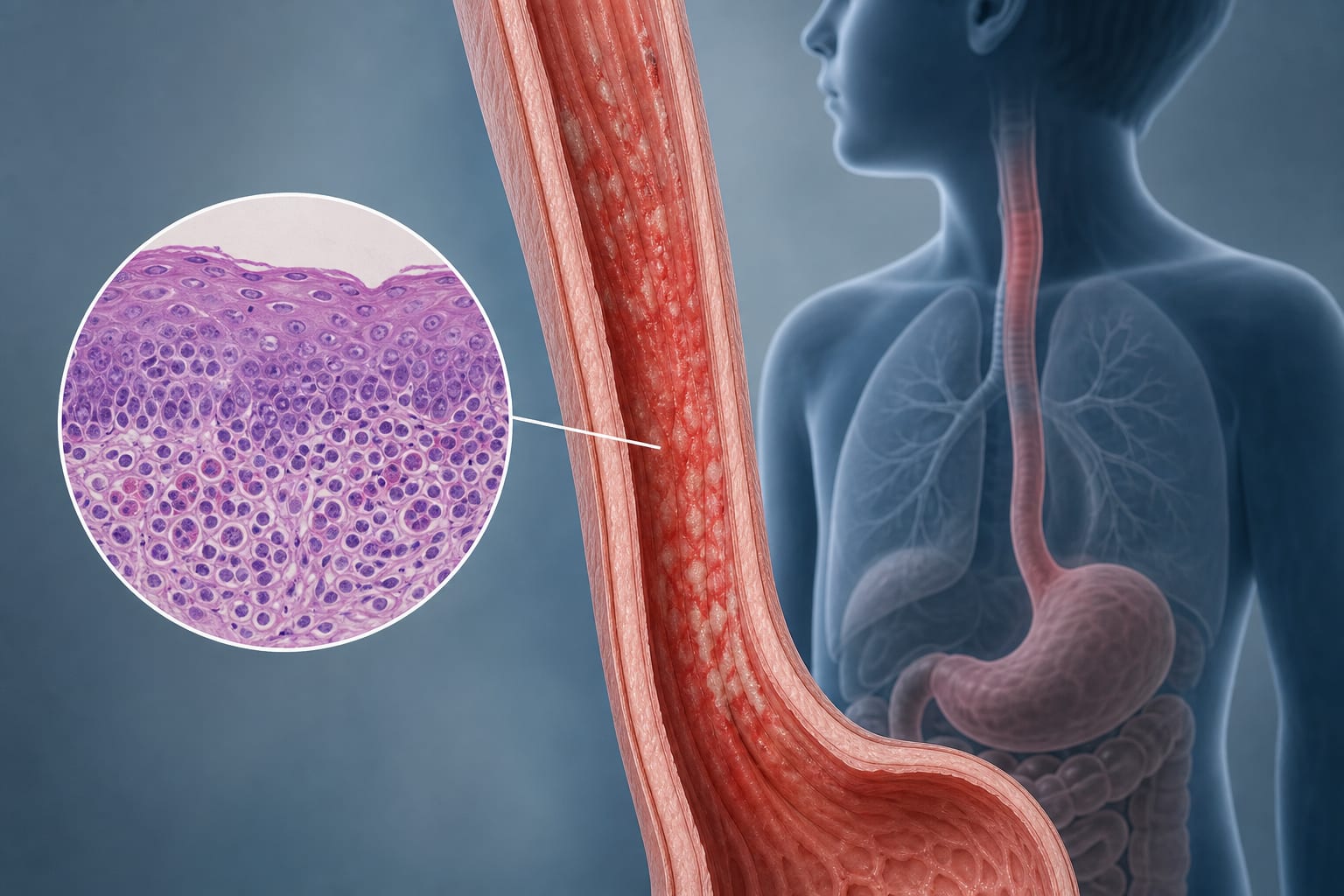
Chronic inflammatory disease of the esophagus with eosinophilic infiltration and type 2 inflammation, potentially emerging as a side effect of oral immunotherapy.
Target Population
Care Setting
Key Highlights
EoE is associated with atopic conditions and may emerge during oral immunotherapy.
The patient had a history of IgE-mediated cow’s milk allergy and severe asthma.
Omalizumab therapy improved asthma control but was followed by symptoms of EoE, including recurrent vomiting.
Diagnosis of EoE was confirmed through upper endoscopy and histological examination.
Treatment included proton pump inhibitors, topical budesonide, and strict cow’s milk elimination.
Guideline-Based Recommendations
Diagnosis
Management
Monitoring & Follow-up
Monitor for persistent gastrointestinal symptoms during dietary liberalization.
Consider regular follow-up endoscopies to assess EoE status.
Risks
Patient & Prescribing Data
Pediatric patients with severe IgE-mediated food allergies and asthma.
Omalizumab can improve asthma control but may not prevent the development of EoE.
Clinical Best Practices
Consider EoE in atopic patients with gastrointestinal symptoms.
Implement strict dietary elimination for confirmed food allergies.
Utilize a multidisciplinary approach for managing complex cases.
Schedule regular follow-ups to monitor EoE and adjust treatment as necessary.