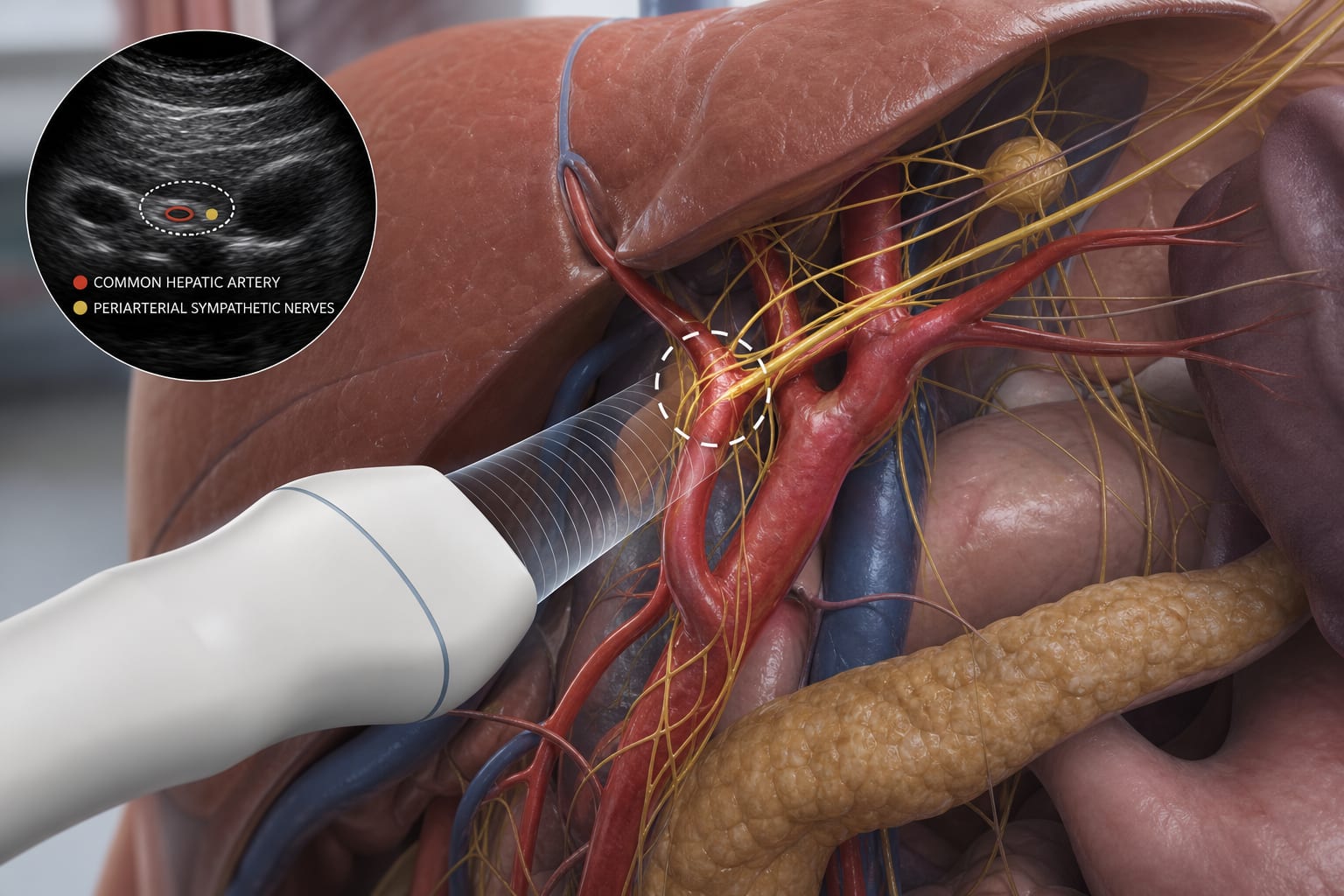
Ultrasound common hepatic artery denervation (CHA-D) as a novel neuromodulatory strategy for cardiovascular-kidney-metabolic syndrome: first-in-human experience - Scorecard - MDSpire
Advertisement
Ultrasound common hepatic artery denervation (CHA-D) as a novel neuromodulatory strategy for cardiovascular-kidney-metabolic syndrome: first-in-human experience
Clinical Scorecard: Exploring Ultrasound-Guided Denervation of the Common Hepatic Artery as an Innovative Neuromodulatory Approach for Cardiovascular-Kidney-Metabolic Syndrome: Initial Human Findings
At a Glance
Category
Detail
Condition
Uncontrolled Hypertension (primary focus)
Key Mechanisms
Ultrasound-guided denervation of the common hepatic artery (CHA-D) may reduce sympathetic nervous system activity and improve metabolic parameters.
Target Population
Patients with uncontrolled hypertension and high cardiometabolic risk, particularly those intolerant to antihypertensive medications.
Care Setting
Angiographic catheterization laboratory
Key Highlights
CHA-D performed in a patient with symptomatic uncontrolled hypertension and limited pharmacological options.
Procedure followed failed previous treatments including lifestyle changes and renal denervation.
Safety and efficacy monitored through BP, laboratory parameters, and imaging.
Interdisciplinary team assessed eligibility and risks prior to the procedure.
Initial findings suggest potential for additional BP lowering and improved metabolic outcomes, including specific metrics.
Guideline-Based Recommendations
Diagnosis
Assess secondary causes of hypertension and exclude them as clinically appropriate.
Management
Consider catheter-based renal denervation for selected patients with uncontrolled hypertension, including alternative treatments.
Monitoring & Follow-up
Continuous monitoring of hemodynamics and safety parameters during the procedure.
Risks
Potential complications include dissection, thrombus formation, and vasospasm.
Patient & Prescribing Data
Patients with uncontrolled hypertension and multiple antihypertensive medication intolerances.
CHA-D may be considered as an experimental option after standard treatments have failed, with clear implications for patient selection.
Clinical Best Practices
Conduct thorough pre-procedural evaluations including imaging and laboratory tests.
Obtain informed consent after discussing the experimental nature and risks of the procedure.
Utilize interdisciplinary teams for patient selection and management.
Include follow-up care recommendations post-procedure.