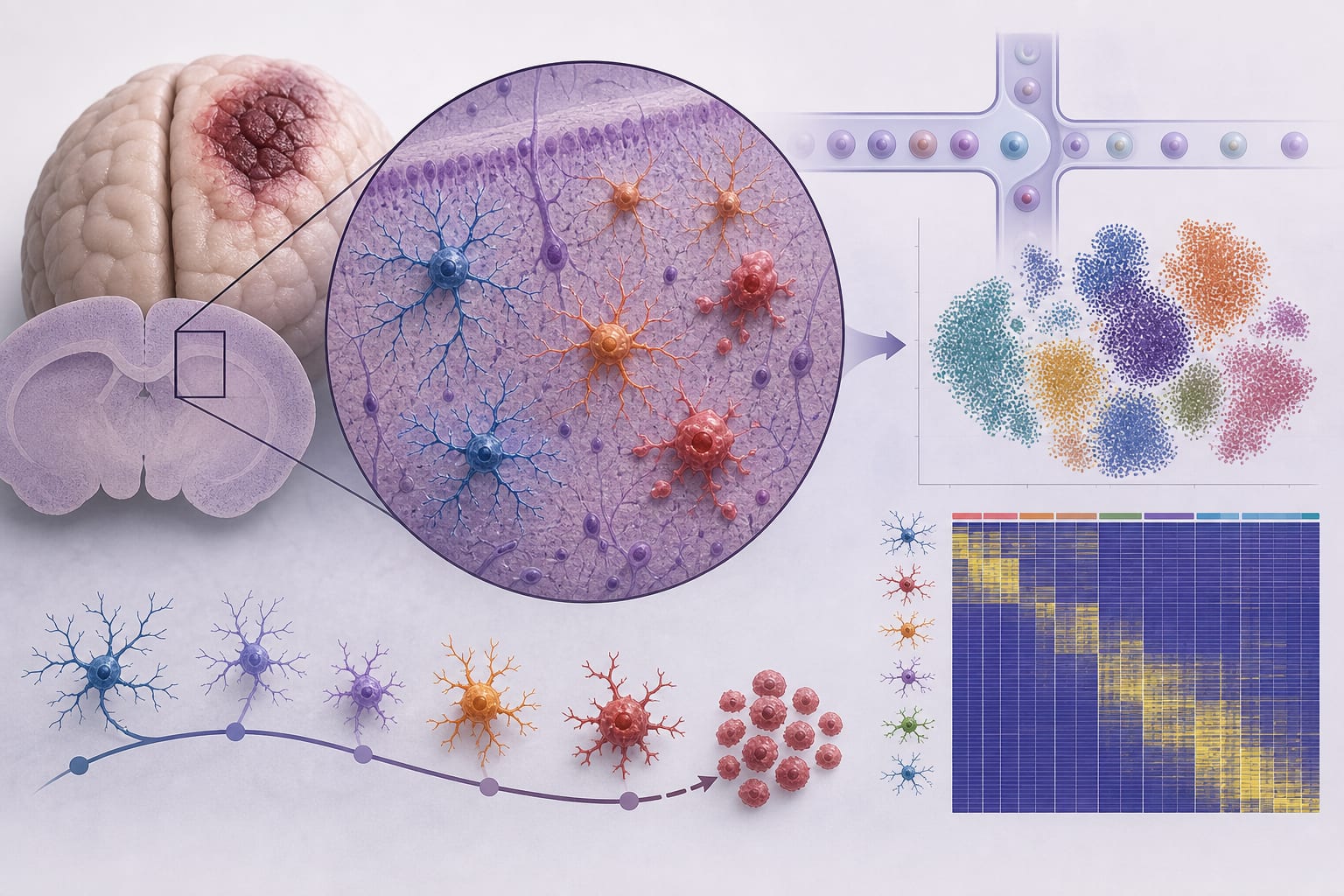
Single-cell RNA sequencing reveals microglial proliferative bias and neuroinflammatory communication reprogramming following traumatic brain injury
By
Xue Zhang
Na Sun
Manman Zhu
Yan Huang
July 10, 2026
Clinical Scorecard: Single-cell RNA sequencing uncovers microglial growth tendencies and alterations in neuroinflammatory signaling after traumatic brain injury
At a Glance
Category Detail
Condition Traumatic Brain Injury (TBI) Key Mechanisms Microglial phenotype remodeling and neuroinflammatory signaling alterations. Target Population Individuals with traumatic brain injury, particularly those under 45 years of age. Care Setting Research context utilizing single-cell RNA sequencing.
Key Highlights
Identification of 14 different cell groups in TBI samples, including 7 microglial subclusters. Significant reduction of homeostatic microglial subclusters post-TBI. Proliferating microglia predominantly exhibit an M1-like phenotype after TBI. Enhanced intercellular communication and M1 polarization contribute to neuroinflammation. Findings provide insights into the cellular dynamics of TBI and microglial behavior. Guideline-Based Recommendations
Diagnosis
Utilize imaging and clinical assessments to diagnose TBI severity. Management
Focus on acute surgical and supportive therapy, including intracranial pressure control. Monitoring & Follow-up
Monitor for prolonged neuroinflammatory responses and secondary injury processes. Risks
Increased risk of long-term cognitive and functional impairments due to chronic neuroinflammation. Patient & Prescribing Data
Individuals experiencing traumatic brain injury.
Current pharmacological therapies for moderate or severe TBI have not successfully translated into clinical trials.
Clinical Best Practices
Investigate cellular and molecular mechanisms underlying TBI. Consider the dual nature of microglial responses in therapeutic strategies. Related Resources & Content