CORO1A links inflammatory chondrocyte subpopulations to immune microenvironment alterations in osteoarthritis: an integrative multi-omics and single-cell study - Scorecard - MDSpire
Conexiant’s news site is now MDSpire News. Learn more
Advertisement
CORO1A associates inflammatory chondrocyte subsets with changes in the immune microenvironment in osteoarthritis: a comprehensive multi-omics and single-cell analysis
Clinical Scorecard: CORO1A associates inflammatory chondrocyte subsets with changes in the immune microenvironment in osteoarthritis: a comprehensive multi-omics and single-cell analysis
At a Glance
Category
Detail
Condition
Osteoarthritis (OA)
Key Mechanisms
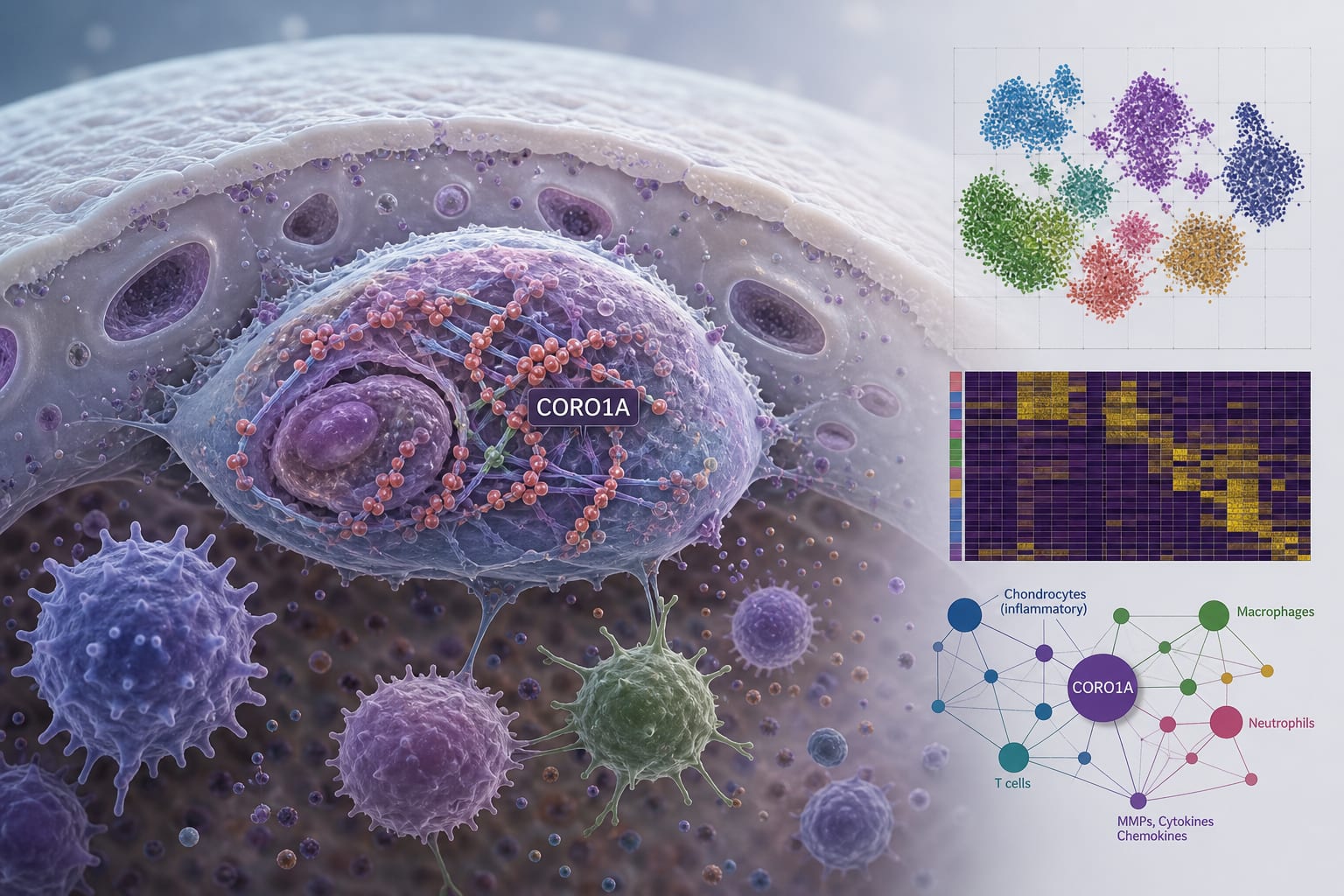
CORO1A expression in inflammatory chondrocytes linked to immune cell infiltration and signaling pathways (IL-6/JAK-STAT3, TNF-α/NF-κB)
Target Population
Individuals with osteoarthritis, particularly those with knee osteoarthritis (KOA)
Care Setting
Clinical and research settings focusing on osteoarthritis pathology
Key Highlights
CORO1A is significantly expressed in osteoarthritic cartilage, particularly in inflammatory chondrocyte subpopulations.
Increased CORO1A expression is associated with immune cell infiltration, including M2 macrophages and natural killer cells.
CORO1A regulates chondrocyte migration and MMP13 expression in response to inflammatory stimuli.
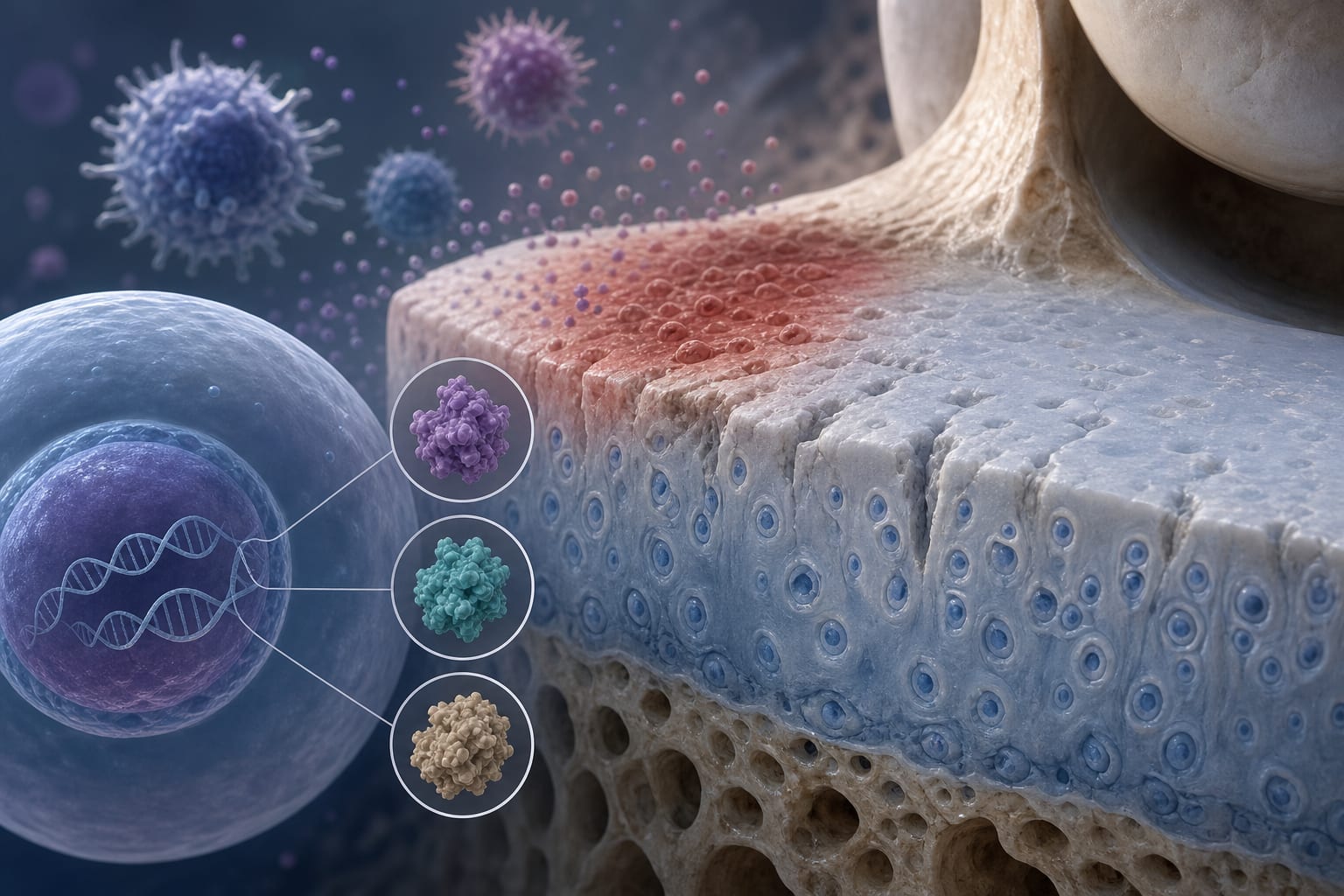
The study emphasizes the role of CORO1A in connecting immune remodeling to cartilage degradation.
Potential therapeutic target for osteoarthritis identified through its mechanistic role.
Guideline-Based Recommendations
Diagnosis
Assess the presence of inflammatory chondrocyte subsets in osteoarthritis.
Management
Consider targeting CORO1A for therapeutic interventions in osteoarthritis.
Monitoring & Follow-up
Monitor CORO1A expression levels as a potential biomarker for disease progression.
Risks
Increased CORO1A may correlate with enhanced immune activity and cartilage degradation.
Patient & Prescribing Data
Patients diagnosed with osteoarthritis, particularly those experiencing significant joint pain and mobility issues.
Current treatments primarily focus on symptom relief; understanding CORO1A's role may lead to novel therapeutic strategies.
Clinical Best Practices
Utilize multi-omics approaches to better understand the molecular mechanisms of osteoarthritis.
Incorporate single-cell analysis to identify specific chondrocyte populations and their roles in the immune microenvironment.
Evaluate the impact of immune cell interactions on cartilage health and disease progression.