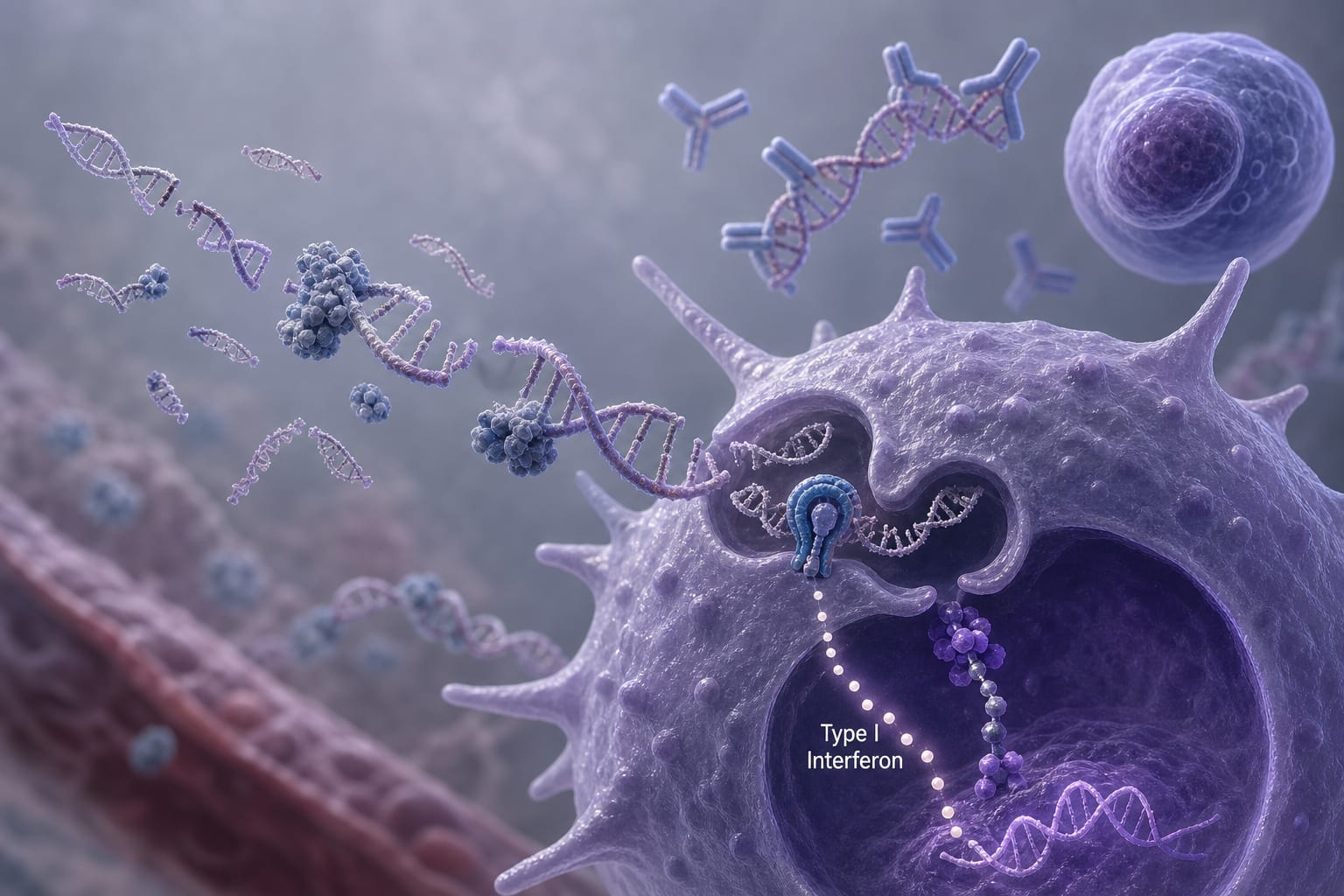
Systematic Review of Coordinated Changes in Oral and Gut Microbiota in Connective Tissue Disorders
By
Verena Ida Meyer
Sylvio Redanz
Martin Alexander Kriegel
July 3, 2026
Clinical Scorecard: Systematic Review of Coordinated Changes in Oral and Gut Microbiota in Connective Tissue Disorders
At a Glance
Category Detail
Condition Systemic Lupus Erythematosus and Primary Sjögren’s Syndrome Key Mechanisms Coordinated dysbiosis across oral and gut microbiomes with opposing abundance patterns. Target Population Adult patients with SLE and pSS. Care Setting Observational studies comparing microbiome data in patients and healthy controls.
Key Highlights
Reduced intestinal Shannon and Simpson α-diversity in SLE and pSS. Increased or preserved oral microbiome diversity in SLE and pSS. Opposing abundance patterns for specific taxa like Streptococcus and Actinomycetota. Evidence of oral-gut microbial relocation in autoimmune conditions. Potential influence of medications like proton pump inhibitors and corticosteroids. Guideline-Based Recommendations
Diagnosis
Utilize observational studies to assess microbiome alterations in SLE and pSS. Management
Consider the role of oral and gut microbiome in the management of SLE and pSS. Monitoring & Follow-up
Monitor changes in oral and gut microbiome as part of disease progression. Risks
Be aware of the potential impact of oral dysbiosis on systemic immunity. Patient & Prescribing Data
Adults diagnosed with systemic lupus erythematosus or primary Sjögren’s syndrome.
Investigate the effects of microbiome-altering medications on disease outcomes.
Clinical Best Practices
Integrate microbiome assessments into routine evaluations of SLE and pSS. Encourage interdisciplinary approaches to understand microbiome interactions. Related Resources & Content