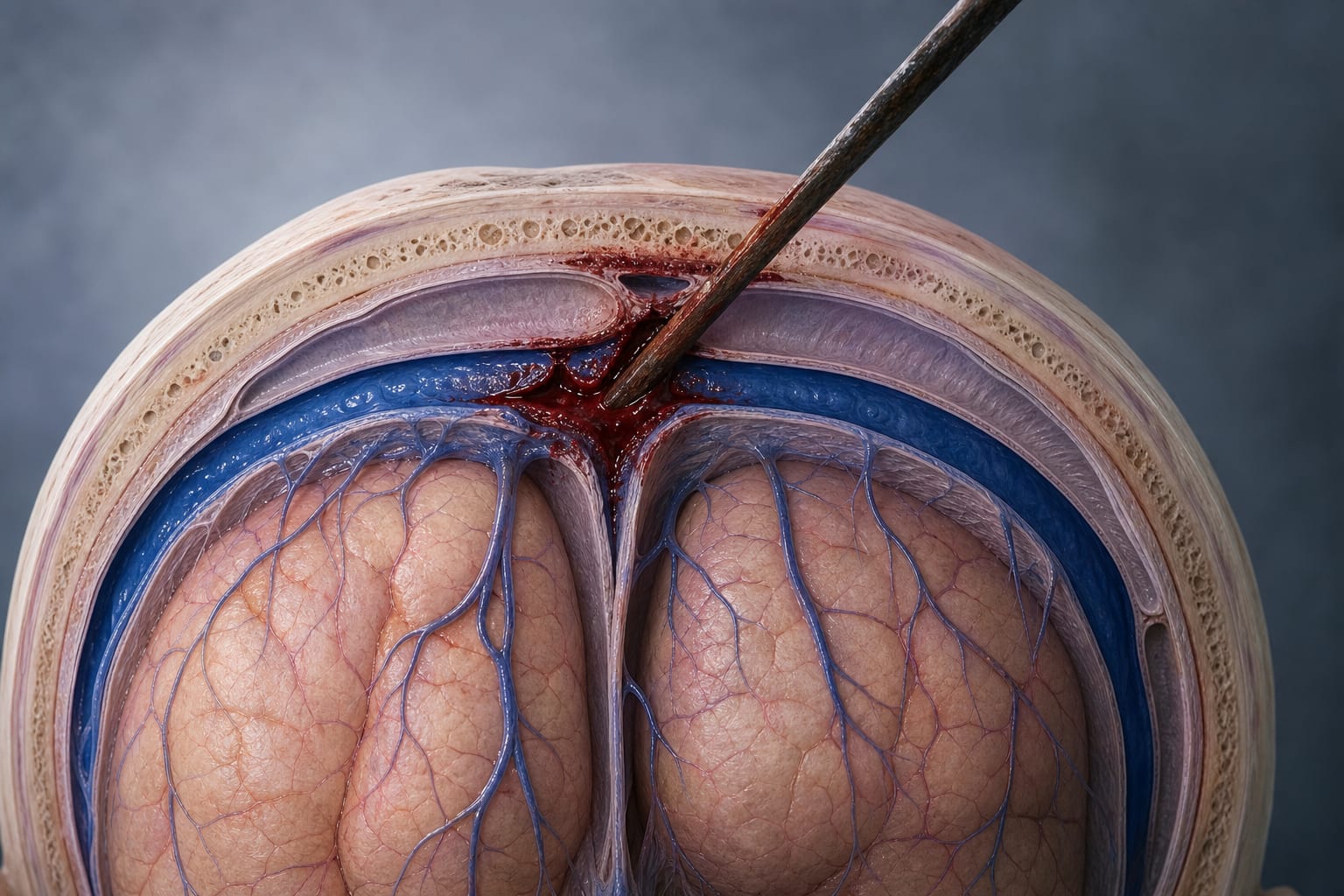
A systematic review of penetrating injuries to the superior sagittal sinus across two centuries
By
Jarett E. Prince
Kivanc Yangi
Kashif Qureshi
Michell Goyal
Jack T. Olson
Egemen Gok
Mark C. Preul
June 11, 2026
Clinical Scorecard: A Comprehensive Review of Penetrating Superior Sagittal Sinus Injuries Over the Past Two Centuries
At a Glance
Category Detail
Condition Penetrating Superior Sagittal Sinus Injuries (pSSSIs) Key Mechanisms Massive hemorrhage, intracranial hypertension, neurological decline Target Population Predominantly male patients with penetrating injuries to the superior sagittal sinus Care Setting Trauma and neurosurgery units
Key Highlights
pSSSIs account for 70-80% of dural venous sinus injuries in traumatic brain injury. Mortality rate for pSSSIs is 27%, highest in anterior third injuries. Common penetrating objects include nails (24%), bone fragments (16%), and bullets (16%). Surgical management options include hemostatic agents, grafts, ligation, and sutures. No standardized management paradigm exists for pSSSIs. Guideline-Based Recommendations
Diagnosis
Injuries must be confirmed with clear mechanisms and definitive involvement of the SSS. Management
Management should be tailored based on individual case factors, including the site and mechanism of injury. Monitoring & Follow-up
Neurological status should be monitored, particularly using Glasgow Coma Scale scores. Risks
High risk of mortality and neurological decline associated with penetrating injuries. Patient & Prescribing Data
Patients with penetrating injuries to the superior sagittal sinus, predominantly male, mean age 30.3 years.
Treatment strategies have evolved but remain individualized; further consensus guidelines are needed.
Clinical Best Practices
Utilize a combination of direct repair, reconstruction, and selective ligation based on injury specifics. Assess and document admission neurological status for better outcome prediction. Related Resources & Content