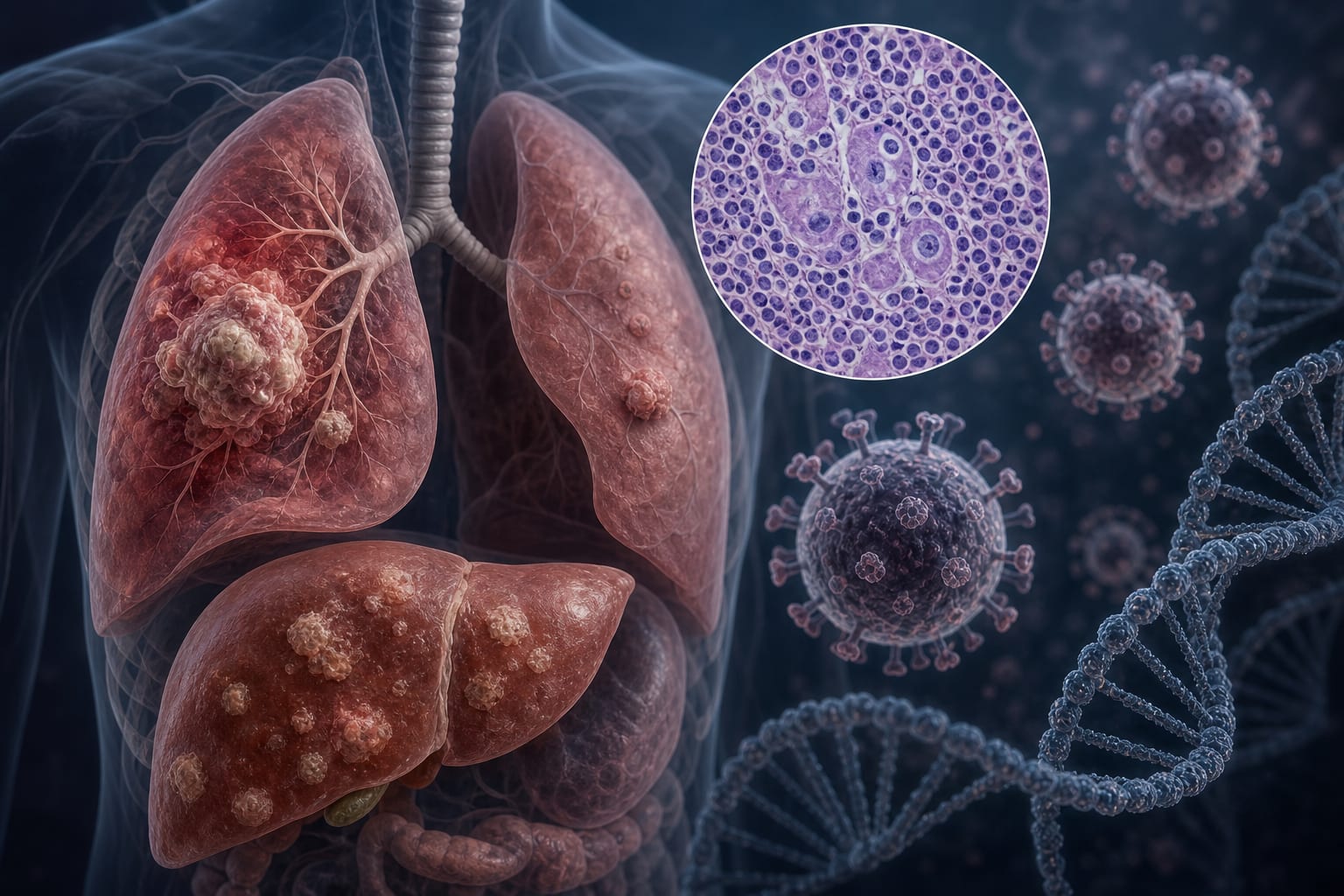
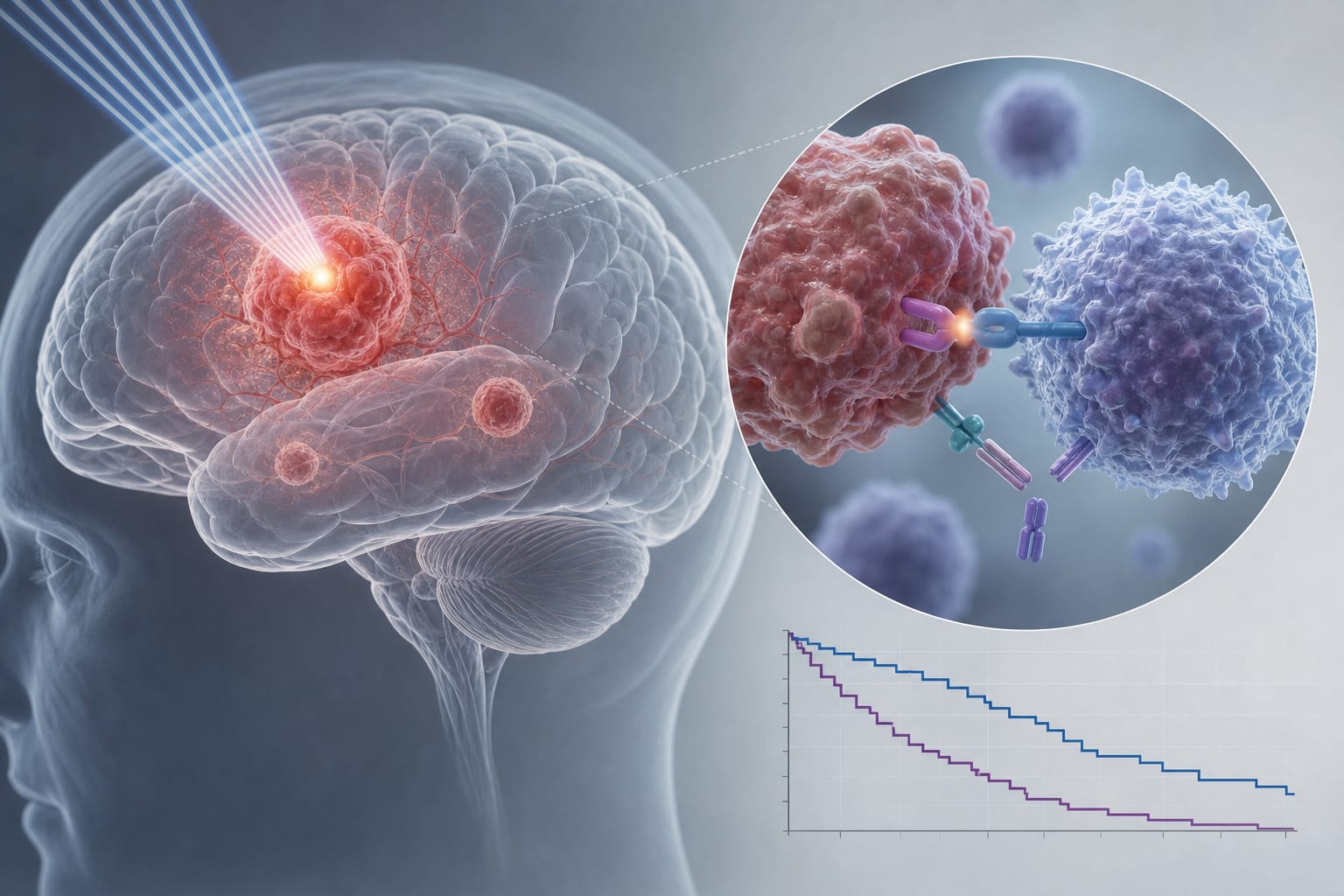
Metastatic progression and treatment challenges in EBV-associated pulmonary lymphoepithelioma-like carcinoma: a case report
-
By
-
Min Wei
-
Sumin Wu
-
Yanbo Wang
-
Mengyuan Zhu
-
Xiaofen Pan
-
Chengming Ke
-
June 23, 2026
-
Clinical Scorecard: Challenges in Managing Metastatic EBV-Related Pulmonary Lymphoepithelioma-Like Carcinoma: A Case Study
At a Glance
| Category | Detail |
|---|
| Condition | Pulmonary Lymphoepithelioma-Like Carcinoma (LELC) |
| Key Mechanisms | EBV infection, PD-L1 expression, immune checkpoint inhibition |
| Target Population | Patients with advanced pulmonary LELC, particularly those with elevated PD-L1 expression |
| Care Setting | Oncology, specifically for advanced non-small cell lung cancer management |
Key Highlights
- Pulmonary LELC is linked to EBV and shows aggressive clinical behavior.
- Initial treatment included radical surgery followed by adjuvant chemoradiotherapy.
- Immunotherapy with pembrolizumab showed temporary efficacy but was complicated by persistent high-grade fever.
- Plasma EBV-DNA levels correlate with disease activity and treatment response.
- Management of treatment-related complications is crucial for optimizing outcomes.
Guideline-Based Recommendations
Diagnosis
- Histopathological confirmation of pulmonary LELC is essential.
- Immunohistochemistry should assess PD-L1 expression.
Management
- Consider multimodal therapy including surgery, chemotherapy, and immunotherapy.
- Monitor plasma EBV-DNA as a biomarker for disease activity.
Monitoring & Follow-up
- Regular assessment of plasma EBV-DNA levels to gauge treatment response and disease progression.
Risks
- Potential for aggressive disease progression and complications such as persistent fever.
Patient & Prescribing Data
Patients with advanced pulmonary LELC, particularly those with EBV association and high PD-L1 expression.
Immunotherapy may provide temporary benefits but requires careful management of side effects.
Clinical Best Practices
- Timely identification and management of treatment-related complications.
- Utilization of dynamic plasma EBV-DNA monitoring for treatment guidance.
Related Resources & Content