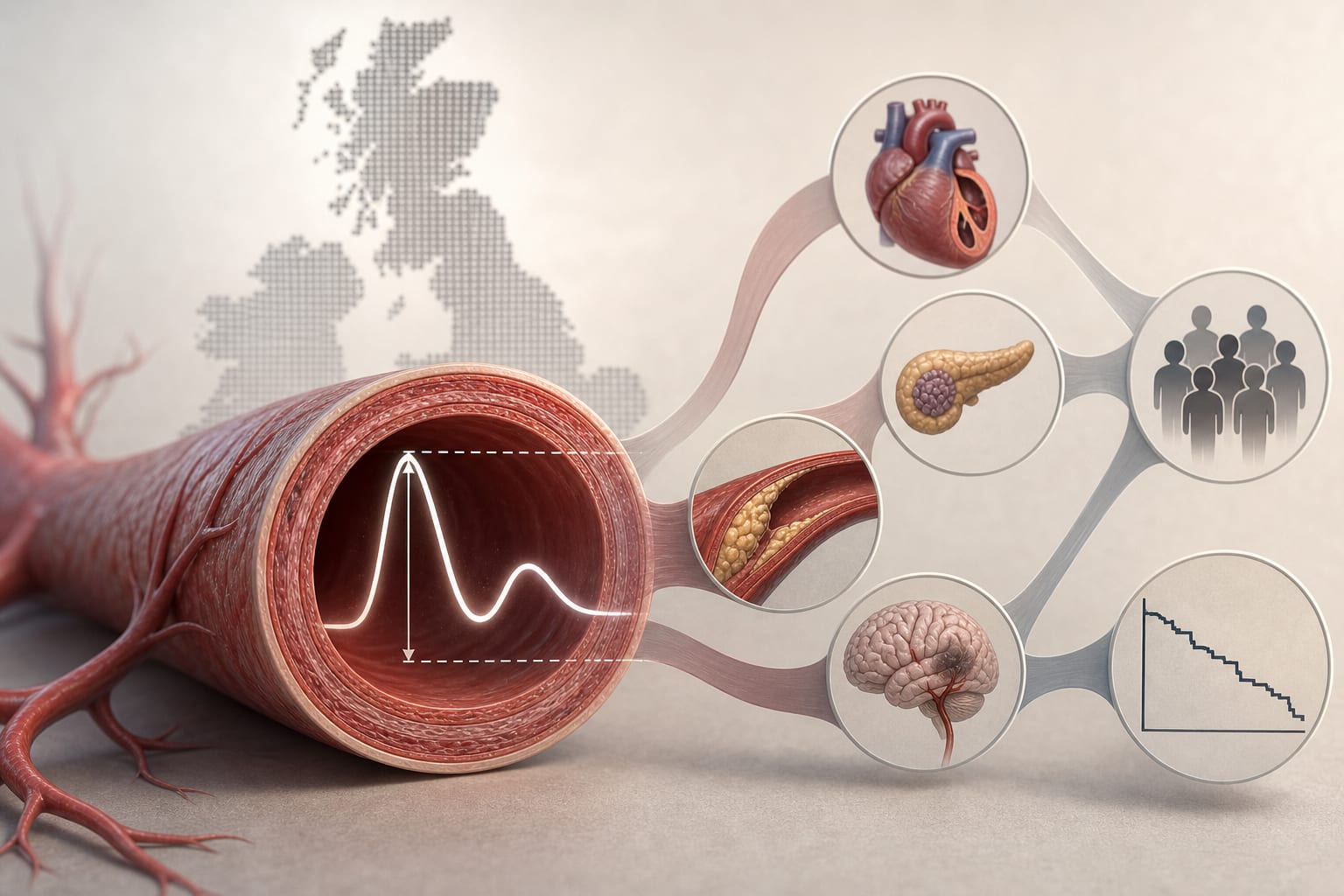
Clinical Scorecard: Advancements in Hypertension Management through Digital Innovation: Insights from the ESH CARE App Study
At a Glance
Category
Detail
Condition
Hypertension
Key Mechanisms
Digital self-monitoring, remote coaching, medication adherence support, timely feedback, and structured BP measurement and titration protocols
Target Population
Adults aged 18–65 years with uncontrolled hypertension and no known cardiovascular disease or secondary hypertension
Care Setting
Outpatient settings including virtual visits and remote monitoring via smartphone applications
Key Highlights
Use of the ESH CARE smartphone application significantly improved ambulatory and office blood pressure control compared to usual care over 6 months.
78% of participants using the app achieved ambulatory BP targets (<130/80 mmHg) versus 50% in usual care, with a 28% absolute difference.
Digital interventions support better medication adherence, lifestyle modification, and self-management, addressing gaps in hypertension control especially in low- and middle-income countries.
Guideline-Based Recommendations
Diagnosis
Incorporate structured self-measurement of blood pressure using validated devices and digital tools to enhance monitoring accuracy.
Use ambulatory blood pressure monitoring to provide context beyond office measurements.
Management
Implement smartphone-based digital interventions to support medication adherence and lifestyle changes.
Combine self-monitoring with remote titration protocols under clinical oversight to accelerate blood pressure control.
Tailor hypertension care delivery models to be simple, scalable, and adaptable across diverse healthcare settings.
Monitoring & Follow-up
Encourage daily or frequent blood pressure measurements with data uploaded directly to digital platforms.
Use app-based reminders, simplified dosing calendars, and timely feedback to maintain patient engagement.
Monitor blood pressure trends remotely to guide treatment adjustments safely.
Risks
Recognize limitations in generalizability to older, higher-risk populations and those with established cardiovascular disease.
Address potential barriers such as therapeutic inertia, health literacy, language, device access, and caregiver training to avoid disparities.
Ensure safety in remote titration by balancing speed of control with clinical oversight.
Patient & Prescribing Data
Adults with uncontrolled hypertension without known cardiovascular disease or secondary hypertension
Digital app-assisted strategies improve blood pressure control rates and reduce systolic and diastolic BP more effectively than usual care, likely through enhanced adherence and engagement.
Clinical Best Practices
Integrate digital self-monitoring tools with routine hypertension management to improve patient adherence and outcomes.
Use ambulatory blood pressure targets (<130/80 mmHg) as a goal for better cardiovascular risk reduction.
Provide patient education and timely feedback through digital platforms to support lifestyle modification and medication adherence.
Consider local resource availability and patient demographics when implementing digital hypertension care models.
Plan for sustained engagement strategies beyond 6 months, including social support and gamification, to maintain adherence.