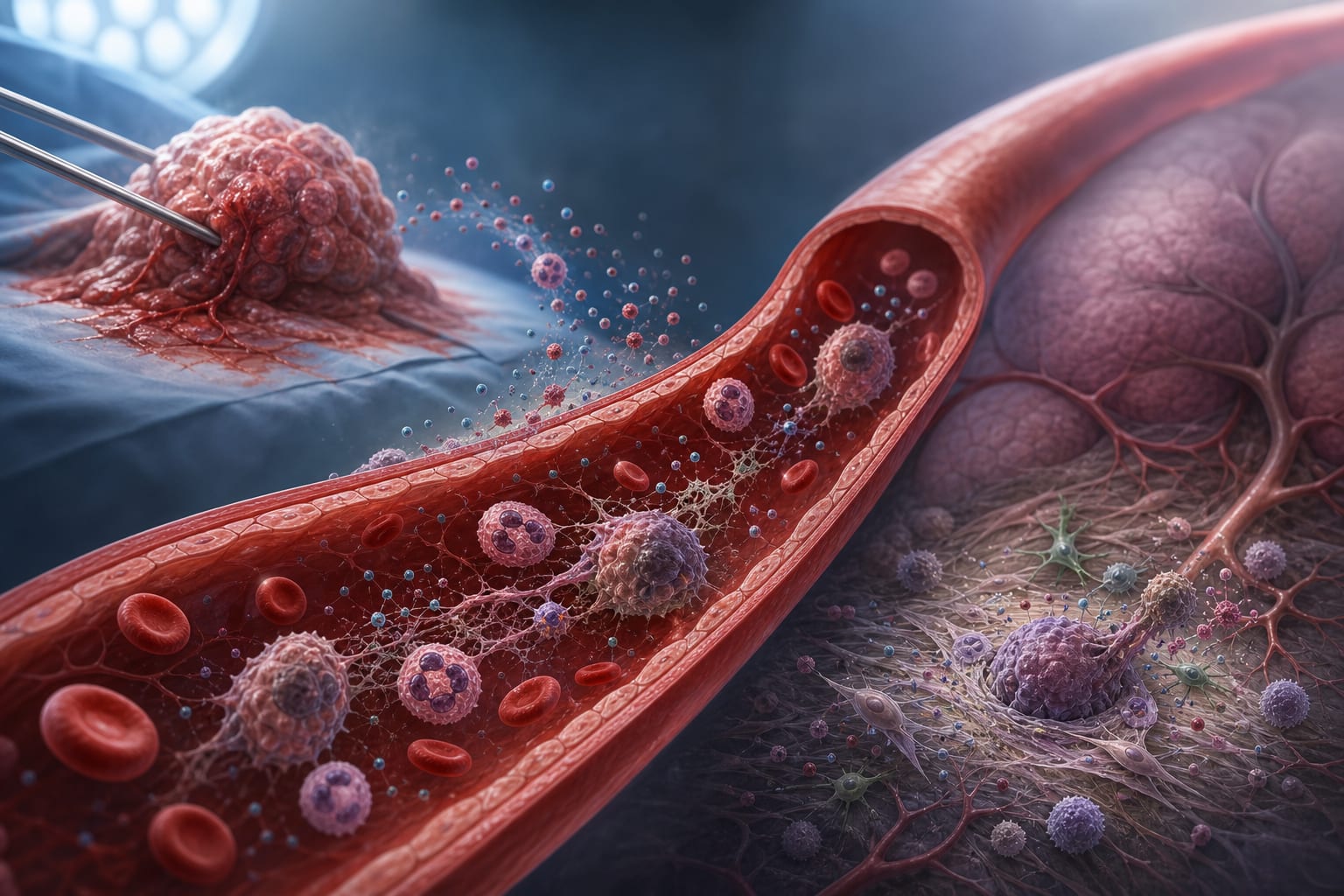
A Case Report of follicular dendritic cell sarcoma
-
By
-
Lijiao Wang
-
Tingshu Jiang
-
June 18, 2026
-
Clinical Scorecard: Case Study of Follicular Dendritic Cell Sarcoma
At a Glance
| Category | Detail |
|---|
| Condition | Follicular Dendritic Cell Sarcoma (FDCS) |
| Key Mechanisms | Malignant neoplasm originating from follicular dendritic cells. |
| Target Population | Adults, median age at diagnosis approximately 50 years. |
| Care Setting | Oncology and Hematology departments. |
Key Highlights
- FDCS is a rare malignancy with low- to intermediate-grade malignant potential.
- Primary mediastinal involvement is exceptionally rare, comprising only 3.2% of extranodal FDCS cases.
- Clinical manifestations are heterogeneous and nonspecific, often presenting as painless lymph node masses.
- Systemic symptoms may include fatigue, fever, and night sweats.
- Median survival for localized disease is approximately 10 years.
Guideline-Based Recommendations
Diagnosis
- Diagnosis is based on comprehensive imaging and histopathological findings, including immunohistochemistry.
Management
- First-line therapy includes a combination of gemcitabine and docetaxel, with possible incorporation of PD-1 monoclonal antibodies and targeted agents.
Monitoring & Follow-up
- Regular imaging follow-ups to assess treatment response and disease progression.
Risks
- High risk of local recurrence or distant metastases, with nearly half of affected individuals experiencing these complications.
Patient & Prescribing Data
Adults diagnosed with advanced FDCS.
Combination therapy involving gemcitabine, docetaxel, and PD-1 monoclonal antibodies, along with targeted therapy.
Clinical Best Practices
- Consider multidisciplinary evaluation for complex cases.
- Utilize imaging and histopathological analysis for accurate diagnosis.
- Monitor for systemic symptoms and complications related to tumor compression.
Related Resources & Content