Clinical Scorecard: Factors Influencing Lifestyle Choices in Patients with Multiple Myeloma
At a Glance
Category
Detail
Condition
Multiple Myeloma (MM), a hematological malignancy with increasing survival due to new therapies
Key Mechanisms
Continuous treatment with maintenance medication impacts quality of life and functional status; symptom burden is high
Target Population
Patients diagnosed with Multiple Myeloma, median age ~70 years
Care Setting
Oncology and hematology clinical care with supportive care interventions
Key Highlights
MM patients experience significant symptom burden and low quality of life compared to other cancers.
Physical activity is safe and beneficial but underutilized among MM patients, with low adherence to exercise guidelines.
Barriers to exercise include fatigue, pain, injuries, and modifiable factors like lack of knowledge and fear of injury.
Guideline-Based Recommendations
Diagnosis
Recognize MM patients often have decreased physical functioning and high symptom burden.
Assess baseline physical activity levels and barriers to exercise.
Management
Encourage physical activity tailored to individual capacity, following American College of Sports Medicine guidelines: moderate-intensity aerobic activity at least 30 minutes, 3 times per week, plus resistance training twice weekly.
Address modifiable barriers such as education on safe exercise and confidence building.
Incorporate supportive care interventions to maximize quality of life and functional status.
Monitoring & Follow-up
Monitor physical functioning and symptom burden longitudinally, especially post-treatment.
Evaluate adherence to physical activity recommendations and adjust plans accordingly.
Risks
Consider disease- and treatment-specific limitations when prescribing exercise to avoid injury.
Be aware of fatigue, pain, and comorbidities that may limit physical activity.
Patient & Prescribing Data
Multiple Myeloma patients, predominantly older adults with median diagnosis age ~70 years
Only a minority meet physical activity guidelines post-diagnosis; prior physical activity predicts continued exercise adherence; tailored exercise programs may improve participation.
Clinical Best Practices
Assess and address both physical and psychological barriers to exercise in MM patients.
The company adds $300 million to its Puerto Rico biologics site as Pfizer reports Phase 3 myeloma data, J&J advances a dual-pathway IBD antibody, and BioNTech streamlines production
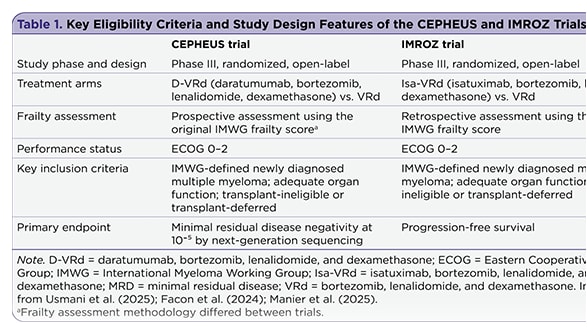
The management of newly diagnosed transplant-ineligible multiple myeloma remains challenging, in part due to the complexity of treatment decisions for frail patients. Recent subgroup analyses provide insight into whether quadruplet therapy may offer advantages over triplet therapy in this population.