Conexiant’s news site is now MDSpire News. Learn more
Advertisement
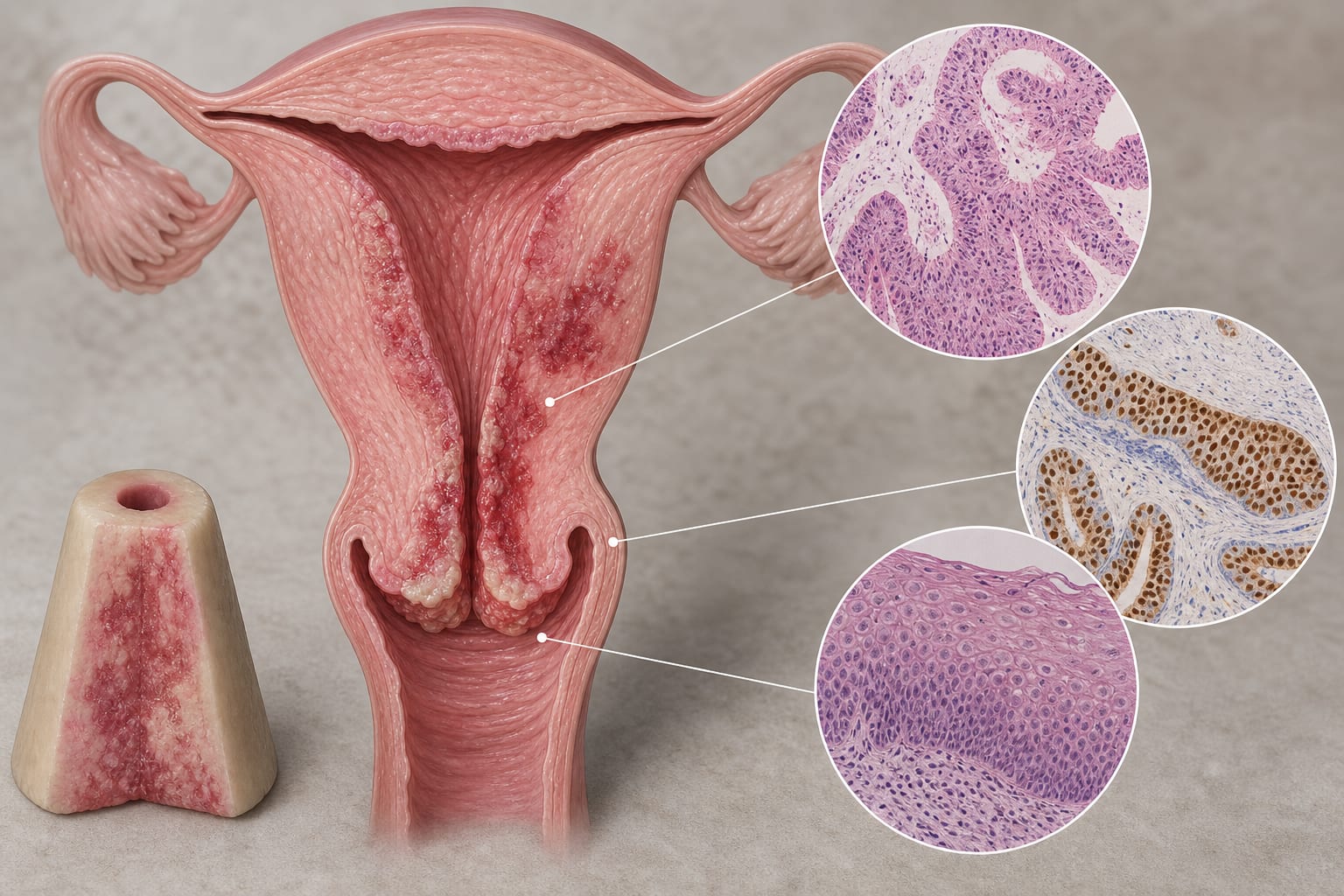
Microinvasive Squamous Cell Carcinoma of the Cervix with Endometrial Involvement Misidentified as High-Grade Squamous Intraepithelial Lesion in a Postmenopausal Patient: A Case Study
Clinical Scorecard: Microinvasive Squamous Cell Carcinoma of the Cervix with Endometrial Involvement Misidentified as High-Grade Squamous Intraepithelial Lesion in a Postmenopausal Patient: A Case Study
At a Glance
Category
Detail
Condition
Microinvasive Squamous Cell Carcinoma of the Cervix
Key Mechanisms
Superficial spreading neoplasia with endometrial involvement, diagnostic challenges due to cervical atrophy.
Target Population
Postmenopausal women
Care Setting
Gynecologic oncology
Key Highlights
Conization may underestimate invasive disease in postmenopausal women.
Immunohistochemistry is crucial for distinguishing cervical from endometrial lesions.
Definitive treatment for stage IA1 lesions without LVSI can include extrafascial total hysterectomy.
Guideline-Based Recommendations
Diagnosis
Consider high-grade squamous intraepithelial lesion (HSIL) in postmenopausal women with atypical squamous cells.
Management
Extrafascial total hysterectomy may be indicated for suspected residual disease.
Monitoring & Follow-up
Follow-up with HPV testing and cytology at 6 months post-treatment.
Risks
Colposcopic assessment may be less reliable in postmenopausal women due to cervical atrophy.
Patient & Prescribing Data
Postmenopausal women with HSIL and suspected invasive disease.
Definitive surgery may be necessary despite initial conization results.
Clinical Best Practices
Utilize immunohistochemistry to confirm the origin of cervical lesions.
Be cautious of diagnostic underestimation in postmenopausal patients.