Comprehensive perioperative management of a giant neurofibroma complicated by hemorrhagic shock: a case report
-
By
-
Jiye Sang
-
Guojun Zhao
-
Yanhong Zhang
-
Liming Sun
-
Mingming Zhao
-
July 2, 2026
-
Clinical Scorecard: Multidisciplinary Perioperative Care for a Patient with a Ruptured Giant Neurofibroma and Hemorrhagic Shock: A Case Study
At a Glance
| Category | Detail |
|---|
| Condition | Ruptured Giant Neurofibroma |
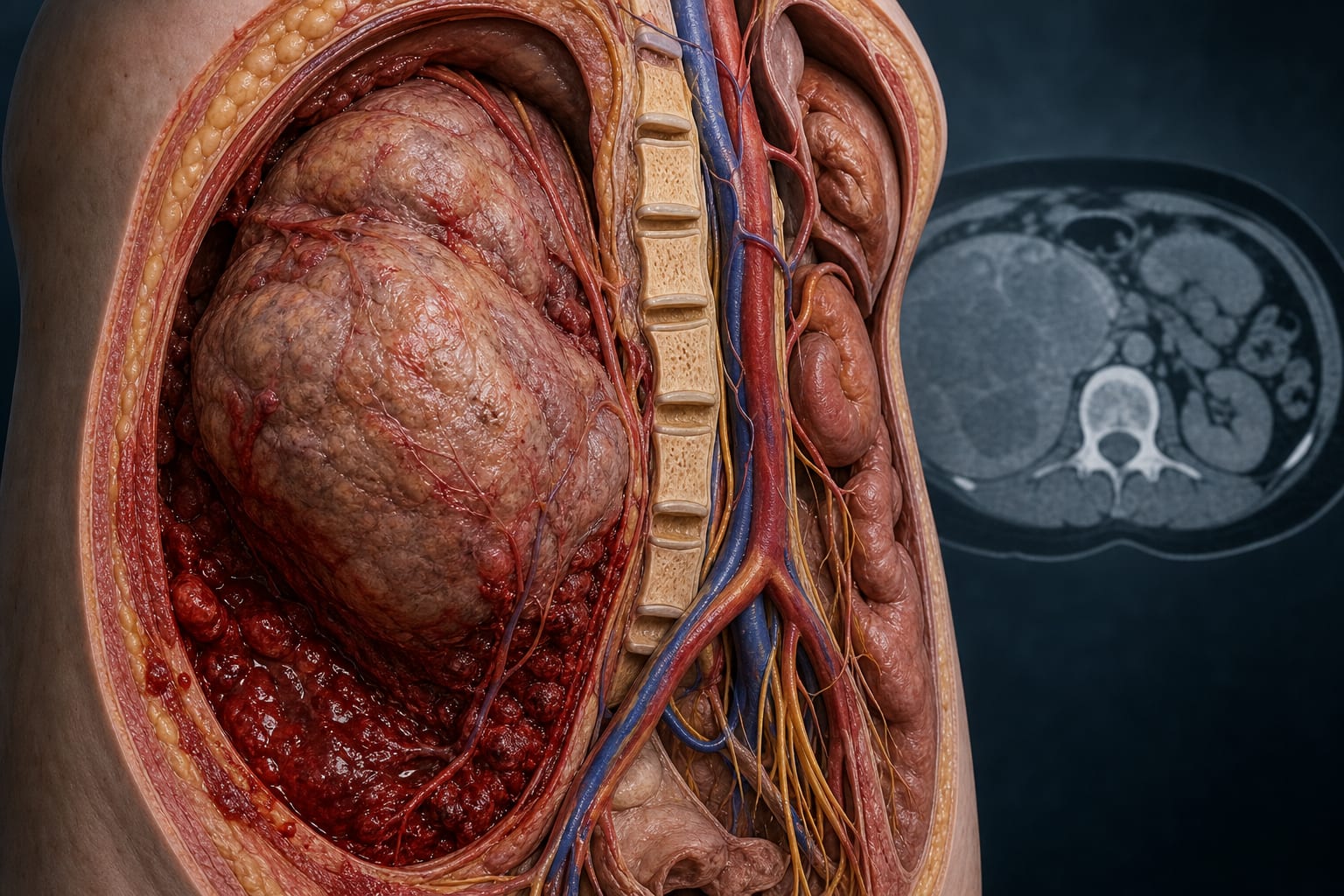
| Key Mechanisms | Tumor rupture leads to massive bleeding and hemorrhagic shock due to fragile vascular architecture and mechanical stress. |
| Target Population | Patients with neurofibromatosis type I and giant neurofibromas. |
| Care Setting | Perioperative management in a surgical and critical care environment. |
Key Highlights
- Giant neurofibromas are rare benign tumors associated with neurofibromatosis type I.
- Rupture can lead to life-threatening hemorrhagic shock requiring immediate intervention.
- Multidisciplinary care is crucial for managing complex surgical challenges and patient stabilization.
Guideline-Based Recommendations
Diagnosis
- Diagnosis is based on clinical presentation and imaging findings.
Management
- Emergency surgery for hemostasis and tumor management is essential.
Monitoring & Follow-up
- Continuous hemodynamic monitoring and transfusion support are critical.
Risks
- High risk of massive intraoperative bleeding and postoperative complications.
Patient & Prescribing Data
Adult patients with ruptured giant neurofibromas and hemorrhagic shock.
Individualized assessment and coordination among surgical, anesthetic, and critical care teams are vital.
Clinical Best Practices
- Implement precise intraoperative positioning and thermal management.
- Utilize aseptic techniques and postoperative infection prevention strategies.
- Ensure effective transfusion coordination and hemostatic interventions.
Related Resources & Content