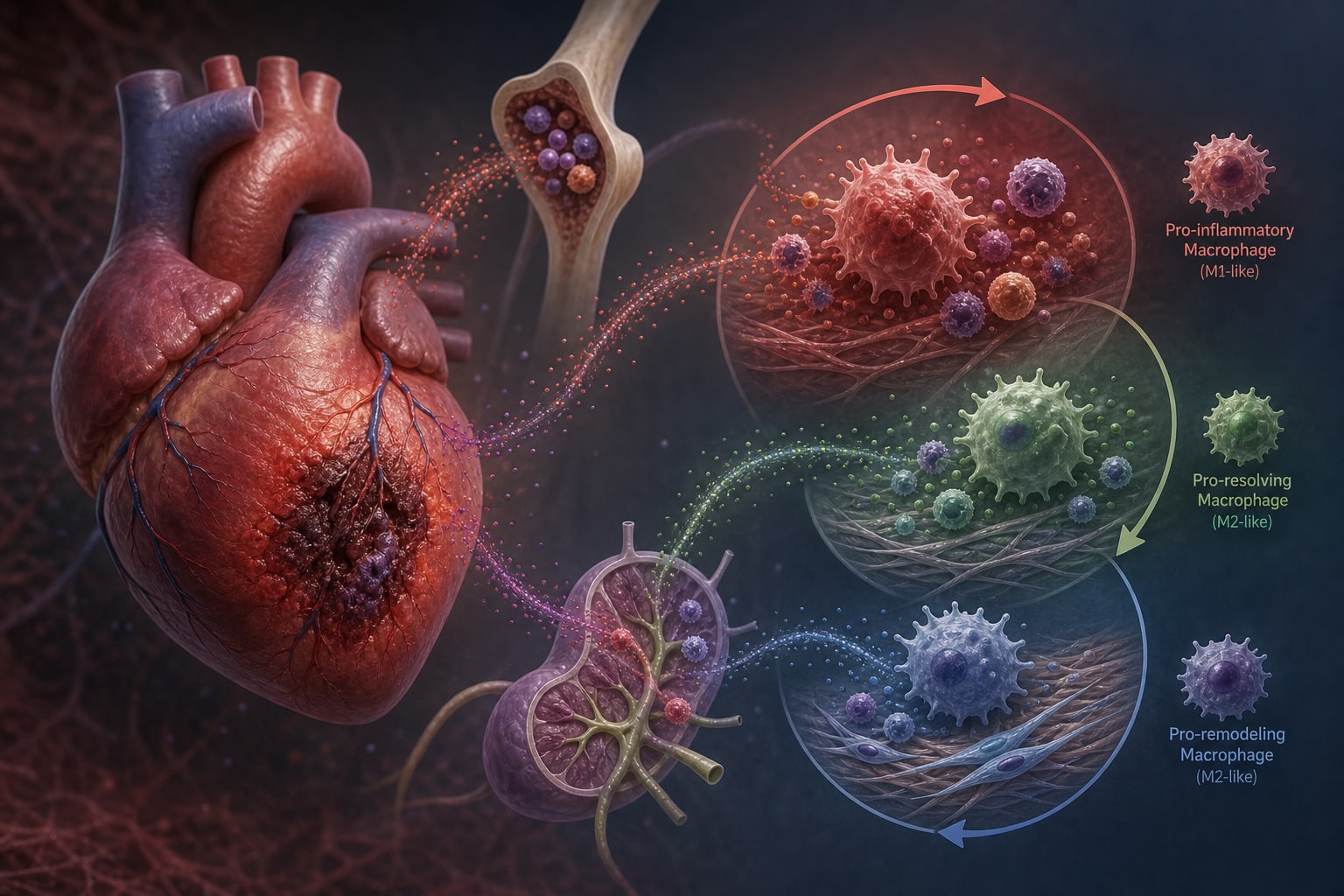
Targeting the heart-immune axis after myocardial infarction: from inflammation to immunomodulation
-
By
-
Li Huang
-
Riping Xu
-
Junyu Fan
-
Liangqing Zhang
-
Min Chen
-
May 28, 2026
-
Clinical Scorecard: Modulating the Heart-Immune Interaction Following Myocardial Infarction: From Inflammatory Response to Immune Regulation
At a Glance
| Category | Detail |
|---|
| Condition | Myocardial Infarction (MI) |
| Key Mechanisms | Bidirectional crosstalk between the injured heart and immune organs, involving cytokine networks and macrophage polarization. |
| Target Population | Middle-aged and elderly populations, patients with underlying cardiac conditions or high-risk factors (e.g., smoking, diabetes, hyperlipidemia). |
| Care Setting | Acute care settings, including emergency departments and cardiac care units. |
Key Highlights
- MI triggers a systemic immune response with complex inter-organ communication.
- The post-MI immune response is divided into three phases: inflammation, resolution, and remodeling.
- Targeting specific immune mechanisms may preserve cardiac function and improve long-term outcomes.
- Emerging immunomodulatory strategies focus on macrophage polarization and regulatory T cell promotion.
- Current therapies include antiplatelet agents, anticoagulants, and revascularization procedures.
Guideline-Based Recommendations
Diagnosis
- Rapid assessment of coronary artery occlusion through clinical evaluation and imaging.
Management
- Immediate restoration of coronary blood flow using pharmacological interventions and revascularization.
Monitoring & Follow-up
- Continuous monitoring for signs of ischemia-reperfusion injury and systemic inflammation.
Risks
- Increased risk of myocardial damage due to ischemia-reperfusion injury.
Patient & Prescribing Data
Patients experiencing acute myocardial infarction.
Combination of dual antiplatelet therapy and revascularization is critical for acute management.
Clinical Best Practices
- Implement phase-specific strategies for managing the immune response post-MI.
- Consider the timing and dosage of immunomodulatory therapies to optimize patient outcomes.
- Engage in multidisciplinary approaches to address comorbidities affecting MI recovery.
Related Resources & Content