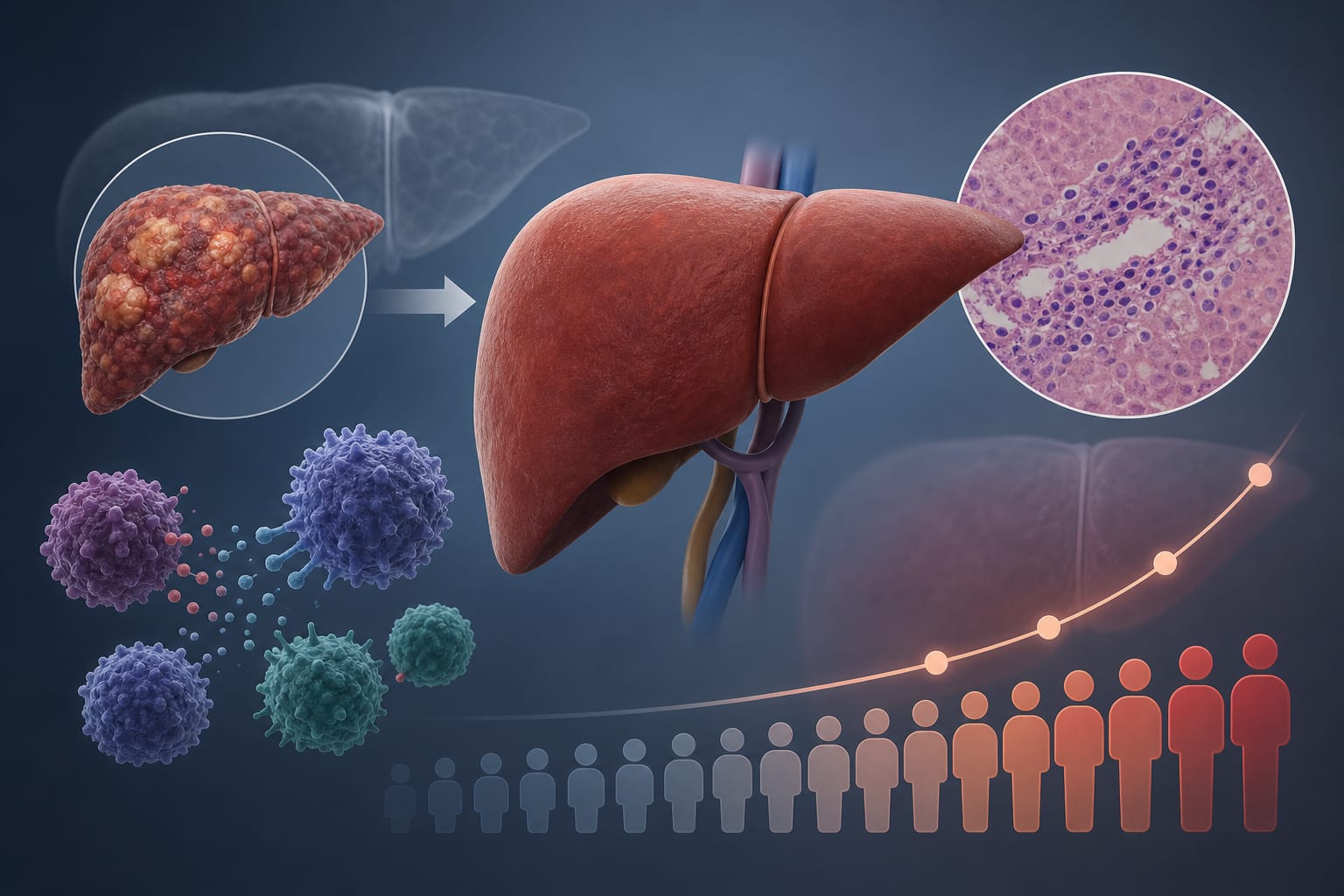
Peripheral cytotoxic immune profiles in hepatobiliary surgical patients
-
By
-
Zhen Li
-
Dongping Yu
-
Lingyong Liu
-
Qi Zuo
-
Jiaqi Wang
-
Xiangjuan Jiao
-
Zhi Duan
-
Dong Chen
-
June 3, 2026
-
Clinical Scorecard: Cytotoxic Immune Profiles in Patients Undergoing Hepatobiliary Surgery
At a Glance
| Category | Detail |
|---|
| Condition | Cytotoxic immune response in hepatobiliary surgical patients (source needed) |
| Key Mechanisms | Perforin and granzyme B expression in cytotoxic T lymphocytes and natural killer cells (source needed) |
| Target Population | Hepatobiliary surgical inpatients aged ≥16 years |
| Care Setting | Department of Hepatobiliary Surgery, First Hospital of Changsha |
Key Highlights
- High cytotoxic marker expression in NK cells compared to T-cell subsets (source needed)
- No significant differences in cytotoxic markers across disease groups (source needed)
- CD8+Perforin+ correlates with pancreatitis severity (source needed)
- Cytotoxic marker expression is positively correlated with age (source needed)
- Distinct immune phenotypes identified not associated with disease category (source needed)
Guideline-Based Recommendations
Diagnosis
- Evaluate cytotoxic marker expression for insights into immune status (source needed)
Management
- Consider CD8+Perforin+ for assessing severity in acute pancreatitis (source needed)
Monitoring & Follow-up
- Monitor age-related changes in cytotoxic marker expression (source needed)
Risks
- Immunosenescence may obscure disease-related signals in older patients (source needed)
Patient & Prescribing Data
245 consecutive hepatobiliary surgical inpatients
Peripheral blood flow cytometry used to assess cytotoxic lymphocyte markers
Clinical Best Practices
- Conduct flow cytometry within 24 hours of hospital admission (source needed)
- Account for age when interpreting cytotoxic marker expression (source needed)
Related Resources & Content