Treatment Intensity in the Frontline Setting for Transplant-Ineligible Patients With Multiple Myeloma - Scorecard - MDSpire

Treatment Intensity in the Frontline Setting for Transplant-Ineligible Patients With Multiple Myeloma

  • By

  • Mark Davis

  • May 6, 2026

  • 18 min

Share

Clinical Scorecard: Treatment Intensity in the Frontline Setting for Transplant-Ineligible Patients With Multiple Myeloma

At a Glance

CategoryDetail
ConditionMultiple Myeloma (MM)
Key MechanismsClonal plasma cell malignancy with bone marrow infiltration and end-organ damage.
Target PopulationTransplant-ineligible patients with active multiple myeloma.
Care SettingFrontline treatment setting.

Key Highlights

  • Quadruplet therapy is now a Category 1 recommendation for transplant-ineligible patients.
  • Significant improvement in overall survival from approximately 3 years to over 8-10 years.
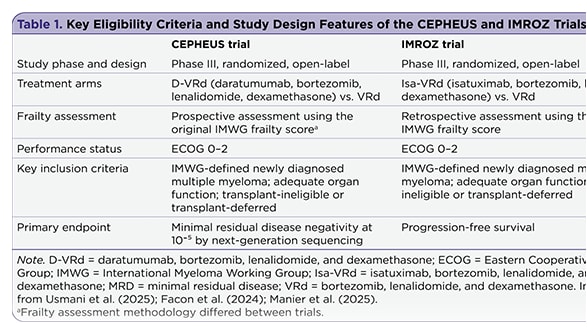
  • The IMROZ trial established quadruplet therapy as a new benchmark for transplant-ineligible patients.

Guideline-Based Recommendations

Diagnosis

  • Active MM defined by IMWG criteria: ≥ 10% clonal plasma cells or biopsy-proven plasmacytoma with myeloma-defining events.

Management

  • Quadruplet regimens (e.g., daratumumab or isatuximab with lenalidomide, bortezomib, and dexamethasone) are preferred.

Monitoring & Follow-up

  • Assess minimal residual disease (MRD) negativity and progression-free survival (PFS).

Risks

  • Consider comorbidities such as renal impairment, diabetes, and cardiovascular disease in treatment planning.

Patient & Prescribing Data

Older, frail, or medically complex patients, with approximately 40% aged 75 years or older.

Increased treatment intensity from doublet to triplet and quadruplet regimens improves outcomes.

Clinical Best Practices

  • Utilize frailty assessments to guide treatment decisions.
  • Monitor for treatment tolerability in older adults.

References

Original Source(s)

Related Content