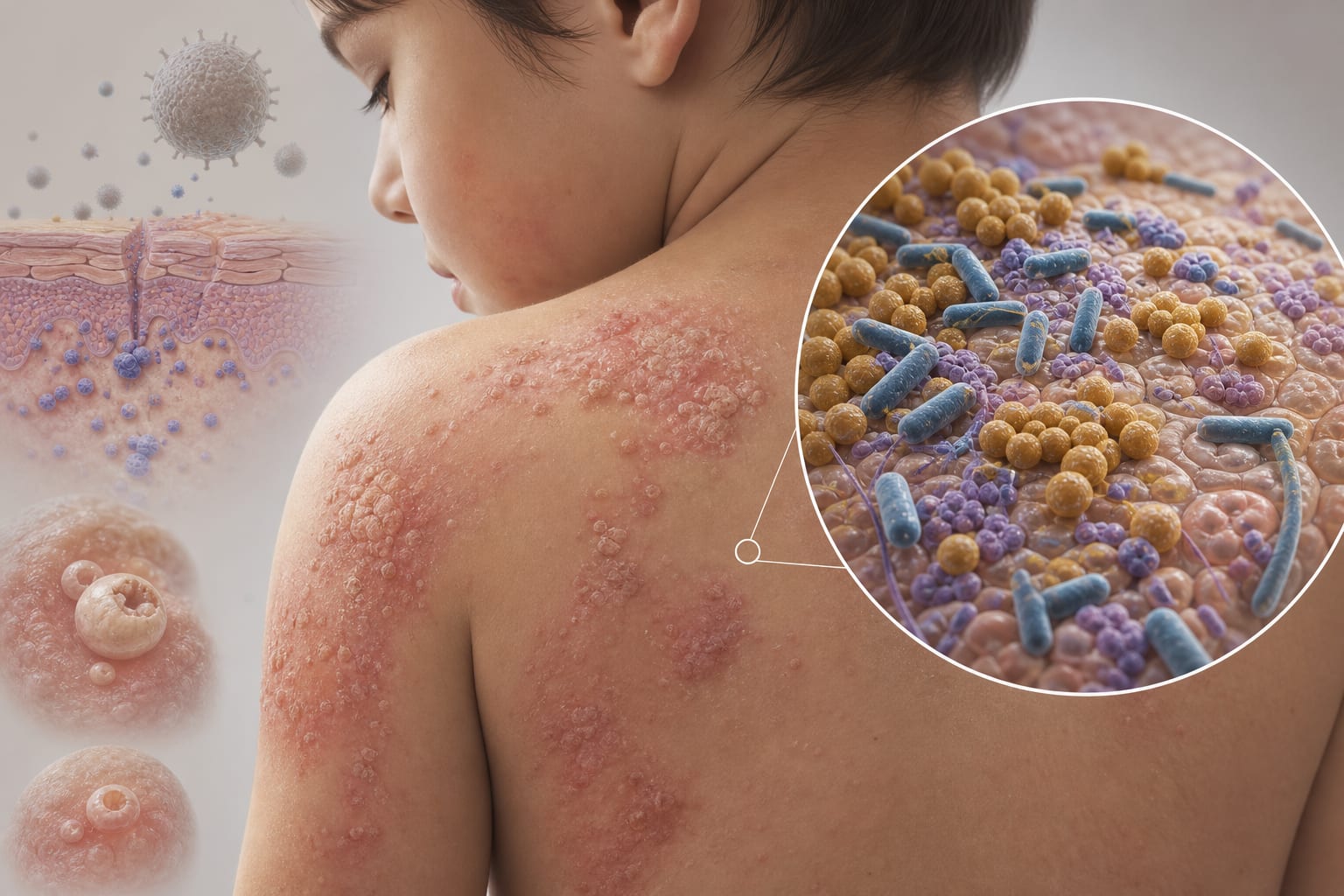
Reevaluating Infection in Pediatric Atopic Dermatitis: From Microbial Imbalance to Targeted Prevention Strategies
-
By
-
Hui Gan
-
Oksana Boyarchuk
-
Aiping Feng
-
Lingyu Jiang
-
Kun Yang
-
June 24, 2026
Clinical Scorecard: Reevaluating Infection in Pediatric Atopic Dermatitis: From Microbial Imbalance to Targeted Prevention Strategies
At a Glance
| Category | Detail |
|---|
| Condition | Pediatric Atopic Dermatitis |
| Key Mechanisms | Barrier defects, skewed type-2 immunity, altered cutaneous microbial community, pruritus, and scratching. |
| Target Population | Children with atopic dermatitis. |
| Care Setting | Pediatric dermatology and infectious disease management. |
Key Highlights
- Infection in pediatric AD is a dynamic, multifactorial process.
- AD increases the difficulty of clearing infections like molluscum contagiosum.
- Genetic factors influence severe phenotypes of AD and associated infections.
- Comorbid conditions like ASD interact with AD, affecting immune responses.
- Emerging therapies include dupilumab and JAK inhibitors for microbiome modification.
Guideline-Based Recommendations
Diagnosis
- Early recognition of complications in pediatric AD is crucial.
Management
- Focus on controlling underlying AD rather than treating infections individually.
- Consider antibiotic selection with MRSA coverage and antiviral therapy for eczema herpeticum.
Monitoring & Follow-up
- Children with AD require closer follow-up and realistic parent education regarding treatment outcomes.
Risks
- Increased susceptibility to infections due to immune dysregulation and microbiome dysbiosis.
Patient & Prescribing Data
Children with atopic dermatitis and associated infections.
AD children may require more treatment sessions for infections compared to those without AD.
Clinical Best Practices
- Integrate skin barrier measurements, immune profiling, and microbiome data in clinical assessments.
- Utilize emerging approaches such as endolysins and bacteriotherapy for managing infections.
Related Resources & Content