Effect of transcranial magnetic stimulation on the limb function of stroke patients: a systematic review and meta-analysis - Scorecard - MDSpire

Effect of transcranial magnetic stimulation on the limb function of stroke patients: a systematic review and meta-analysis

  • By

  • Lisha Xie

  • Nangen Song

  • Cui Huang

  • Yong Fan

  • Youjia Mao

  • Zhicheng Zhu

  • July 3, 2026

  • 0 min

Share

Clinical Scorecard: Impact of Transcranial Magnetic Stimulation on Limb Function in Stroke Patients: A Systematic Review and Meta-Analysis

At a Glance

CategoryDetail
ConditionStroke
Key MechanismsTranscranial magnetic stimulation (TMS) facilitates neuroplastic reorganization and modulates neural network excitability.
Target PopulationStroke patients with upper limb dysfunction.
Care SettingRehabilitation settings involving randomized controlled trials.

Key Highlights

  • TMS significantly improved Action Research Arm Test (ARAT) and Box and Block Test (BBT) scores.
  • No significant effects were observed for Fugl-Meyer Assessment for Upper Limb (FMA-UL), Fugl-Meyer Assessment for Lower Limb (FMA-LL), Modified Ashworth Scale (MAS), and Wolf Motor Function Test (WMFT).
  • Intervention cycles longer than 2 weeks improved FMA scores.
  • A total of 21 studies were included in the meta-analysis.
  • Further large-scale randomized controlled trials are necessary to confirm findings.

Guideline-Based Recommendations

Diagnosis

  • Utilize standardized assessments such as Fugl-Meyer Assessment and Action Research Arm Test for evaluating limb function in stroke patients.

Management

  • Consider TMS as an adjunct therapy for improving upper limb function in stroke rehabilitation.

Monitoring & Follow-up

  • Regularly assess functional outcomes using validated scales post-TMS intervention.

Risks

  • Monitor for potential adverse effects associated with TMS, although specific risks were not detailed in the study.
Patient & Prescribing Data

Stroke patients experiencing upper limb dysfunction.

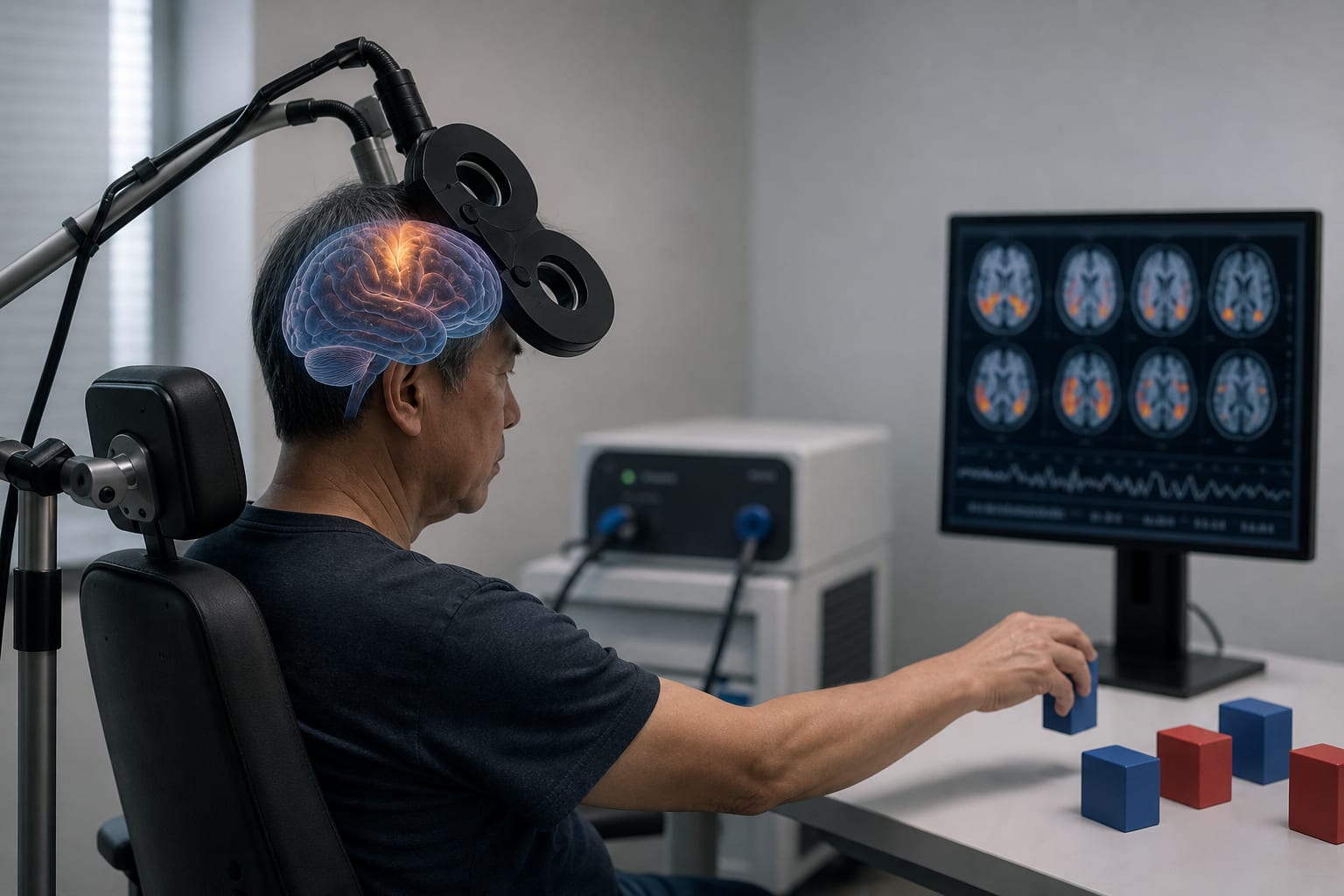
TMS may enhance upper limb flexibility and motion function, particularly with longer intervention durations.

Clinical Best Practices

  • Incorporate TMS into rehabilitation protocols for stroke patients with upper limb impairments.
  • Tailor TMS intervention duration based on individual patient needs and response.

Related Resources & Content

Original Source(s)

Related Content