Case Report: Reopening the anabolic window — romosozumab added to ongoing denosumab for severe osteoporosis in two kidney transplant recipients - Scorecard - MDSpire
Conexiant’s news site is now MDSpire News. Learn more
Advertisement
Case Study: Reactivating the Anabolic Window — The Use of Romosozumab Alongside Denosumab in Two Female Patients with Severe Osteoporosis Post-Kidney Transplant
Clinical Scorecard: Case Study: Reactivating the Anabolic Window — The Use of Romosozumab Alongside Denosumab in Two Female Patients with Severe Osteoporosis Post-Kidney Transplant
At a Glance
Category
Detail
Condition
Severe Osteoporosis Post-Kidney Transplant
Key Mechanisms
Inhibition of sclerostin, anabolic and antiresorptive effects
Target Population
Kidney transplant recipients with osteoporosis
Care Setting
Clinical management of osteoporosis in kidney transplant recipients
Key Highlights
Romosozumab added to denosumab increased lumbar spine BMD by 5.9% and 11.2% in two patients.
No clinically significant hypocalcemia occurred during treatment.
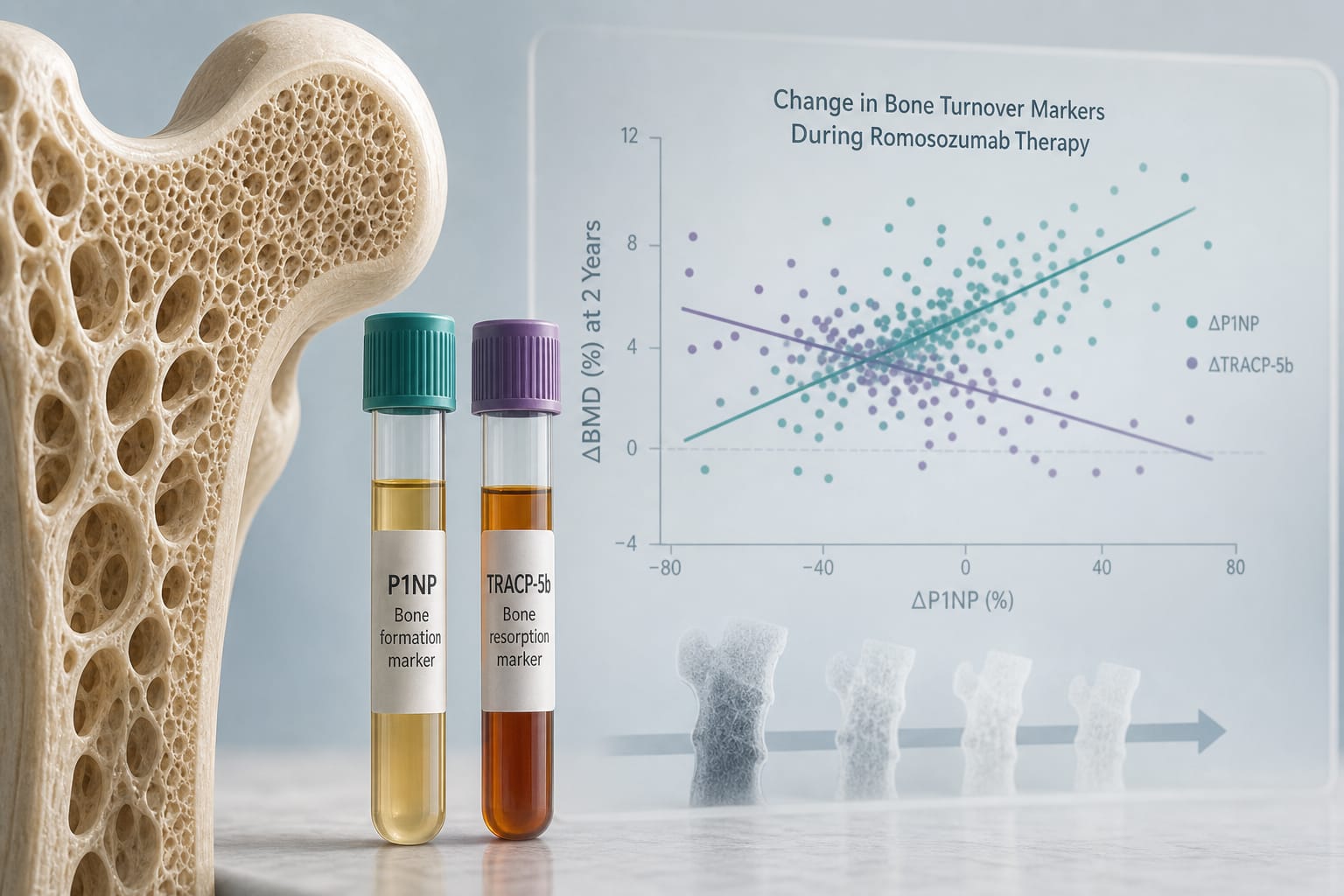
Both patients showed early increases in bone-formation markers P1NP and BAP.
Guideline-Based Recommendations
Diagnosis
Assessment of bone mineral density (BMD) in kidney transplant recipients.
Management
Consideration of combination therapy with romosozumab and denosumab for severe osteoporosis.
Monitoring & Follow-up
Regular monitoring of serum calcium, parathyroid hormone, and vitamin D levels.
Risks
Increased fracture risk in kidney transplant recipients due to osteoporosis.
Patient & Prescribing Data
Female kidney transplant recipients with severe osteoporosis.
Combination therapy with romosozumab and denosumab may enhance bone density without compromising mineral metabolism.
Clinical Best Practices
Individualize antiosteoporotic therapy based on bone phenotype and turnover state.
Correct vitamin D deficiency and insufficiency in kidney transplant recipients.
by Simona Barbuto, Paolo Mastromauro, Guido Zavatta, Daniele Vetrano, Anna Mistretta, Nicolò Bisceglia, Giorgia Comai, Uberto Pagotto, Gaetano La Manna, Giuseppe Cianciolo