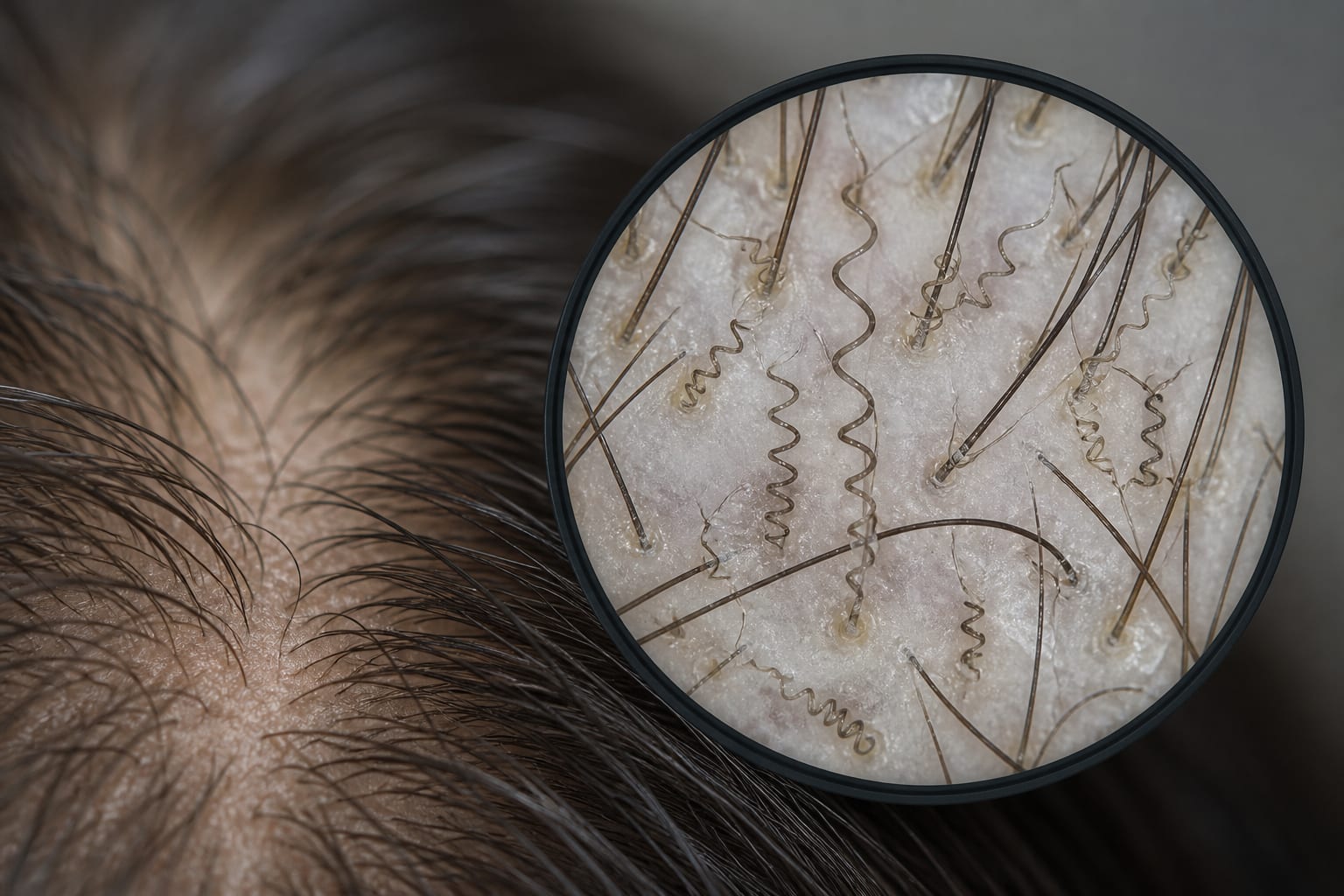
Elongated Corkscrew Hairs as a Possible Novel Trichoscopic Sign in Endothrix Tinea Capitis Affecting Adults with Immunosuppression - Scorecard - MDSpire
Clinical Scorecard: Persistent Elongated Corkscrew Hairs: A Potential New Trichoscopic Indicator in Endothrix Tinea Capitis in Immunocompromised Adults
At a Glance
Category
Detail
Condition
Endothrix Tinea Capitis
Key Mechanisms
Fungal invasion by Trichophyton violaceum leading to hair shaft changes.
Target Population
Immunocompromised adults
Care Setting
Dermatology clinic
Key Highlights
Identification of persistently elongated corkscrew hairs in two immunosuppressed patients.
Trichoscopy serves as a noninvasive diagnostic tool for tinea capitis.
Elongated corkscrew hairs may indicate atypical presentations of tinea capitis.
Guideline-Based Recommendations
Diagnosis
Trichoscopy is recommended for diagnosing tinea capitis, especially in atypical cases.
Management
Oral griseofulvin or fluconazole can be used based on individual patient circumstances.
Monitoring & Follow-up
Follow-up trichoscopy to assess treatment response and hair regrowth.
Risks
Immunocompromised status may complicate the presentation and management of tinea capitis.
Patient & Prescribing Data
Immunosuppressed adults with endothrix tinea capitis.
Individualized treatment regimens were used, with griseofulvin and fluconazole prescribed.
Clinical Best Practices
Utilize trichoscopy for early diagnosis of tinea capitis.
Consider individual patient factors when selecting antifungal therapy.
Investigational inhibitor was not associated with treatment-related serious adverse events and produced biomarker changes consistent with pathway inhibition in healthy volunteers.