Clinical Scorecard: A Bibliometric Review of the Transorbital Approach from 1948 to 2024
At a Glance
Category
Detail
Condition
Access to intraorbital structures, skull base, and adjacent regions for surgical intervention
Key Mechanisms
Minimally invasive transorbital surgical corridor utilizing endoscopic techniques to reach complex cranial and orbital areas
Target Population
Patients requiring surgical management of orbital lesions, skull base tumors, and related neurosurgical conditions
Care Setting
Specialized neurosurgical and ophthalmological surgical centers with endoscopic capabilities
Key Highlights
The transorbital approach offers a minimally invasive corridor to access intraorbital and skull base structures, reducing the need for more invasive transcranial surgeries.
Endoscopic transorbital surgery (eTOA) has evolved since 2010 as a safe and effective technique with low complication rates for accessing complex anatomical regions such as the cavernous sinus and Meckel’s cave.
Despite increasing clinical and anatomical studies, prospective clinical data remain limited, highlighting the need for further research and comprehensive bibliometric analyses.
Guideline-Based Recommendations
Diagnosis
Use imaging and clinical evaluation to identify orbital and skull base lesions amenable to transorbital surgical access.
Management
Consider endoscopic transorbital approaches for selected patients to minimize invasiveness and preserve ocular function.
Select surgical approach based on lesion location, size, and involvement of adjacent structures, comparing eTOA with alternative routes such as endonasal or transcranial approaches.
Monitoring & Follow-up
Monitor for surgical complications postoperatively, including ocular function and neurological status.
Follow-up imaging to assess for treatment success and detect recurrence.
Risks
Potential complications include injury to orbital contents, neurovascular structures, and incomplete lesion resection.
Historical concerns from psychosurgical applications (transorbital lobotomy) are not relevant to current surgical indications.
Patient & Prescribing Data
Patients undergoing surgical treatment for orbital and skull base lesions via transorbital approaches
Clinical series report favorable outcomes with low complication rates; however, prospective data are limited and further studies are needed to optimize patient selection and technique.
Clinical Best Practices
Employ endoscopic assistance to enhance visualization and minimize tissue disruption during transorbital surgery.
Integrate anatomical knowledge from cadaveric studies to plan surgical corridors and avoid critical neurovascular structures.
Use multidisciplinary collaboration between neurosurgery and ophthalmology for complex orbital and skull base cases.
Compare transorbital approach outcomes with alternative surgical routes to tailor individualized treatment plans.
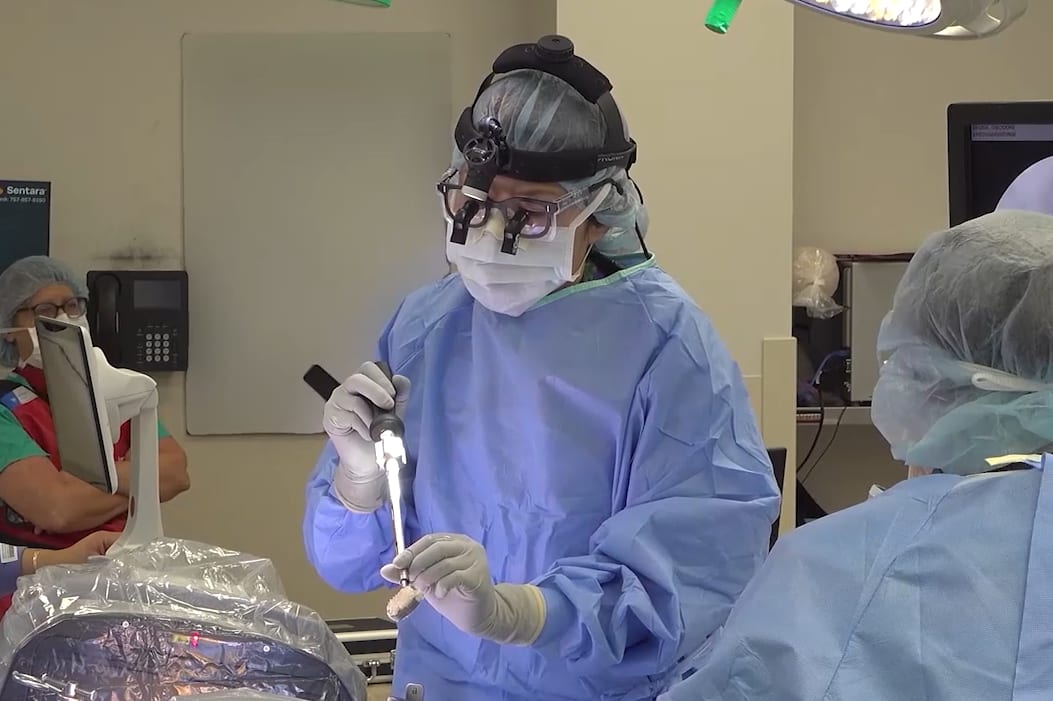
In this procedural case review, vascular surgeon Dr. Samuel Steerman and neurosurgeon Dr. Shannon Clark collaborate to perform an anterior lumbar interbody fusion (ALIF).