Biomarkers predicting good prognosis among patients receiving immunosuppressive treatment in IgA nephropathy: the promising role of serum TGF-β1 and MCP-1 - Scorecard - MDSpire
Advertisement
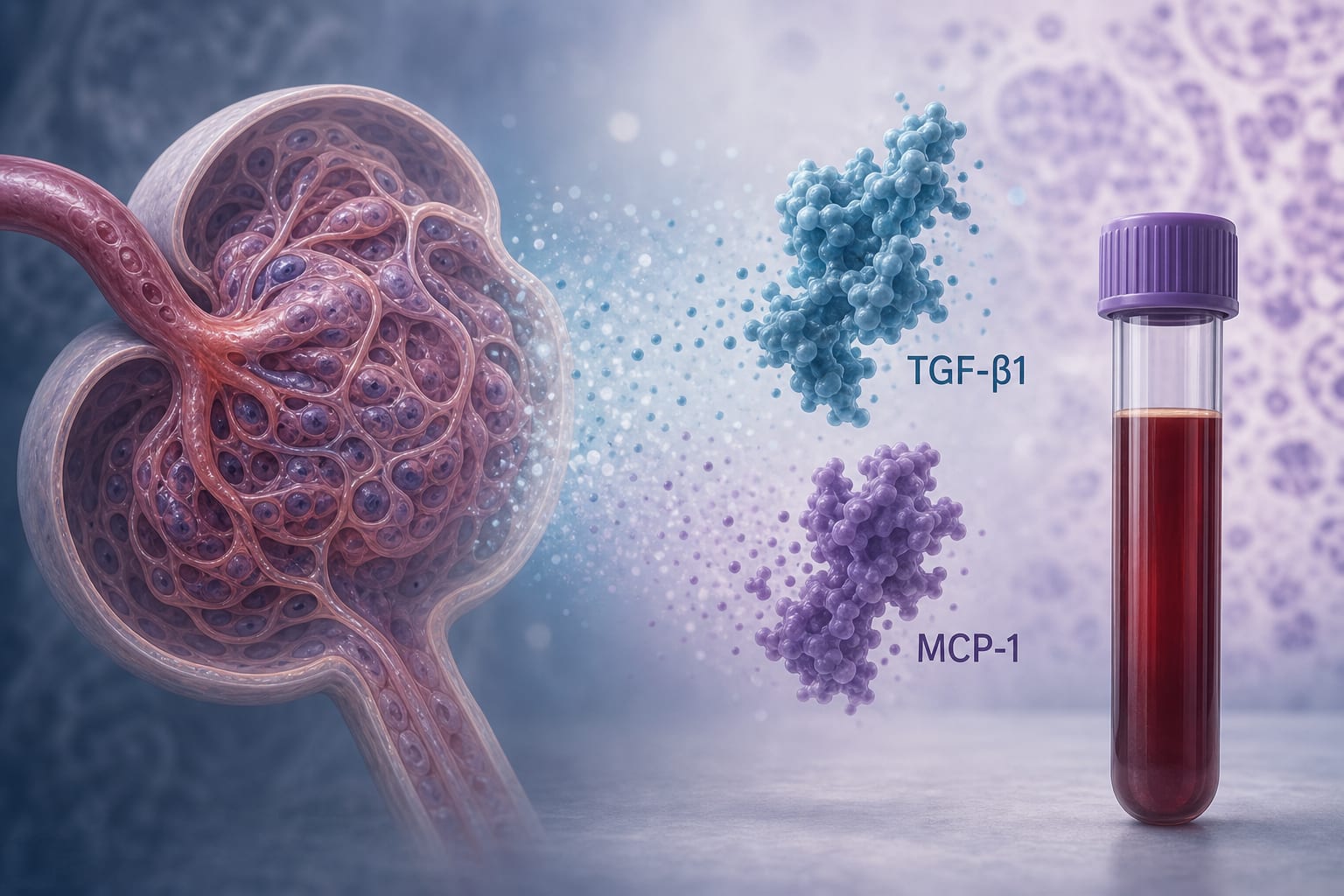
Biomarkers predicting good prognosis among patients receiving immunosuppressive treatment in IgA nephropathy: the promising role of serum TGF-β1 and MCP-1
Clinical Scorecard: Prognostic Biomarkers for Favorable Outcomes in IgA Nephropathy Patients Undergoing Immunosuppressive Therapy: The Potential of Serum TGF-β1 and MCP-1
At a Glance
Category
Detail
Condition
IgA Nephropathy (IgAN)
Key Mechanisms
Serum TGF-β1 and MCP-1 levels as prognostic biomarkers.
Target Population
Adults with biopsy-proven IgAN.
Care Setting
Prospective cohort study.
Key Highlights
59.4% of patients showed good prognosis with immunosuppressive therapy.
Higher serum TGF-β1 and lower MCP-1 levels predict good prognosis.
Intrarenal CD20+ cell infiltration indicates poor prognosis under supportive care.
Guideline-Based Recommendations
Diagnosis
Biopsy-proven IgAN diagnosis is essential.
Management
Immunosuppressive therapy recommended for high-risk patients.
Monitoring & Follow-up
Monitor urine protein-to-creatinine ratio and serum cytokine levels.
Risks
Immunosuppressive therapy may increase the risk of infection.
Patient & Prescribing Data
Adults aged 18-80 with biopsy-proven IgAN.
Glucocorticoids are commonly used, often in combination with other agents.
Clinical Best Practices
Integrate serum cytokine profiles with clinical assessments for treatment decisions.
Consider histologic grade and clinical parameters in prognosis evaluation.
Plasma proteomic models of more than 40 cell types were associated with incident Alzheimer's disease, amyotrophic lateral sclerosis, cancer, and mortality across three large cohorts.