A phase II clinical trial of neoadjuvant chemotherapy combined with immunotherapy and different radiotherapy fractionation regimens in HR+/HER2- breast cancer - Scorecard - MDSpire
Advertisement
A phase II clinical trial of neoadjuvant chemotherapy combined with immunotherapy and different radiotherapy fractionation regimens in HR+/HER2- breast cancer
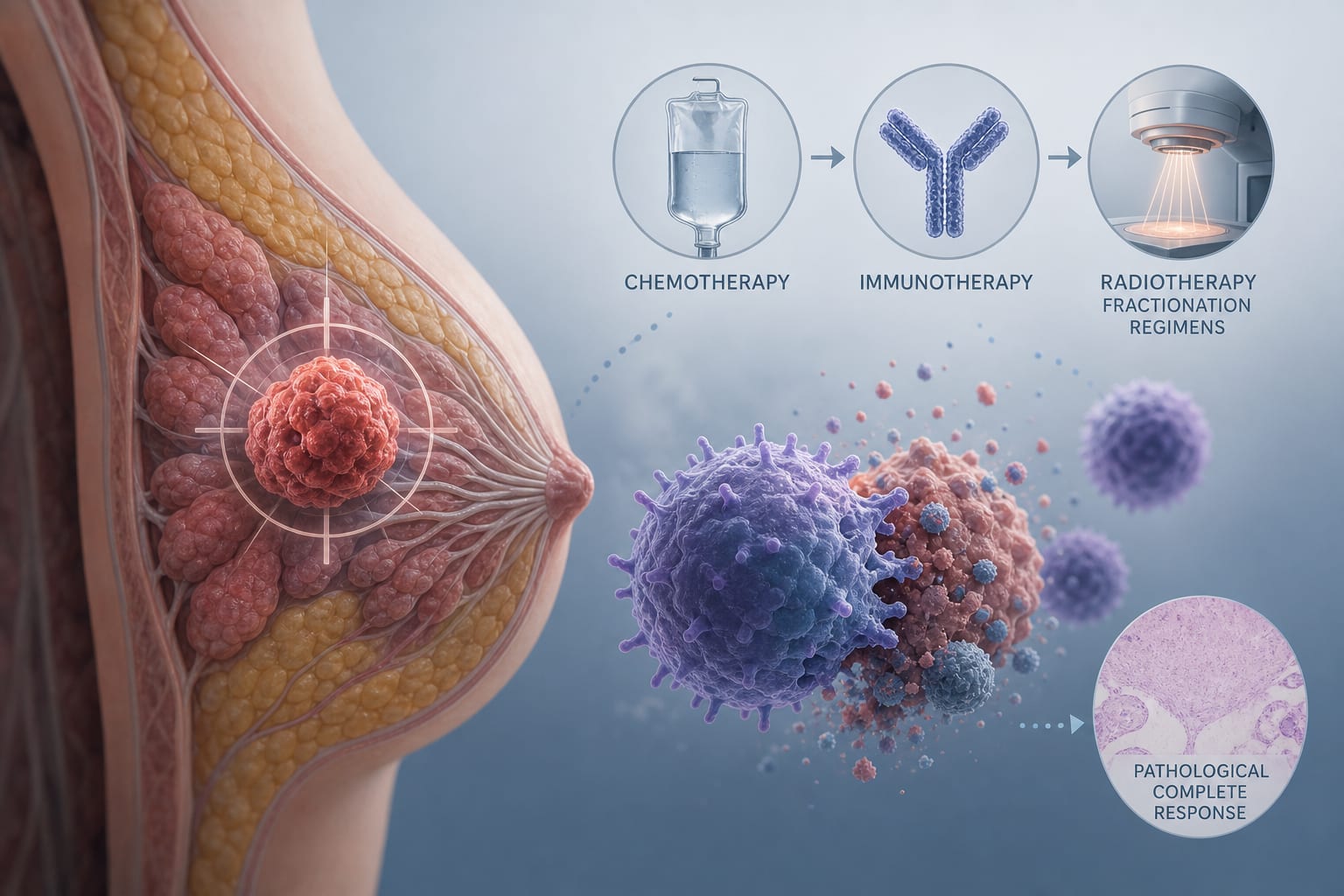
Clinical Scorecard: A Phase II Study Assessing Neoadjuvant Chemotherapy with Immunotherapy and Varied Radiotherapy Fractionation in HR+/HER2- Breast Cancer
At a Glance
Category
Detail
Condition
HR+/HER2- Breast Cancer
Key Mechanisms
Combination of Toripalimab (PD-1 inhibitor), chemotherapy, and tumor-directed radiotherapy to enhance neoadjuvant response.
Target Population
Treatment-naïve patients with early-stage HR+/HER2- breast cancer.
Care Setting
Multicenter clinical trial.
Key Highlights
Study evaluates three distinct radiotherapy fractionation schedules combined with immunotherapy and chemotherapy.
Primary endpoint is pathological complete response (pCR).
Secondary endpoints include objective response rate, recurrence, and survival outcomes.
Total of 45 patients will be enrolled across three cohorts.
Study aims to generate hypothesis-generating data for future trials.
Guideline-Based Recommendations
Diagnosis
Confirm eligibility for neoadjuvant treatment in early-stage HR+/HER2- breast cancer.
Management
Administer Toripalimab with chemotherapy and image-guided radiotherapy.
Monitoring & Follow-up
Assess pathological complete response and safety outcomes.
Risks
Monitor for treatment-related adverse events, particularly with immunotherapy.
Patient & Prescribing Data
Treatment-naïve patients with early-stage HR+/HER2- breast cancer.
Combination therapy aims to enhance neoadjuvant efficacy through immunomodulation.
Clinical Best Practices
Utilize tailored radiotherapy fractionation to minimize normal tissue exposure.
Incorporate immunotherapy to improve response rates in HR+/HER2- breast cancer.