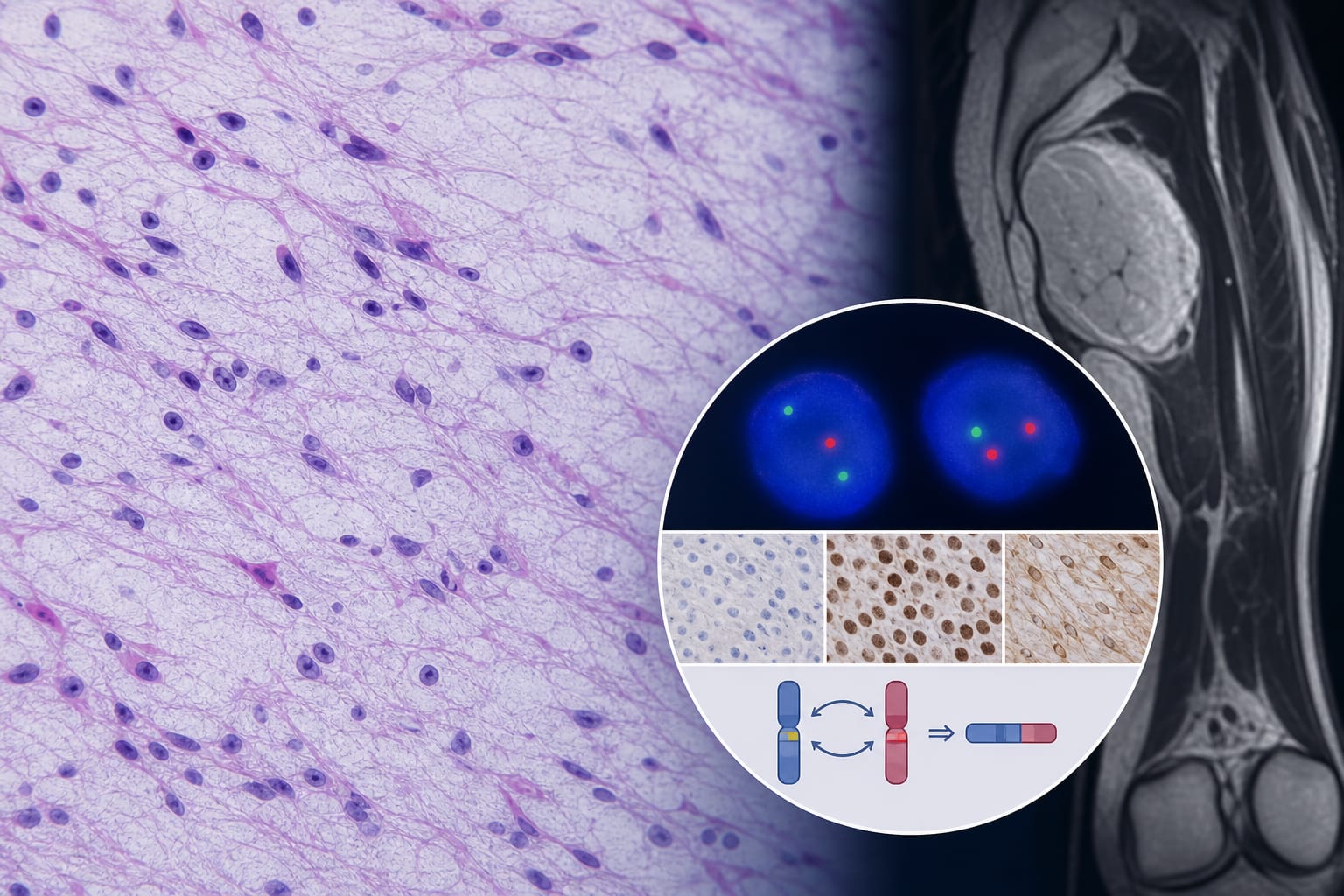
Virtual Staining in the Tumor Microenvironment
AI models are generating virtual biomarker staining from hematoxylin and eosin slides at a fraction of the cost and time of the manual technique
Clinical Scorecard: Virtual Staining in the Tumor Microenvironment
At a Glance
| Category | Detail |
|---|
| Condition | Non-Small Cell Lung Cancer (NSCLC) |
| Key Mechanisms | AI-generated virtual biomarker staining from routine H&E slides. |
| Target Population | Patients with NSCLC |
| Care Setting | Clinical pathology laboratories |
Key Highlights
- AI models achieve per-cell AUCs of 0.90 to 0.93 and Pearson correlations exceeding 0.70.
- Virtual staining preserves spatial context of biomarker expression.
- Potential to reduce costs and turnaround time while expanding access to tumor profiling.
Guideline-Based Recommendations
Diagnosis
- Utilize virtual biomarker staining for tissue characterization in NSCLC.
Management
- Incorporate virtual staining in translational research and clinical trials.
Monitoring & Follow-up
- Assess per-cell biomarker expression levels for ongoing patient evaluation.
Risks
- Technical variability in virtual staining may affect reproducibility.
Patient & Prescribing Data
Patients diagnosed with NSCLC requiring tumor microenvironment analysis.
Virtual staining can facilitate biomarker discovery and precision oncology workflows.
Clinical Best Practices
- Leverage virtual biomarker models to enhance tissue analysis efficiency.
- Use archived H&E material for broader access to tumor profiling.
Related Resources & Content