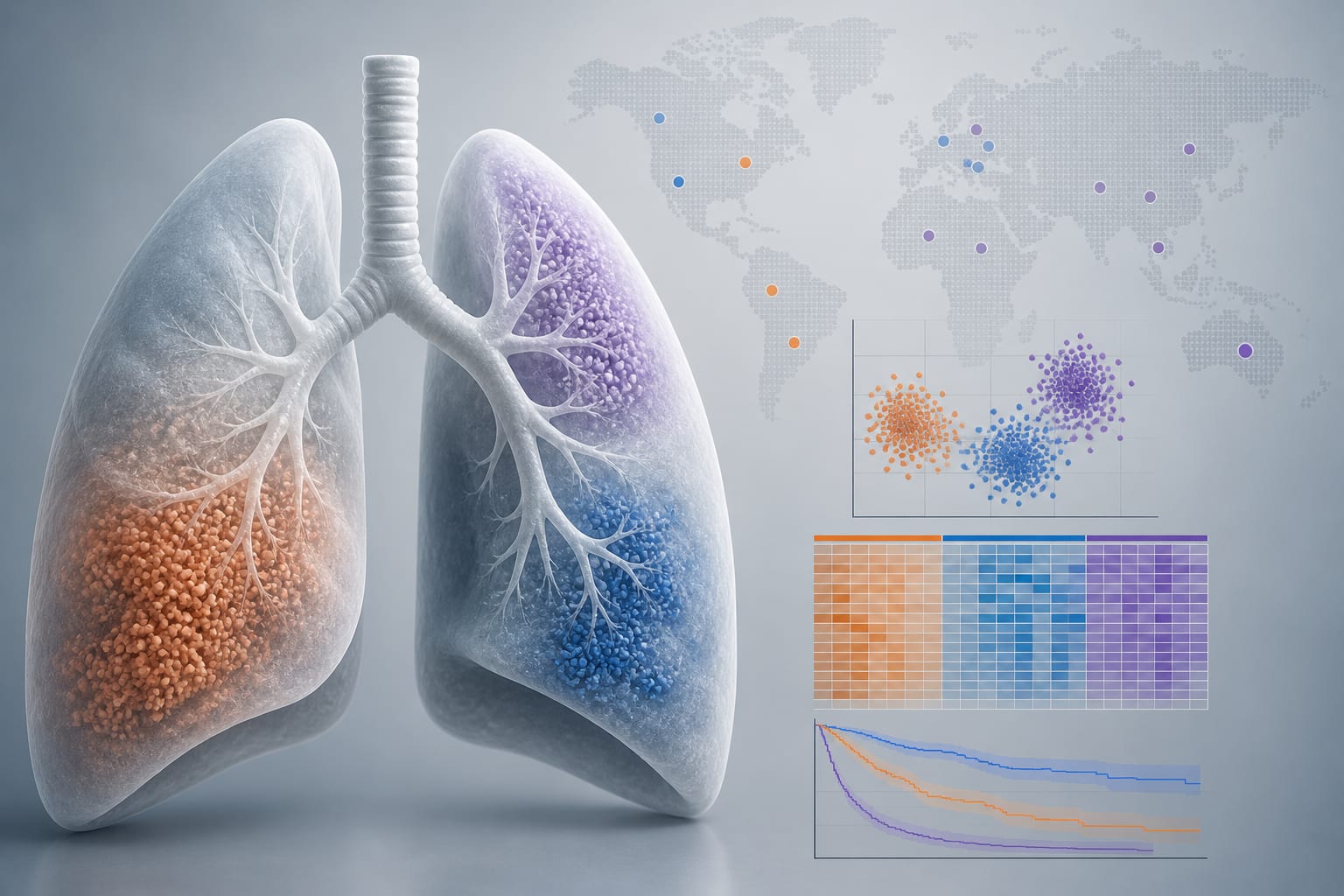
Balancing Respiratory Support and Timely Reintubation After Extubation in High-Risk Patients
-
By
-
Domenico Luca Grieco
-
Elie Azoulay
-
Audrey De Jong
-
October 27, 2026
Clinical Scorecard: Balancing Respiratory Support and Timely Reintubation After Extubation in High-Risk Patients
At a Glance
| Category | Detail |
|---|---|
| Condition | Clinical topic addressed by the source article: Balancing Respiratory Support and Timely Reintubation After Extubation in High-Risk Patients |
| Key Mechanisms | After extubation, loss of PEEP promotes lung de-recruitment and raises elastic workload; inadequate inspiratory effort may lead to expiratory muscle activation, further worsening de-recruitment and compliance. Post-extubation pulmonary edema also increases respiratory muscle workload. NIV provides PEEP and pressure support. |
| Target Population | Population described in the source article. |
| Care Setting | Care setting described in the source article. |
Key Highlights
- NIV used prophylactically immediately after extubation is recommended for high-risk patients; NIV used as rescue treatment after established post-extubation respiratory failure has been associated with delayed reintubation and increased mortality.
- In pooled trial data, high-flow nasal oxygen was associated with less day-7 extubation failure in crude analysis, but the association was not statistically significant after adjustment.
- The comparison of high-flow nasal oxygen with standard oxygen was observational, subject to potential confounding and treatment-group misclassification, and was not powered to establish equivalence.
- The article states that routine high-flow oxygen during NIV breaks cannot be justified without evidence of benefit and calls for a randomized trial.
- The article identifies physiological subgroups, including patients with hypercapnic respiratory failure, as a topic for further study.
Guideline-Based Recommendations
Diagnosis
Management
- Initiate prophylactic NIV immediately after extubation in high-risk patients, before respiratory failure develops.
- Do not use NIV for established post-extubation respiratory failure in a way that postpones reintubation when invasive ventilation is required.
- The article identifies oxygen modality during intervals between NIV sessions as an unresolved question requiring further study.
Monitoring & Follow-up
- Assess both prevention of avoidable extubation failure and timely recognition of patients who require reintubation.
Risks
- Delayed reintubation after NIV for established post-extubation respiratory failure was linked to increased mortality in the cited landmark trial.
- The pooled comparison of oxygen strategies is vulnerable to residual confounding, immortal time bias, and misclassification of patients who failed before receiving standard oxygen.
- The pooled comparison was not powered to establish equivalence.
Patient & Prescribing Data
One cited trial found day-7 reintubation rates of 12% with prophylactic NIV alternating with high-flow nasal oxygen and 18% with high-flow nasal oxygen alone. In pooled data, day-7 extubation failure was 13.7% with high-flow nasal oxygen and 18.5% with standard oxygen in crude analysis (crude difference −4.7%, 95% CI −9.4% to −0.3%); the adjusted difference was −3.9% (95% CI −8.7% to 0.9%).
Clinical Best Practices
- Distinguish prophylactic NIV initiated immediately after extubation from rescue NIV started after respiratory failure is established.
- Avoid allowing respiratory support to postpone reintubation when a patient requires invasive ventilation.
- Interpret the pooled oxygen-strategy comparison cautiously: neither contributing trial randomized high-flow versus standard oxygen, and adjustment cannot exclude residual confounding.
- Do not interpret the adjusted non-significant result as proof that high-flow and standard oxygen are equivalent.
- Further randomized research should assess oxygen modality during NIV breaks and identify physiological subgroups that may derive different benefit.
Related Resources & Content
Based on findings from:
Optimizing post-extubation respiratory support in high-risk patients
Domenico Luca Grieco, Elie Azoulay, Audrey De Jong. Intensive Care Medicine, 2026.
https://link.springer.com/article/10.1007/s00134-026-08647-4
This content is an AI-generated, fully rewritten summary based on a published scholarly article. It does not reproduce the original text and is not a substitute for the original publication. Readers are encouraged to consult the source for full context, data, and methodology.